
Ehrenbreitstein Fortress (Festung Ehrenbreitstein)
Large 19th-century Prussian fortress overlooking Koblenz on the Rhine. Built 1817–1832 to guard the Middle Rhine; today conserved and opened for museums, events and panoramic views.
Overview
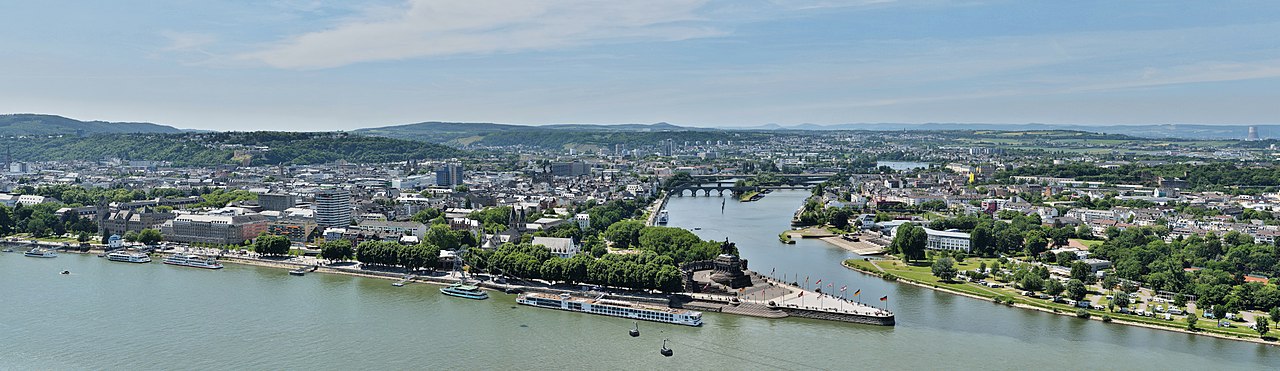
The Ehrenbreitstein plateau hosts one of the most prominent fortresses in central Europe, commonly known in German as Festung Ehrenbreitstein. Perched on the right bank of the Rhine opposite the town of Koblenz, it commands the confluence of the Moselle and Rhine and overlooks the famous Deutsches Eck. The site lies within the modern German state of Rhineland-Palatinate and combines a strategic natural plateau with large-scale 19th-century masonry and earthwork fortifications.
Image gallery
9 Images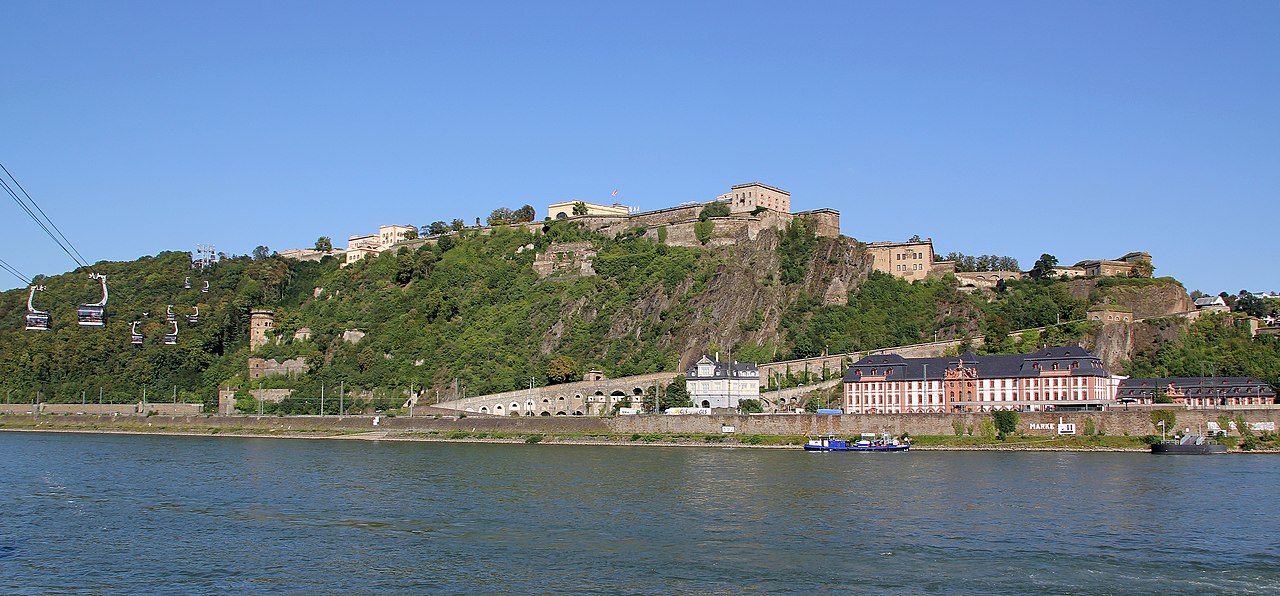




Origins and earlier fortifications
The Ehrenbreitstein hill served as a fortified position for many centuries before the present fortress was built. Its height and outlook made it a recurring military strongpoint in medieval and early modern periods; remnants of earlier works and the continuity of defensive use influenced the siting and scale of the later Prussian complex. The location's long strategic significance is closely tied to the control of river traffic and regional communications around Koblenz.
Construction and design
The surviving fortress complex was erected by Prussia as part of the broader "Festung Koblenz" defensive system following the Napoleonic wars. Major construction ran from 1817 to 1832. Engineers combined traditional bastioned elements with casemated gun positions and deep magazines, adapting the works to steep slopes and to command the approaches along the Rhine. The design features multiple ramparts, glacis, vaulted casemates and gun batteries sited to enfilade the river approaches, with service buildings and barracks arranged within the protected perimeter.
Later history
The fortress formed an important regional stronghold through the 19th century and into the era of industrialised warfare. It was intended to deter invasion from neighboring powers, chiefly the historic rivalries with France, but the modern Ehrenbreitstein complex was never subjected to a decisive siege. During the 20th century the site saw varied military use, periods of disuse, and postwar change in ownership and function before systematic conservation and reuse as a cultural site.
Museums, events and visitor access
In recent decades the fortress has been adapted for public use: parts of the interior accommodate museums, exhibition halls and interpretive displays explaining its construction, garrison life and the wider strategic history of the Middle Rhine. The location also serves as a venue for cultural events, guided tours and educational programs. Modern visitor infrastructure links the plateau with the city and riverside, and panoramic viewpoints on the ramparts offer extensive views of the Rhine valley and the Deutsches Eck.
Conservation and significance
Ehrenbreitstein is regarded as a well-preserved example of early 19th-century Prussian fortification practice and an important heritage asset in Rhineland-Palatinate. Its scale and state of preservation make it valuable for the study of military architecture, regional history and landscape management in Germany. Conservation efforts balance the maintenance of historic fabric with adaptive reuse for public and cultural purposes.
Notable distinctions
- A major Prussian-era fortress constructed to control a key Rhine junction.
- Combines masonry casemates and extensive earthworks adapted to a rocky plateau.
- Despite its strategic role, the modern complex was never subjected to a full-scale assault.
- Now functions as a cultural and educational site with museums and events.
For official and visitor information consult site overviews and regional resources: Festung Ehrenbreitstein, municipal pages for Koblenz, and heritage information from the Rhineland-Palatinate authorities. Further context on 19th-century Prussian military policy and regional geography is available through general references on Prussia, Germany and the political history that followed the Napoleonic era (1817–1832). The fortress's strategic rationale is linked to historical tensions with neighbouring states, notably France.
Related articles
Author
AlegsaOnline.com Ehrenbreitstein Fortress (Festung Ehrenbreitstein) Leandro Alegsa
URL: https://en.alegsaonline.com/art/30428