
Rhineland-Palatinate: geography, history, economy and cultural highlights
Rhineland-Palatinate (Rheinland-Pfalz) is a western German state known for rivers, wine regions, Roman heritage and mixed industrial and agricultural economy; capital: Mainz.
Overview
Rhineland-Palatinate (German: Rheinland-Pfalz) is one of Germany's federal states (Bundesländer) in the west of Germany. It covers an area of about 19,847 km² (7,663 sq mi) and is home to roughly 4.07 million people. The state capital is Mainz, a historical city on the Rhine.
Image gallery
8 Images



Geography and natural regions
The landscape combines major rivers and low mountain ranges. The Rhine and Moselle valleys shape much of the terrain and local economy. Upland areas such as the Eifel, Hunsrück and the Palatinate Forest provide forests, hiking routes and rural communities.
History and development
The modern state was formed after World War II from territories in the French occupation zone, bringing together parts of former Prussia, Bavaria and other regions. Long before that, the area was an important Roman frontier and contains substantial archaeological remains and medieval towns.
Economy, wine and culture
Rhineland-Palatinate is one of Germany's leading wine-producing regions; vineyards along the Rhine and Moselle are internationally known. The economy mixes agriculture and viticulture with manufacturing, chemicals, and service industries. Cities host universities and cultural institutions, while festivals and regional cuisine reflect a strong local identity.
Tourism and notable sites
- Roman ruins and cathedrals in Trier and Speyer.
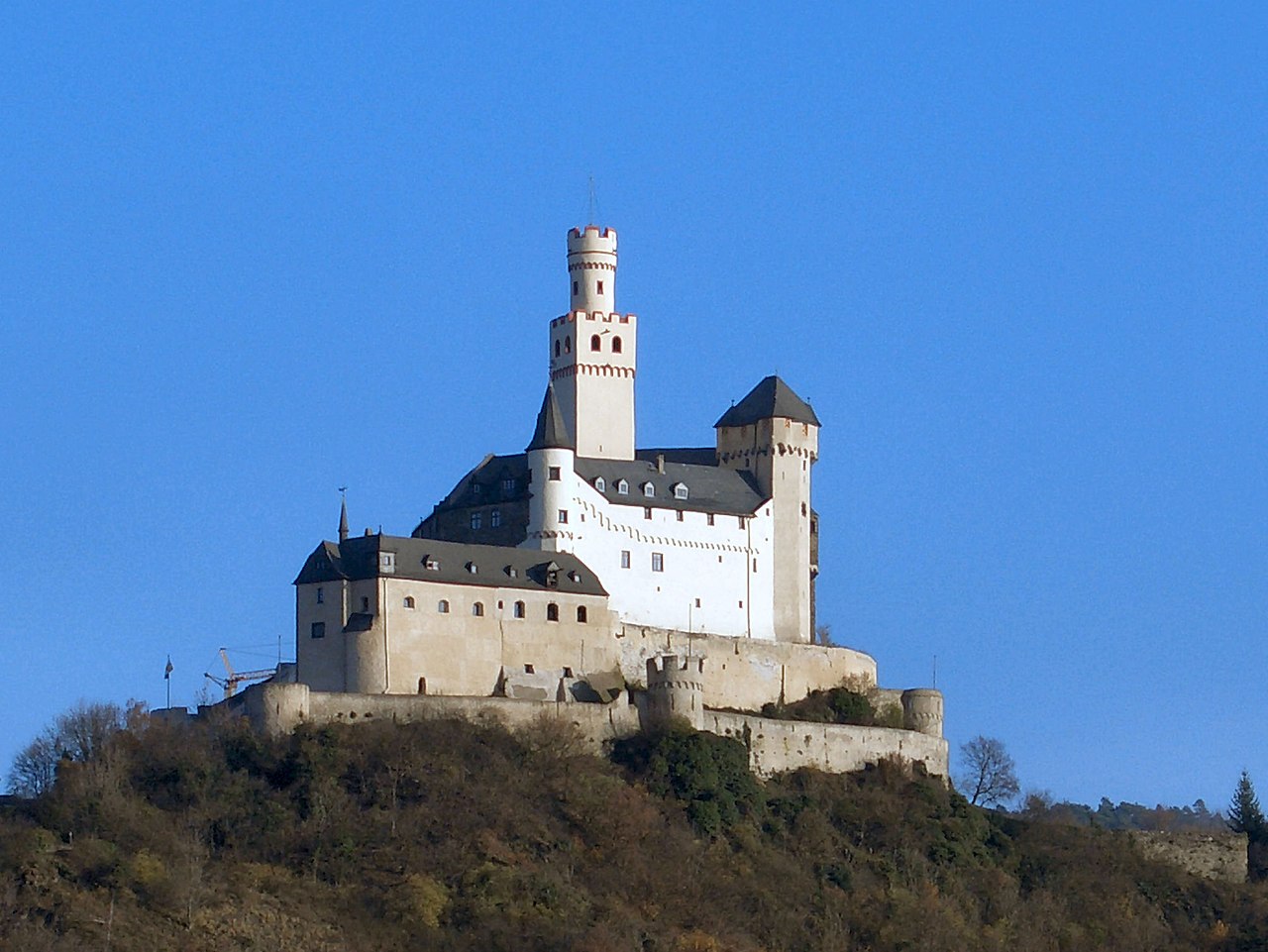
- Castle-dotted stretches of the Rhine and the Upper Middle Rhine Valley.
- Outdoor recreation in the Palatinate Forest and Eifel.
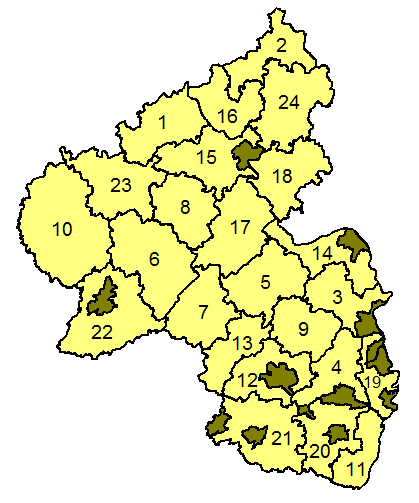
Administratively the state includes several independent cities and rural districts; its mixture of river valleys, vineyards and historic towns makes it a distinct region within modern Germany.
Questions and answers
Q: What is Rhineland-Palatinate?
A: Rhineland-Palatinate is a state of Germany.
Q: What is the population of Rhineland-Palatinate?
A: Rhineland-Palatinate has a population of 4.073 million people.
Q: What is the area of Rhineland-Palatinate?
A: Rhineland-Palatinate has an area of 19,847 km2 (7,663.0 sq mi).
Q: What is the capital of Rhineland-Palatinate?
A: The capital of Rhineland-Palatinate is Mainz.
Q: What is the other name of Rhineland-Palatinate in German?
A: The other name of Rhineland-Palatinate in German is Rheinland-Pfalz.
Q: What is the other name of Rhineland-Palatinate in Rhine Franconian?
A: The other name of Rhineland-Palatinate in Rhine Franconian is Rhoilond-Palz.
Q: How many states does Germany have?
A: Germany has 16 states (Bundesländer).
Related articles
Author
AlegsaOnline.com Rhineland-Palatinate: geography, history, economy and cultural highlights Leandro Alegsa
URL: https://en.alegsaonline.com/art/82508