
Eternal Silence — Lorado Taft’s monument in Chicago’s Graceland Cemetery
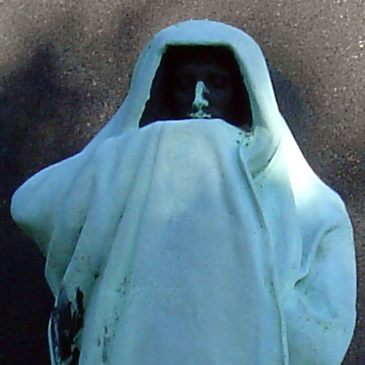
Eternal Silence is a hooded bronze monument by Lorado Taft (1909) at Graceland Cemetery in Chicago, also called the Dexter Graves Monument or Statue of Death, noted for its black granite backdrop and somber symbolism.
Overview
Eternal Silence is a widely recognized funerary monument located at Chicago's Graceland Cemetery. Often referred to as the Dexter Graves Monument or simply the Statue of Death, the work was completed in 1909 by American sculptor Lorado Taft. Its popular names reflect both the individual it commemorates and the powerful, somber imagery of the figure.
Image gallery
3 Images

Appearance and materials
The monument consists of a seated, hooded figure cast in bronze set against a high slab of black granite. The figure is shrouded and faceless, suggesting silence and anonymity rather than a specific personality. The combination of dark stone and patinated bronze produces a strong visual contrast that heightens the sculpture's contemplative mood.
Characteristics and details
- The statue presents an enveloping hood and folded hands, inviting an interpretation of mourning or vigil.
- Its austere, almost architectural backdrop isolates the form and directs focus to the theme of silence.
- Finishing techniques emphasize texture differences between metal and stone.
History and context
Created by Taft in the first decade of the twentieth century, the monument marks the grave of Dexter Graves and reflects broader trends in American cemetery art of the period. Taft, a prominent sculptor and teacher, produced a range of public monuments and was active in Chicago's artistic community. Eternal Silence stands among his cemetery works for its immediacy and restraint.
Interpretation and significance
Viewers and critics commonly read the work as a meditation on death, silence, and memory. The hooded, non-individualized figure resists sentimentality and instead offers a stark emblem of absence. Because of its dramatic presentation it is sometimes called the "Statue of Death," though interpretations vary from guardian figure to personified silence.
Visiting and notable facts
The monument is accessible to visitors of the cemetery and remains a frequently photographed and discussed piece of Chicago public art. It connects to wider conversations about memorial design, symbolism in sculpture, and Taft's role in early twentieth-century American art. For further context see resources on the monument as an example of funerary sculpture and on Taft's other works, including catalogues and local guides to historic cemeteries and monuments (monument entry, sculpture references). Additional scholarly and visitor information is available in regional art histories and cemetery guides (materials, stonework, artist biography).
Questions and answers
Q: What is Eternal Silence?
A: Eternal Silence is a monument in Chicago's Graceland Cemetery.
Q: What are the other names given to the Eternal Silence?
A: The Eternal Silence is also known as the Dexter Graves Monument or the Statue of Death.
Q: Who created the Eternal Silence?
A: The Eternal Silence was created by American sculptor Lorado Taft in 1909.
Q: What material is the Eternal Silence made of?
A: The statue of Eternal Silence is a bronze sculpture set on and backdropped by black granite.
Q: Where is the location of the Eternal Silence?
A: The Eternal Silence is located in Chicago's Graceland Cemetery.
Q: When was the Eternal Silence created?
A: The Eternal Silence was created by Lorado Taft in 1909.
Q: What significance does the Eternal Silence hold?
A: The Eternal Silence monument is a significant piece of art, which represents grief and mourning.
Related articles
Author
AlegsaOnline.com Eternal Silence — Lorado Taft’s monument in Chicago’s Graceland Cemetery Leandro Alegsa
URL: https://en.alegsaonline.com/art/32362
Sources
- gis.hpa.state.il.us : Graceland Cemetery