
Echolocation: biological sonar used by animals and its technological parallels
Echolocation is active biological sensing in which animals emit sounds and interpret returning echoes to locate and identify objects; found in bats, toothed whales, some birds and humans and mirrored by sonar and radar.
Overview
Echolocation is an active sensing strategy in which an animal emits a sound or click and interprets the returning echoes to learn about the environment. By measuring the time delay, amplitude and spectral changes of echoes, an echolocating animal can estimate distance, direction, size, texture and relative motion of objects. The method is often described as a form of biological sonar.
Image gallery
5 Images


How it works
Emitted signals are usually short and directional. Key cues extracted from echoes include echo delay for range, intensity for distance and size, changes in frequency or phase for motion (Doppler shifts), and spectral detail for surface texture. Many animals use frequencies beyond human hearing to improve resolution; signal timing, repetition rate and beam shape are adapted to the tasks of hunting, navigation or communication.
Animals that use echolocation
Microbats are the best-known users: they hunt flying insect prey in low light by emitting rapid calls and processing returning echoes to localize and track targets. Several toothed whales, including some whales and dolphins, produce powerful clicks that travel efficiently through water. These are members of the broader group of mammals that evolved specialized structures for sound production and reception. Other animals that use echo-based sensing include certain birds such as oilbirds and swiftlets, and a few small terrestrial mammals.
Medium and adaptations
Sound propagation differs between air and water, which influences signal design: water transmits sound farther and with different attenuation, so aquatic echolocation favors different click patterns and intensities than airborne echolocation. Anatomical specializations vary: bats have vocal and facial structures that shape their beam, and toothed whales have a fatty organ called the melon that focuses clicks. On the receiving side, sensitive middle and inner ear structures and highly specialized neural timing circuits allow extraction of microsecond differences.
Human and technological parallels
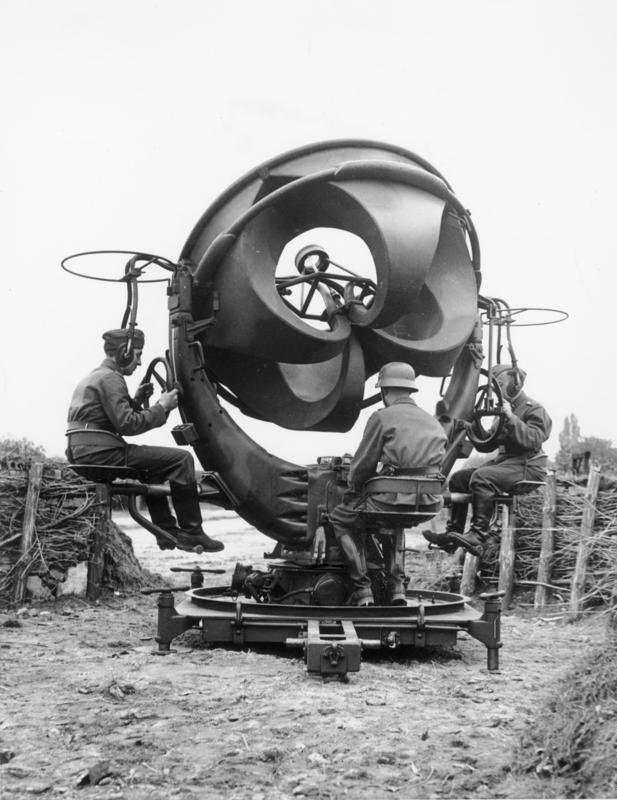
Humans have developed technologies inspired by echolocation. Sonar systems send and receive sound pulses underwater for navigation and mapping, while artificial systems using electromagnetic pulses—such as radar—serve similar functions at greater ranges. Radar operates with radio waves rather than sound. Some blind or visually impaired people learn click-based echolocation to detect obstacles and improve mobility.
Research, applications and conservation
Study of echolocation has advanced understanding of sensory processing, neural timing and animal behavior, and it informs engineering of sensors, autonomous vehicles and medical imaging. Conservation concerns include the effects of noise pollution on echolocating species, which can interfere with navigation and prey detection. Protecting acoustic habitats is an important component of efforts to conserve bats and marine mammals.
- Common functions: prey detection, obstacle avoidance, mapping and social signaling.
- Active versus passive sensing: echolocation is active because the animal produces the signal; passive listening relies on sounds produced by other sources.
- Cross-disciplinary impact: biology, neuroscience, acoustics and engineering all contribute to understanding and applying echolocation principles.
Related articles
Author
AlegsaOnline.com Echolocation: biological sonar used by animals and its technological parallels Leandro Alegsa
URL: https://en.alegsaonline.com/art/29893