
Emergency Alert System (United States)
Overview of the U.S. Emergency Alert System: purpose, operation, message types, history, testing, and how agencies and the public interact with alerts.
Overview
The Emergency Alert System (EAS) is a national public-warning network in the United States designed to allow federal, state, tribal and local authorities to deliver urgent information through broadcasters, cable systems, satellite radio and television, and other participating services. Originally developed from earlier alerting efforts, the EAS provides a standardized means to interrupt regular programming with audio and text messages intended to protect life and property during imminent threats, major disasters, or national emergencies.
Image gallery
4 Images


How it works
EAS messages follow a structured format that typically includes an attention signal, an audio announcement, and an encoded header that directs participating stations how to relay the message. Alerts can originate at different levels: local jurisdictions and the National Weather Service for severe weather, state emergency operations centers for statewide incidents, or authorized federal authorities for national emergencies. The system uses interoperability standards to pass messages between authorities and media outlets, and it integrates with broader alerting infrastructures such as FEMA’s public alerting services.
Types of messages and examples
- Local and regional alerts: Warnings for tornadoes, flash floods, evacuation orders, AMBER alerts, and other area-specific threats.
- Emergency Action Notification (EAN): The highest-priority message type intended for nationwide use in extreme national emergencies.
- Wireless Emergency Alerts (WEA): Short, location-targeted text alerts delivered to compatible mobile devices; WEA complements EAS for cellular distribution.
- Emergency Action Termination: Messages that indicate when the immediate threat has ended or the emergency declaration has been lifted.
Participants and technology
Participation in the EAS is mandated for most broadcast stations and cable systems under rules established by federal regulators; this ensures broad distribution across mass media. Technically, the system relies on digital headers, event codes, and standard audio tones to trigger automated relays. Recent modernization efforts emphasize the Common Alerting Protocol (CAP), which enables more consistent, machine-readable alerts and facilitates simultaneous delivery via radio, television, internet services, and wireless carriers.
History and governance
The EAS evolved from Cold War-era alerting systems and a succession of broadcast-based protocols that sought to improve national readiness. The framework for the system in its current form was approved by the Federal Communications Commission (FCC) in the 1990s and placed into operation in the late 1990s. Oversight and coordination involve multiple agencies, including emergency management and meteorological services at federal and state levels. In situations requiring the highest level of national coordination, a message or address may come from the office of the President or authorized federal officials.
Testing, limitations and public guidance
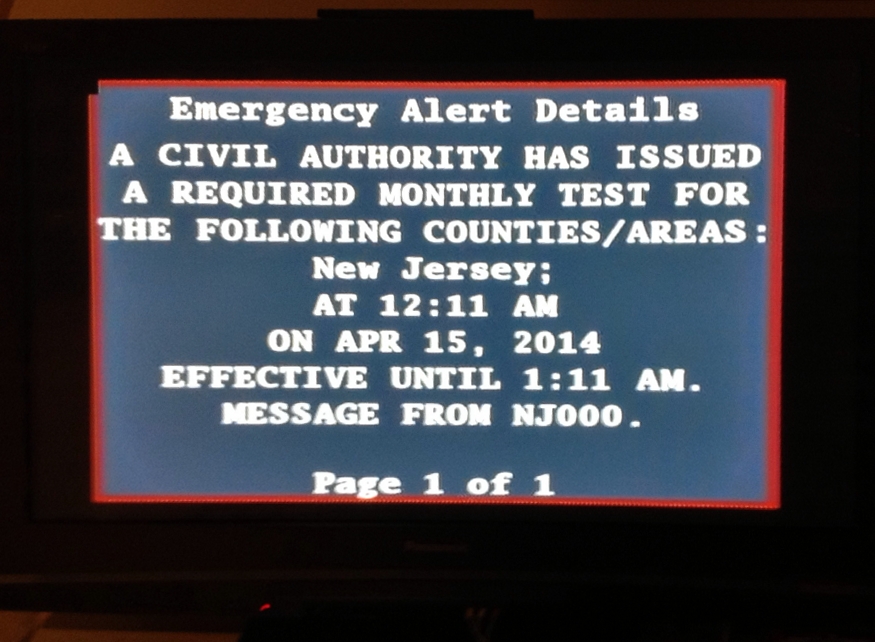
Regular tests of the EAS and allied systems are conducted to verify performance, train operators, and familiarize the public with the format of alerts. While EAS and WEA are powerful tools, they have limitations: messages are only as effective as the accuracy of the originating information, and delivery depends on the availability of broadcast, cable, satellite, or cellular service. False or accidental alerts have occurred in the past, prompting procedural and technical improvements. For individuals, guidance is to take any valid alert seriously, follow the instructions provided, and use multiple information sources when possible.
Notable distinctions
- EAS is primarily a broadcast and cable-based system with extensions to other media; WEA is the cellular counterpart for mobile devices.
- EANs and presidential messages are exceptional and reserved for the most serious national conditions.
- Modern alerting increasingly uses standardized digital formats to support accessibility, multilingual messaging, and richer situational information.
For more technical or regulatory details consult official resources and guidance from emergency management and communications authorities.
Related articles
Author
AlegsaOnline.com Emergency Alert System (United States) Leandro Alegsa
URL: https://en.alegsaonline.com/art/31108
Sources
- oldradio.com : "What is Conelrad? EBS? EAS?"