
Ellipsis (three-dot punctuation)
A punctuation mark of three consecutive dots used to indicate omission, pause, trailing thought, or continuation; also appears in mathematics and computing as horizontal or vertical dots.
Overview
An ellipsis is a sequence of dots—traditionally three—that signals omission, a trailing sentence, a pause in speech, or an unfinished idea. The word derives from Greek ἔλλειψις, meaning "omission" or "falling short." As a typographic sign it is treated differently from three separate periods: many languages and style guides distinguish a dedicated ellipsis glyph from three discrete full stops.
Image gallery
1 Image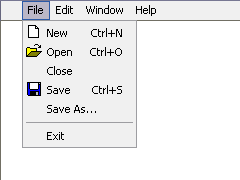
Forms and typography
In printed text an ellipsis may appear as three closely spaced dots (…) or as three evenly spaced points with thin spaces between them. Some fonts include a single character for the ellipsis, while others rely on three periods. Style manuals differ on spacing: some recommend no space before and a space after, others place spaces between the dots. The mark is commonly written in informal contexts as "dot-dot-dot."
Common uses in prose and dialogue
Writers use ellipses to indicate several related effects. These include:
- a trailing off of thought: "I thought we might..."
- a pause that conveys hesitation or awkwardness
- a rhetorical or dramatic gap to allow implication rather than explicit statement
Omission in quoting and editing
When quoting longer material, editors use ellipses to show that words have been removed. This preserves the original meaning while shortening the text. Different editorial styles prescribe where to place spaces or brackets around the ellipsis; some journals require ellipses inside square brackets to indicate editorial omission. For guidance on usage in various style systems see quoting and editing conventions.
Mathematical and computing variants
In mathematics and technical writing, ellipsis symbols denote continuation of a pattern or an indefinite sequence. Common variants include the horizontal ellipsis (…) and the center-aligned form (⋯) used in row or column contexts; vertical (⋮) and diagonal (⋱) ellipses indicate continuing elements in matrices or tables. Programming languages and command-line tools sometimes adopt three dots or similar tokens as operators or placeholders; conventions depend on the language. For a general overview of punctuation and symbols, consult resources on mathematical notation and punctuation.
Style, clarity, and notable distinctions
Practical guidance emphasizes clarity: use an ellipsis sparingly, ensure omission does not distort meaning, and follow the spacing rules of your style guide. Distinctions to note include the difference between an ellipsis and an em dash (—), which marks breaks or interruptions of a different kind, and the typographic difference between a single ellipsis glyph and three periods entered consecutively. Historically the mark has appeared in manuscripts and printed books for centuries as a tool for both rhetoric and editing.
Related articles
Author
AlegsaOnline.com Ellipsis (three-dot punctuation) Leandro Alegsa
URL: https://en.alegsaonline.com/art/30960