
Electrical telegraph: technology, history, and impact
The electrical telegraph transmits coded messages over wires using electric current, keys, sounders, relays and batteries. It transformed 19th-century communication, enabling near‑instant long‑distance transmission.
Overview
The electrical telegraph is a system that conveys information by making and breaking electrical circuits to produce signals at a distant receiver. Operators encode messages with a agreed code and operate a telegraph key to alter current flow; at the far end an instrument such as a sounder, needle or printer converts the electrical pattern into audible clicks, needle positions or printed characters that an operator reads and transcribes.
Image gallery
10 Images


Core components and how it works
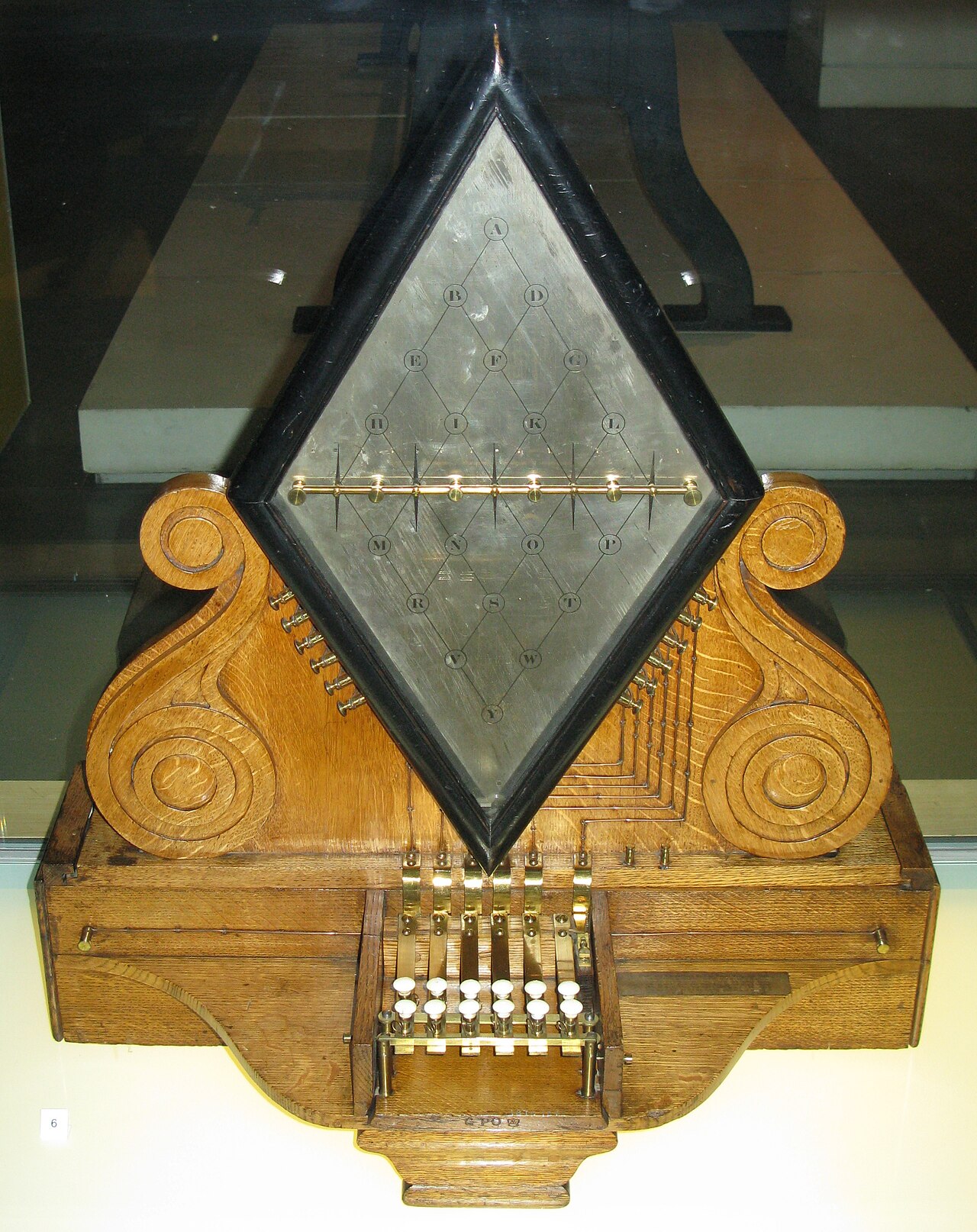
Typical early electrical telegraph equipment included a telegraph key (the sender's switch), a line of insulated wire, one or more batteries as a power source, and a receiving device. Where distances or line resistance required it, relays or repeaters were used to detect weak signals and operate stronger local circuits. Common receiving devices were the sounder (an electromagnet that produced clicks) and the needle instrument (which deflected a pointer to indicate characters).
- Telegraph key: manually closes and opens the circuit.
- Battery/cells: provide the low-voltage current used to signal.
- Line and insulation: overhead poles and cable; early undersea cables used gutta‑percha insulation.
- Receivers and relays: electromagnets that render the signal readable or amplify it.
History and development
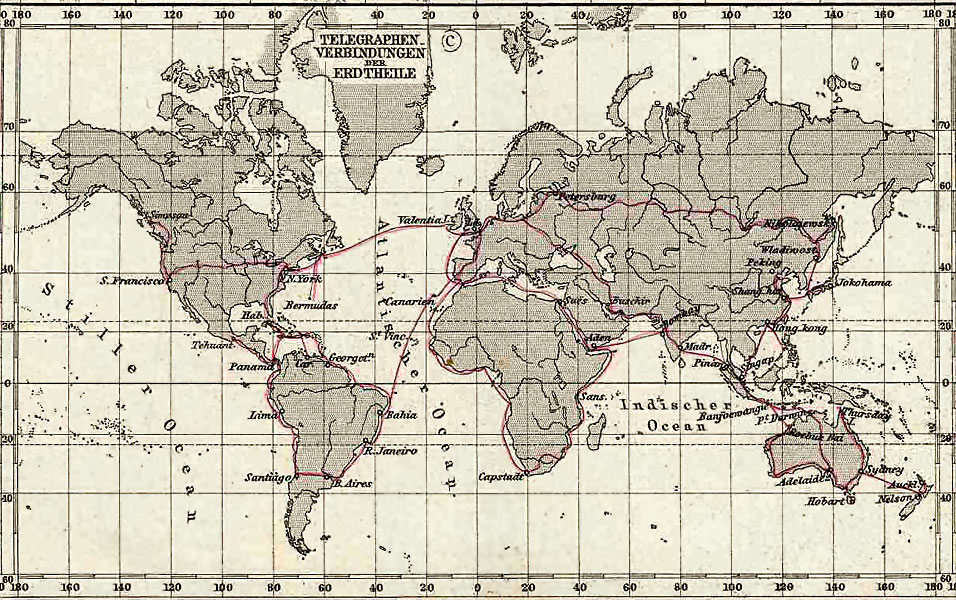
Developed in the first half of the 19th century, electrical telegraphy replaced earlier optical signalling systems. Inventors and teams in different countries produced competing systems: needle and dial telegraphs in Europe and pulse-based systems in the United States. Samuel Morse and his collaborators popularized a simple on/off code (Morse code) and demonstrated long‑distance service in the 1840s, including the famous 1844 message sent over a line between Washington and Baltimore. International connections and undersea cables followed later in the century, making near‑instantaneous intercontinental communication possible.
Uses and societal impact
The telegraph transformed commerce, journalism, finance, railways and diplomacy by enabling rapid coordination and the immediate transmission of news. Railways used telegraphy to manage traffic and reduce collisions; news agencies transmitted reports across continents; markets synchronized prices. Militaries also adopted telegraphs for command and control. The technology laid the groundwork for electrical communication networks and influenced later inventions such as the telephone and radio.
Variations, codes and legacy
Different telegraph systems used different codes and mechanisms. Morse code became a de facto international standard for many services, though regional variants existed. Alternatives included needle telegraphs, printing telegraphs (which produced typed messages), and multiplexing techniques that increased line capacity. By the 20th century, telegraph networks were gradually superseded by voice telephony, radio and digital networks, but many conventions and practices (codes, routing concepts and networked switching) persisted into modern communications.
For further technical detail and historical accounts, see additional resources.
Questions and answers
Q: What is an electrical telegraph?
A: An electrical telegraph is a telegraph that uses electric signals.
Q: How does an electrical telegraph work?
A: An operator makes and breaks an electrical contact with a telegraph key which produces an audible signal at the other end. The signal is produced by a telegraph sounder and then interpreted and transcribed by a human operator.
Q: What kind of signalling system does the term electrical telegraph refer to?
A: The term electrical telegraph refers to a signalling system where an operator makes and breaks an electrical contact with a telegraph key.
Q: What produces an audible signal in an electrical telegraph?
A: The audible signal in an electrical telegraph is produced by a telegraph sounder.
Q: How is a signal transcribed in an electrical telegraph?
A: After the signal is produced by the telegraph sounder, it is interpreted and transcribed by a human operator.
Q: Who operates an electrical telegraph?
A: An operator is responsible for sending and receiving signals in an electrical telegraph.
Q: What is the main function of a telegraph key in an electrical telegraph?
A: The main function of a telegraph key in an electrical telegraph is to make and break an electrical contact, which produces the signal that will be sent to the other end.
Related articles
Author
AlegsaOnline.com Electrical telegraph: technology, history, and impact Leandro Alegsa
URL: https://en.alegsaonline.com/art/30705