
Durham Cathedral
Norman-era cathedral in Durham, England, founded AD 1093. Renowned for its Romanesque architecture, shrine of St Cuthbert, medieval relics, crypt and cloisters, UNESCO World Heritage designation and active Anglican ministry.
The Cathedral Church of Christ, Blessed Mary the Virgin and St Cuthbert of Durham, commonly called Durham Cathedral, is an historic Anglican cathedral in the city of Durham, England. It stands on a rocky promontory above the River Wear and has been the seat of the Bishop of Durham since the medieval bishopric was established. Construction of the present building began in AD 1093 and the cathedral is celebrated as one of the finest surviving examples of Norman (Romanesque) architecture. Its national and international significance is recognised by its inclusion alongside Durham Castle on the UNESCO World Heritage list.
Image gallery
10 Images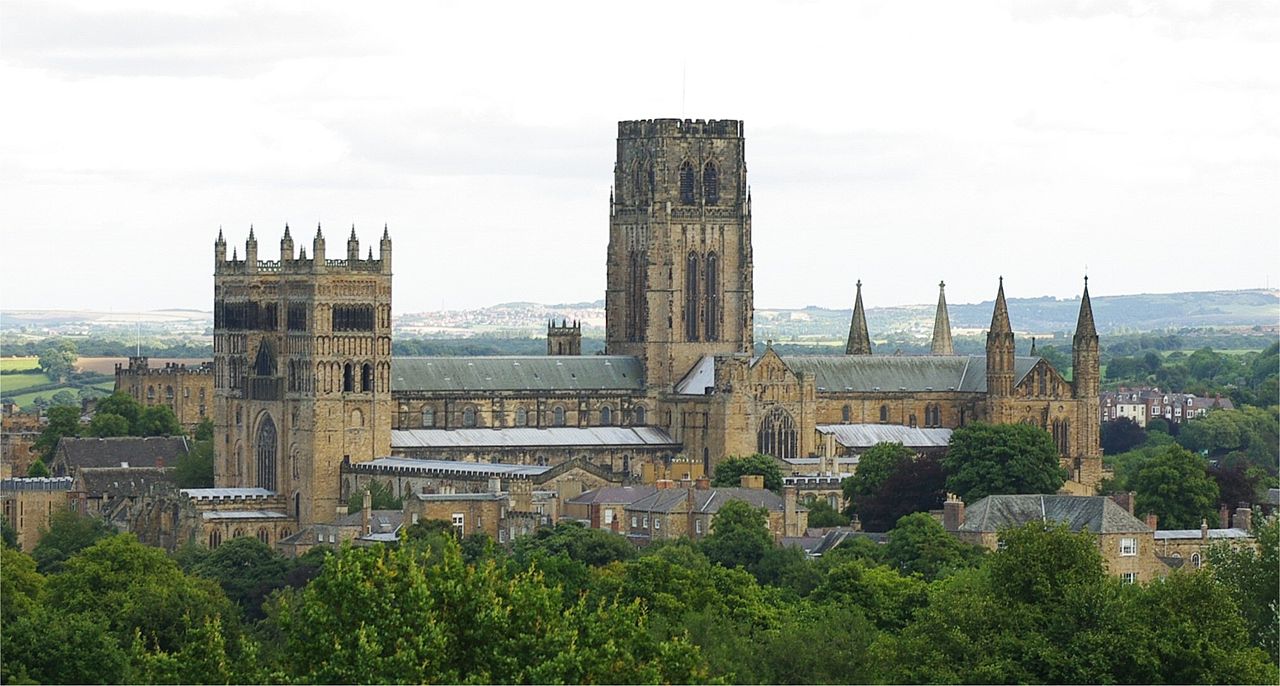


History and origins
The cathedral replaced an earlier tenth‑century church that formed the centre of a monastic foundation created to protect and venerate the relics of Saint Cuthbert of Lindisfarne. Originally staffed by a Benedictine community, the cathedral served both as a monastic priory and the diocesan church. Over centuries it developed as a religious, administrative and cultural centre of the north of England, responding architecturally and liturgically to changing needs while retaining many medieval structures.
Architecture and principal features
Durham is widely admired for its robust Norman massing, round arches and decorative stonework, together with innovations that prefigure Gothic design — notably early use of pointed arches and stone ribbed vaulting. The plan includes a long nave, transepts, choir, an extensive crypt beneath the eastern end, and a prominent central tower rising to about 217 feet (66 m) which dominates the city skyline. The cathedral precincts contain cloisters, chapters and ancillary monastic buildings that together illustrate the scale of the medieval complex.
Relics, burials and artistic legacy
From the Middle Ages Durham has been a centre of pilgrimage because it houses the shrine of St Cuthbert and other important relics traditionally associated with Northumbrian saints, including the head of St Oswald and remains attributed to the Venerable Bede. The cathedral’s crypt and treasury preserve objects and tombs that reflect its long history as a religious repository and burial place for bishops and notable figures.
Use, conservation and cultural role
Today Durham Cathedral remains an active place of worship and a working diocesan cathedral with regular services, a choir and community outreach. It is also a major visitor attraction and an important subject for conservation, scholarship and music. The cathedral and its cloisters have been used as locations for film and television, bringing its architecture to a wider audience while prompting careful management to balance tourism and liturgical life.
Further information
- Official cathedral information
- City of Durham resources
- England tourism pages
- Anglican Communion reference
- Founding and early history
- Norman architecture overview
- UNESCO World Heritage details
- World Heritage listing
- St Cuthbert and the shrine
- Lindisfarne and regional saints
- Relics and treasury
- St Oswald and early medieval history
- River Wear and site geography
Questions and answers
Q: What is Durham Cathedral?
A: Durham Cathedral is a cathedral located in the city of Durham, England, which is the seat of the Anglican Bishop of Durham.
Q: When was the present cathedral built?
A: The present cathedral was founded in AD 1093.
Q: What is the significance of Durham Cathedral?
A: Durham Cathedral is known as one of the finest examples of Norman architecture and is a UNESCO World Heritage Site.
Q: What was the 10th century "White Church" built for?
A: The 10th century "White Church" was built as part of a monastic foundation to house the shrine of Saint Cuthbert of Lindisfarne.
Q: What are the treasures of Durham Cathedral?
A: The treasures of Durham Cathedral include relics of St Cuthbert, the head of St Oswald of Northumbria, and the remains of the Venerable Bede.
Q: Where is Durham Cathedral located?
A: Durham Cathedral occupies a strategic position on a promontory high above the River Wear.
Q: Who are some famous people interred in Durham Cathedral and in the surrounding grounds?
A: Some famous people interred in Durham Cathedral and in the surrounding grounds include Bishop Alfred Tucker.
Related articles
Author
AlegsaOnline.com Durham Cathedral Leandro Alegsa
URL: https://en.alegsaonline.com/art/29308
Sources
- whc.unesco.org : "Durham Castle and Cathedral"
- wdl.org : "In Memoriam: Bishop Alfred Robert Tucker, June 19, 1914"