
Douglas MacArthur
American general (1880–1964) who led U.S. and allied forces in the Pacific in World War II, directed the occupation of Japan, and commanded UN forces early in the Korean War.
Overview
Douglas MacArthur (January 26, 1880 – April 5, 1964) was one of the most prominent American military leaders of the 20th century. A career army officer, he played leading roles in three major conflicts: World War I, World War II, and the Korean War. His long service combined battlefield command, strategic planning, and high-profile political interaction. He remains a controversial figure: celebrated for bold operations and nation-building in Japan, yet criticized for episodes of strategic failure and for clashing with civilian leadership.
Image gallery
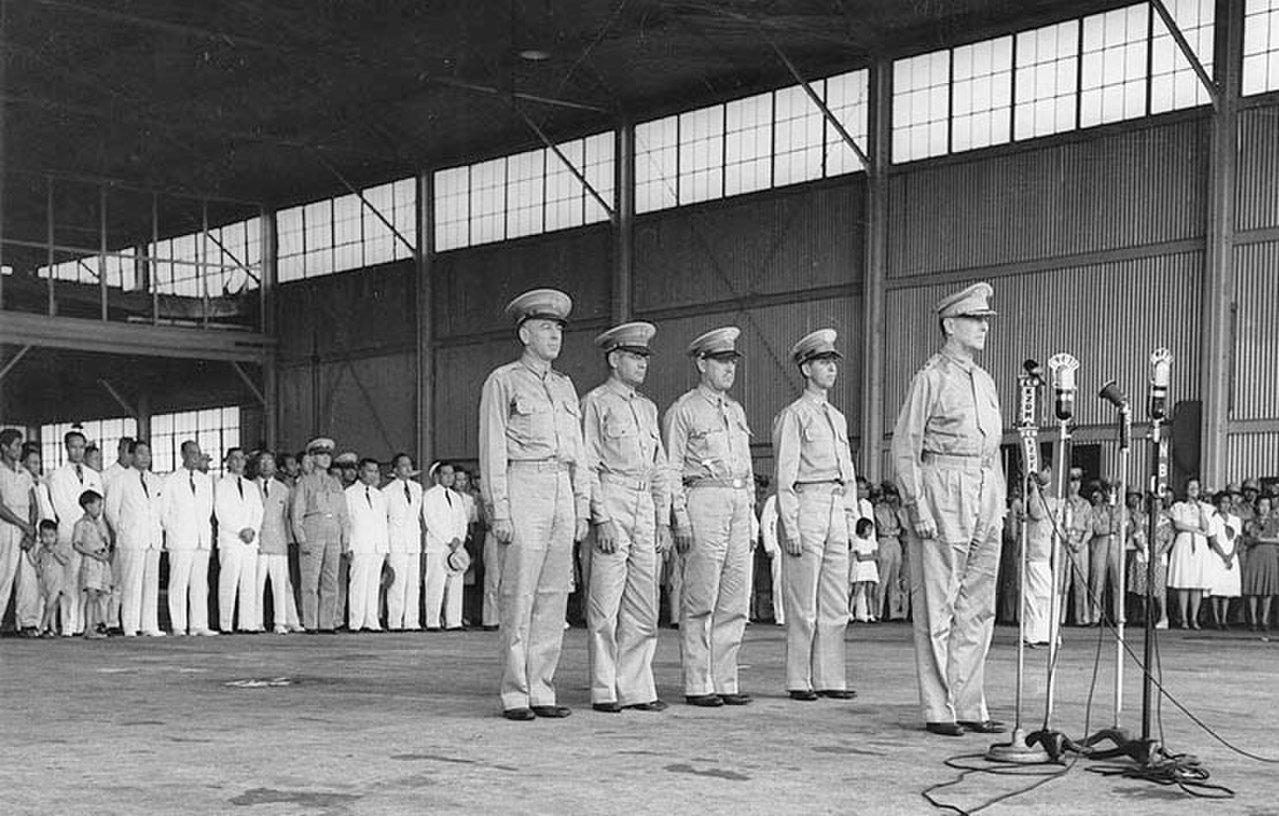
10 Images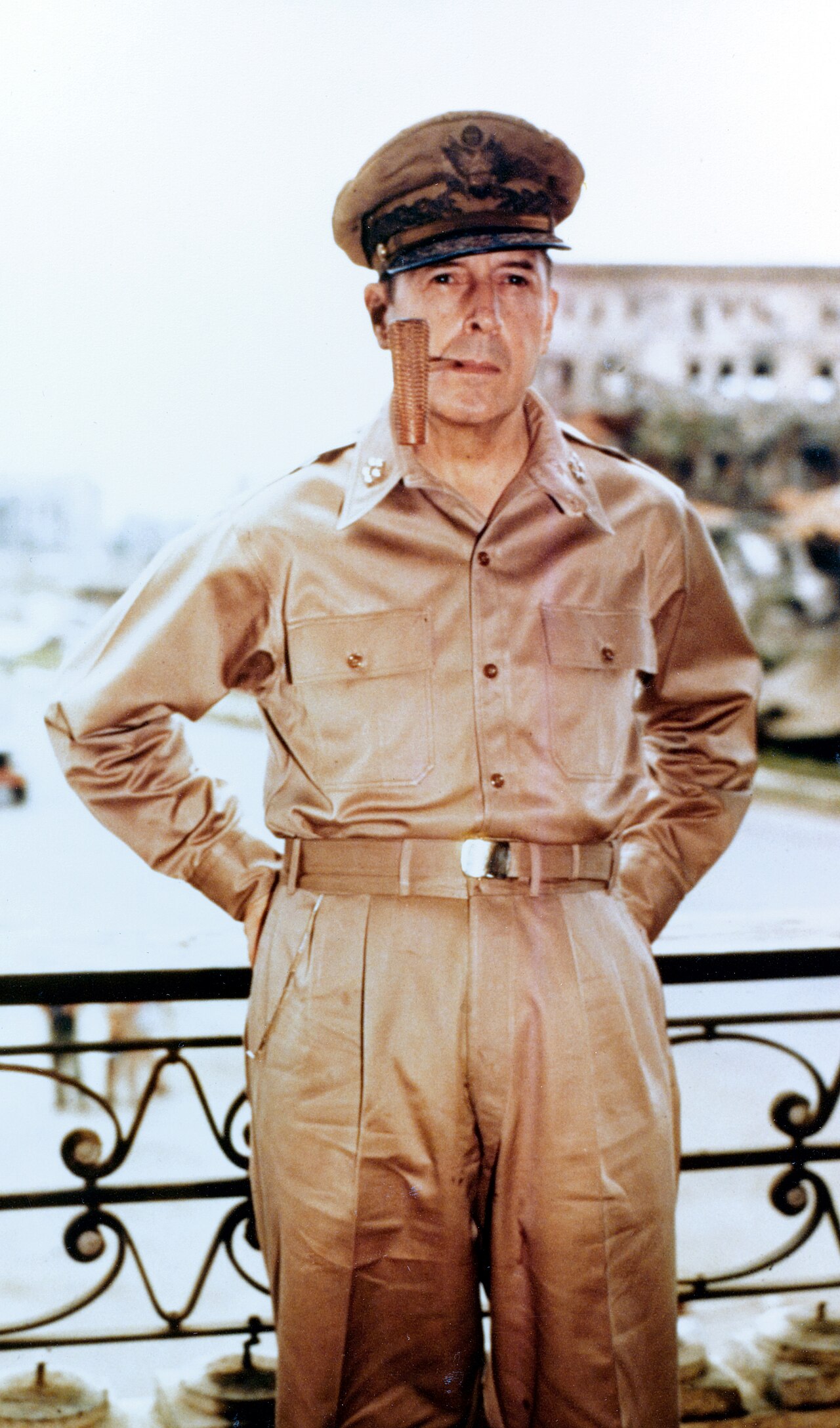



Early life and military formation
Born in Little Rock, Arkansas, MacArthur was raised in a military family and trained as an officer at the United States Military Academy. Over decades he developed a reputation for energetic leadership and a strong sense of personal duty. His early career included service in the First World War and interwar assignments that combined staff work, teaching, and command.
World War II and the Pacific
At the outbreak of the Pacific War, MacArthur was appointed Commander of United States Army forces in the Far East (Far East Command). After the Japanese offensives of late 1941 and early 1942, American and Filipino forces suffered severe setbacks in the Philippines, culminating in the fall of Bataan and Corregidor. MacArthur left the islands and promised, "I shall return," a pledge that symbolized eventual Allied recovery. He later led campaigns that helped liberate the Philippines and oversaw large-scale operations in the Southwest Pacific theater.
Occupation of Japan
Following Japan's surrender, MacArthur served as the Supreme Commander for the Allied Powers and directed the occupation and reconstruction of Japan. Under his authority, the occupation implemented political, economic, and social reforms, guided the drafting of a new constitution, and supervised demilitarization. This role shaped postwar Japanese institutions and is among his most enduring legacies.
Korean War and removal
In 1950 MacArthur was named commander of United Nations forces in Korea. He orchestrated the daring amphibious landing at Inchon, which reversed North Korean advances, but the subsequent push northward led to a Chinese intervention. United Nations and U.S. formations met fierce resistance, including the bitter fighting around the Chosin Reservoir. Differences with civilian leadership over strategy and public statements culminated in his relief by President Harry S. Truman in April 1951. His dismissal sparked wide debate about civil-military relations and the limits of military authority.
Legacy, honors, and notable facts
MacArthur's career combined decisive successes, dramatic retreats, political prominence, and institutional influence. He received numerous military honors, including the Medal of Honor, and remained a polarizing public figure after his dismissal. He delivered a famous farewell address to Congress and later published memoirs that shaped his public image. MacArthur died in Washington, D.C. in 1964.
- Major commands: U.S. forces in the Philippines, Supreme Allied Commander in the Southwest Pacific, Supreme Commander for the Allied Powers in Japan, and UN forces in Korea.
- Notable operations: defense and later liberation of the Philippines; occupation and reform of Japan; Inchon amphibious assault.
- Controversies: strategic defeats and retreats, clashes with civilian leaders, and debates over his public conduct and political ambitions.
- Further reading: Contemporary histories, military studies, and biographies explore his complex influence on 20th-century American and East Asian history. See overviews at Philippine campaign and institutions referenced in United Nations records.
For concise chronologies, campaign maps, and primary documents, reference specialized military histories and institutional archives that cover MacArthur's service from his early academy years through his final retirement.
Related articles
Author
AlegsaOnline.com Douglas MacArthur Leandro Alegsa
URL: https://en.alegsaonline.com/art/28709
Sources
- smithsonianmag.com : "The Redacted Testimony That Fully Explains Why General MacArthur Was Fired"
- history.army.mil : "Douglas MacArthur,"