
Durham Light Infantry
Former county regiment of the British Army (1881–1968), raised in County Durham as a light infantry unit; served in colonial campaigns and both World Wars before amalgamation into The Light Infantry.
The Durham Light Infantry (DLI) was a county infantry regiment of the British Army formed in 1881 and maintained a distinct identity until its amalgamation in 1968. Raised principally from County Durham in northeast England, the regiment was classed as light infantry — troops trained for mobility, skirmishing and rapid tactical response — and retained strong local ties through recruitment and territorial battalions.
Image gallery
10 Images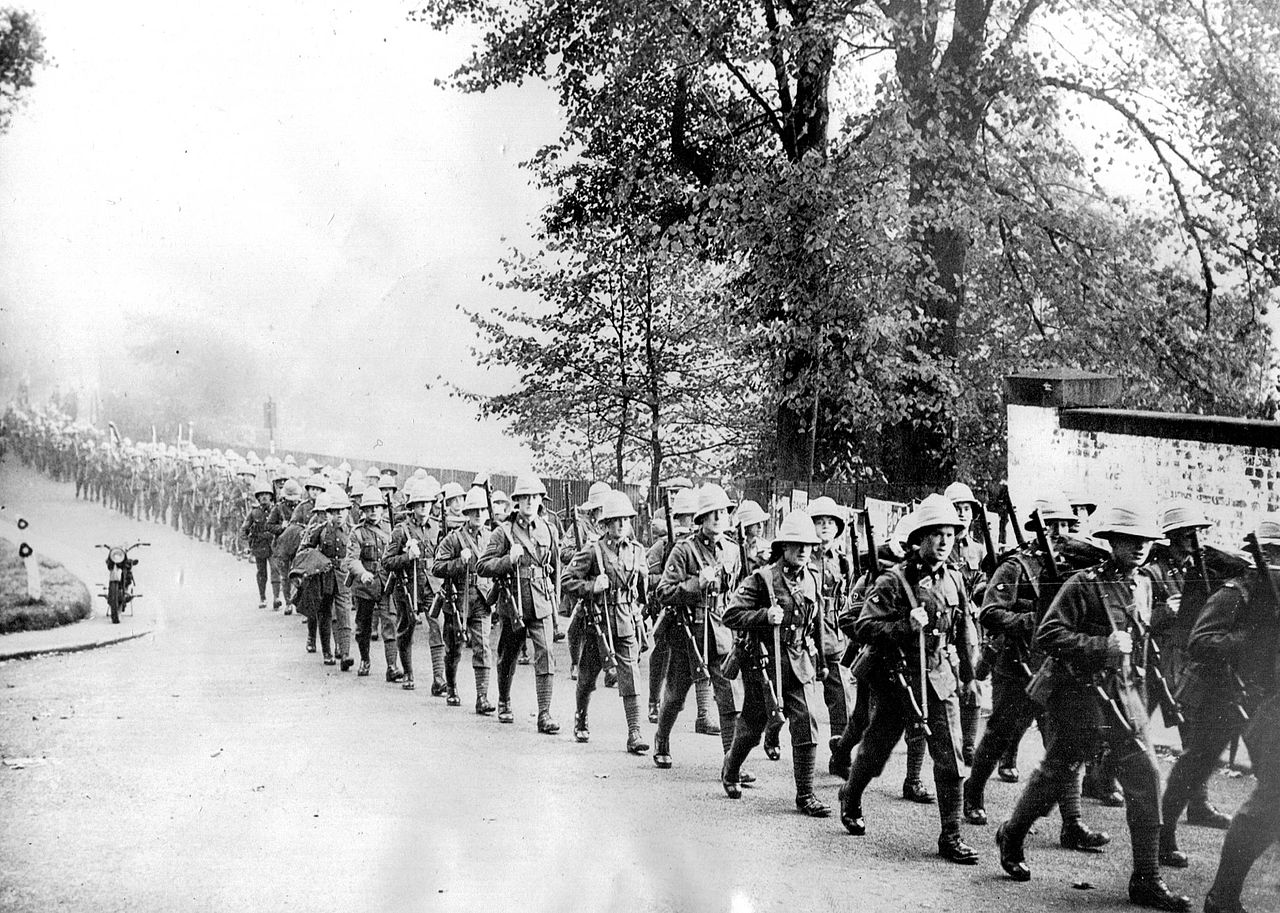




Origins and organisation
The DLI was created under the 1881 reforms that reorganised the infantry of the line by pairing numbered regiments with local counties. It brought together the antecedent battalions of earlier regiments and developed a regimental system that included regular battalions, militia and volunteer/territorial units. The light infantry tradition was emphasised in drill, insignia and tactics; the bugle horn was commonly used as a regimental emblem in keeping with light infantry practice.
Role and characteristics
As light infantry, the DLI emphasized speed, flexibility and marksmanship. Members were expected to perform a range of duties from line fighting to reconnaissance and raiding. The regiment wore distinctive insignia and maintained county connections that fostered a shared identity among soldiers from mining towns, coastal towns and rural districts of Durham.
Service and campaigns
Across its history the regiment served in many theatres of British military operations. In the late 19th and early 20th centuries DLI battalions saw service in colonial conflicts. During the First World War the regiment expanded dramatically, raising numerous service battalions that served on the Western Front and in other theatres, suffering heavy casualties and earning many battle honours. In the Second World War DLI units again fought in multiple campaigns, serving in Europe, North Africa, Italy and beyond as part of Britain’s expeditionary and home defence forces.
Postwar change and legacy
After the Second World War the regiment continued in the regular army and Territorial Army until wider defence reorganisations led to its amalgamation in 1968 with other light infantry regiments to form The Light Infantry. That change ended the DLI as a separate administrative regiment, but its traditions, honours and records are preserved by regimental associations, museums and local memorials. Former DLI battalions and veterans’ groups continue to commemorate the regiment’s service, and collections of uniforms, medals and diaries remain important resources for military and local history.
Notable aspects
- Strong county identity and local recruitment from County Durham.
- Light infantry traditions reflected in tactics and insignia.
- Large expansion in wartime with multiple service battalions in 1914–1918 and 1939–1945.
- Amalgamated into The Light Infantry in 1968; legacy maintained through museums and associations.
Today the Durham Light Infantry is remembered for its regional heritage, the service of its soldiers in major conflicts of the 19th and 20th centuries, and its contribution to the development of light infantry practice within the British Army.
Related articles
Author
AlegsaOnline.com Durham Light Infantry Leandro Alegsa
URL: https://en.alegsaonline.com/art/29310