
Diplura: two‑pronged bristletails — biology, diversity and ecology
Diplura are a small order of primitive, wingless hexapods known as two‑pronged bristletails. This article summarizes their anatomy, lifestyle, diversity, and role in soil ecosystems.
Overview
Diplura are a distinct biological order of small, wingless arthropods that belong to the broader assemblage of hexapods. They are traditionally grouped with other primitive hexapods such as insects, springtails and Protura. Because of their two tail appendages, they are commonly referred to as "two‑pronged bristletails." Roughly 800 species have been described worldwide, with regional records including about 70 species in North America, around 12 species recorded in Great Britain, and two species reported from Australia.
Image gallery
3 Images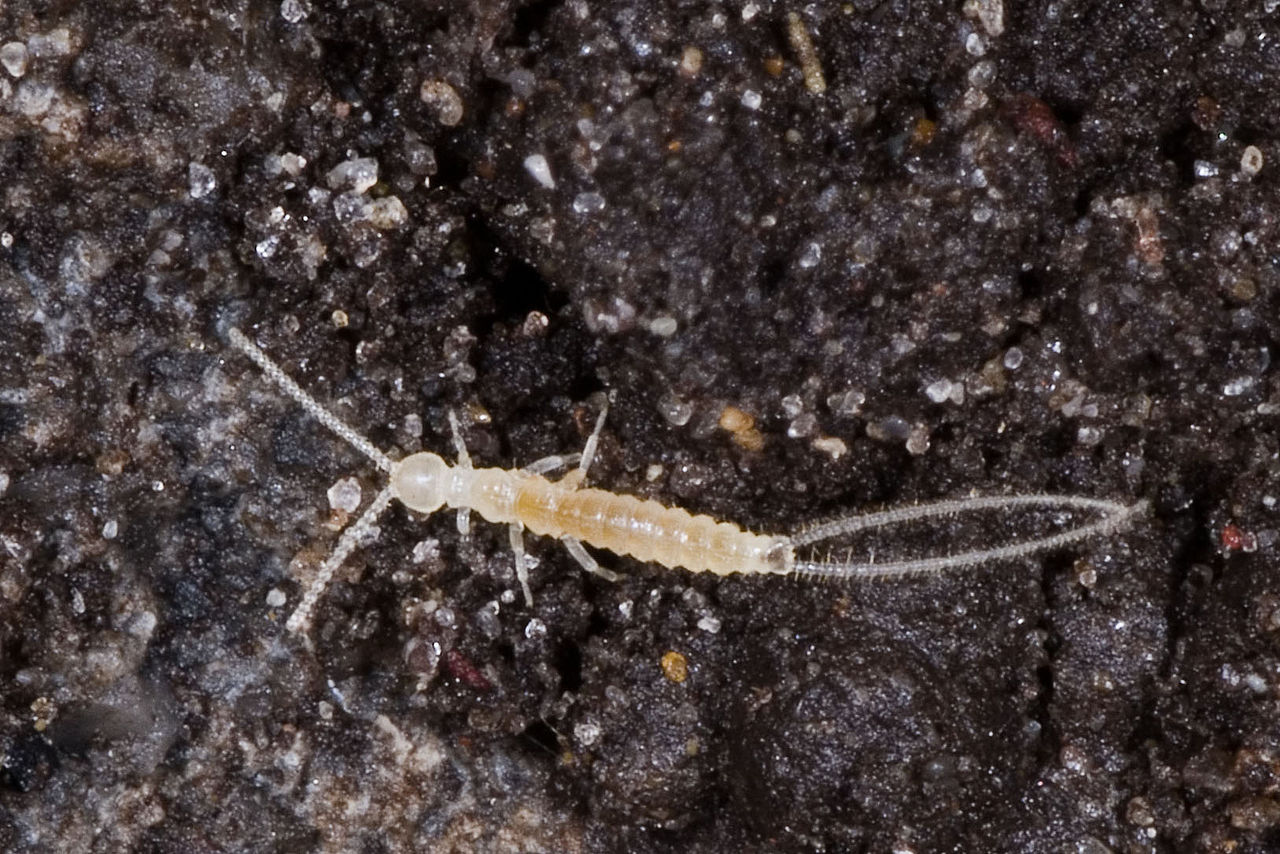


Key characteristics
Diplurans are small (typically a few millimeters to a couple of centimeters), elongate, and usually pale. They are wingless and lack compound eyes in most species, although some bear simple ocelli. Their mouthparts are enclosed within the head (entognathous), and they retain long, segmented antennae. The most diagnostic feature is the pair of terminal cerci: in some families these cerci are long and filamentous, in others they are stout and pincer‑like.
Typical anatomy and life cycle
- Body plan: six legs, segmented abdomen, and paired cerci at the posterior.
- Sensory organs: elongate antennae act as primary tactile sensors; vision is reduced or absent.
- Development: ametabolous — juveniles resemble adults and continue to molt after maturity in many species.
Habitat, diet and behaviour
Diplurans are primarily soil and litter dwellers found in moist microhabitats such as leaf litter, under stones, rotting wood and in the upper soil layers. Diet varies by family and species: some are predators of tiny invertebrates, others scavenge or feed on fungal hyphae and decomposing plant material. Many are nocturnal and avoid dry or exposed conditions, making them important but inconspicuous components of the soil fauna.
Diversity, classification and notable groups
The order contains several families; two well‑known contrasts are the campodeids, which have long, threadlike cerci, and the japygids, which bear forcep‑like cerci used to seize prey. Taxonomic work on Diplura has been incremental because their cryptic habits and small size make them less sampled than many insects, yet they provide useful insights into early hexapod evolution and soil biodiversity.
Ecological importance and distinctions
As part of the soil community, diplurans contribute to decomposition, nutrient cycling and the regulation of microarthropod populations. They are often confused with springtails or primitive insects, but can be distinguished by their two terminal cerci and entognathous mouthparts; by contrast, Protura lack antennae and use their forelegs for sensory tasks. Diplurans are not harmful to humans and are mostly of interest to ecologists and taxonomists studying belowground ecosystems.
Research and observing tips
Because diplurans are secretive, they are typically collected by sifting leaf litter, extracting soil samples, or using Berlese/Tullgren funnels in field studies. Observations require careful handling and magnification. Continued sampling worldwide will refine estimates of species richness and distribution, and improve understanding of their roles in soil communities.
Related articles
Author
AlegsaOnline.com Diplura: two‑pronged bristletails — biology, diversity and ecology Leandro Alegsa
URL: https://en.alegsaonline.com/art/27569