
DNA polymerase: function, mechanism, diversity, and laboratory uses
DNA polymerases are enzymes that synthesize DNA strands, ensure genomic fidelity, participate in repair and recombination, and underpin techniques such as PCR and sequencing.
Overview
DNA polymerases are biological enzymes that assemble DNA by adding deoxyribonucleotide units to a growing strand. They operate by reading an existing DNA template and creating a complementary strand, which is central to DNA replication and the faithful transmission of genetic information. In cells, polymerases typically function as part of large protein complexes and cooperate to duplicate double-stranded DNA into two copies.
Image gallery
5 Images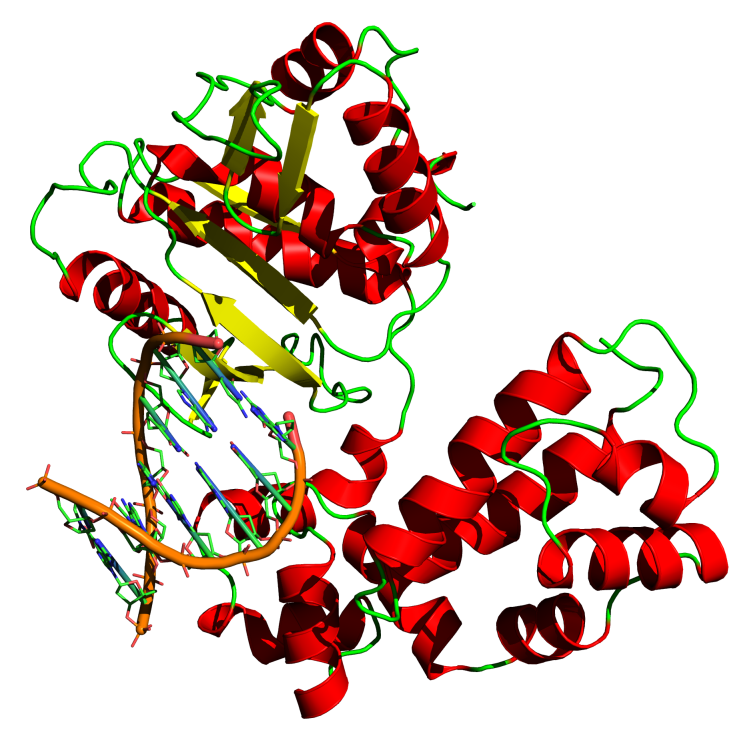

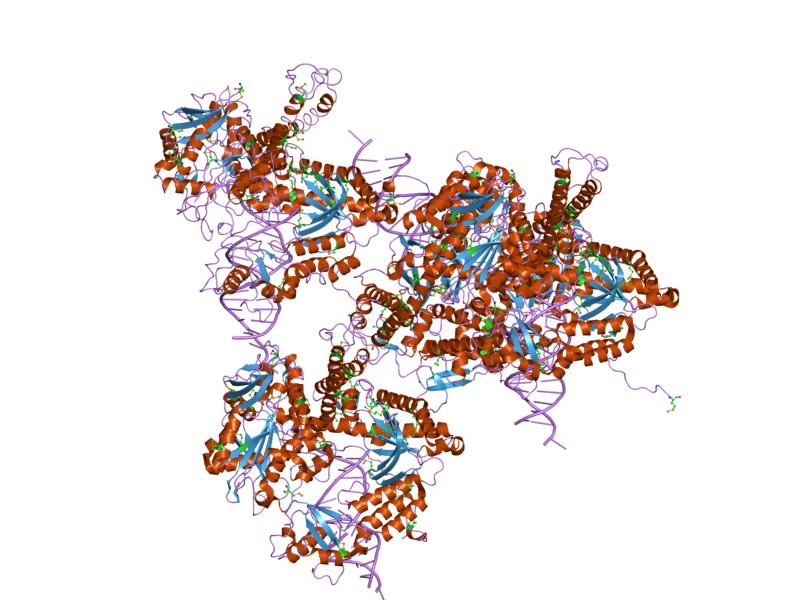


How they work
All DNA polymerases synthesize DNA in the 5'→3' direction: they add nucleotides onto a free 3'-OH group. Because of this requirement, synthesis cannot begin de novo and needs a primer — a short nucleic acid with a free 3' end — to provide the initial 3'-OH. The enzyme selects nucleotides that are complementary to the template strand and catalyzes formation of the phosphodiester bond that joins them.
Fidelity and proofreading
Accuracy of DNA synthesis is achieved by three complementary mechanisms: correct base selection, 3'→5' exonucleolytic proofreading performed by many polymerases, and post‑replicative mismatch repair. Some polymerases have intrinsic proofreading activity and can remove incorrectly incorporated bases before continuing. Others lack proofreading and are more error-prone; these low-fidelity enzymes can be useful biologically for processes that require diversity or experimentally for mutagenesis.
Types and cellular roles
Different families of DNA polymerases specialize for distinct tasks. In bacteria there are several named enzymes that collaborate during replication and repair, while eukaryotes use multiple polymerases (for example those involved in replication of leading and lagging strands, and others dedicated to repair). Polymerases also participate in DNA repair pathways, genetic recombination, and adaptive immune processes where targeted mutation and repair generate antibody diversity. Related enzymes called reverse transcriptases synthesize DNA from RNA templates in retroelements and some viruses.
Historical notes and classification
The first DNA polymerase was identified in the mid‑20th century, which helped reveal the biochemical basis of DNA replication and earned broad recognition for the investigators involved. Polymerases are often grouped into families based on sequence and structural features; these groups correlate with functional properties such as processivity, fidelity, and substrate preference.
Applications in research and medicine
DNA polymerases are indispensable tools in molecular biology. Thermostable polymerases enable the polymerase chain reaction (PCR), a method for amplifying specific DNA fragments. Specialized polymerases are designed for high fidelity in cloning and sequencing, for tolerance to damaged templates in forensic samples, or for adding or modifying ends during library preparation for next‑generation sequencing. Common laboratory uses include PCR, PCR-based diagnostics, molecular biology workflows, molecular cloning, and DNA sequencing.
- Key practical properties: fidelity, processivity, thermostability, and tolerance for inhibitors.
- Examples: bacterial and eukaryotic replicative polymerases, low‑fidelity translesion polymerases, thermostable polymerases used in PCR such as those derived from thermophilic organisms.
Important distinctions and notes
Not all polymerases are interchangeable: an enzyme suitable for high‑temperature PCR may lack proofreading and produce more errors, while a high‑fidelity polymerase may be less tolerant of inhibitors or may not work well in long amplicon PCR. In cells, polymerases work with accessory proteins such as sliding clamps, helicases, and primases to achieve rapid, coordinated replication. For further technical background and protocols, consult specialized resources and reviews (nucleotide basics, replication mechanisms, repair pathways).
Polymerases remain an active area of research for improving accuracy, speed, and robustness in both biological understanding and biotechnological application. For historical context and more on enzyme discovery, see accounts of early biochemical research and the identification of the first cellular DNA polymerases (reverse transcription relations), their role in immunity (antibody diversification), and their adoption into routine laboratory practice (enzyme technology).
Additional practical and educational materials can be found through technical manuals and comprehensive reviews that explain enzyme selection, reaction setup, and troubleshooting for experiments that rely on DNA polymerase activity (molecular biology, PCR, cloning). For authoritative online references and protocols use curated scientific resources and databases rather than unverified sources.
Related articles
Author
AlegsaOnline.com DNA polymerase: function, mechanism, diversity, and laboratory uses Leandro Alegsa
URL: https://en.alegsaonline.com/art/28074