
DNA damage theory of ageing
Theory proposing that accumulation of unrepaired DNA damage drives physiological ageing; discusses mechanisms, evidence, mitochondrial vs nuclear roles, repair pathways and implications.
The DNA damage theory of ageing proposes that progressive accumulation of DNA lesions within cells leads to the functional decline observed in ageing tissues. The idea links molecular damage to organismal ageing by suggesting that when damage outpaces repair, cellular processes deteriorate. For a concise introduction see ageing resources; basic information about the chemical substrate is available via DNA.
Image gallery
1 Image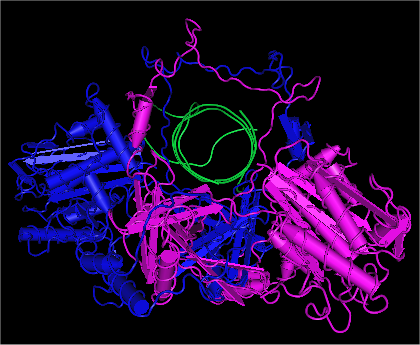
Processes and types of damage
Cells encounter a variety of DNA insults: single- and double-strand breaks, base modifications, crosslinks, and replication errors. Sources include endogenous reactive oxygen species, replication stress, and environmental agents. Damage can occur in both the nuclear genome and the mitochondrial genome; this article emphasizes nuclear DNA while noting important mitochondrial contributions and the role of the cell nucleus in coordinating responses.
Repair pathways and limitations
Multiple repair systems counter DNA damage: base excision repair, nucleotide excision repair, mismatch repair, and double-strand break repair (non-homologous end joining and homologous recombination). These pathways maintain genomic stability, but efficiency varies by tissue, cell type and age. Some lesions are repaired imperfectly, or persist in non-dividing cells, producing mutations, chromosomal rearrangements, or persistent signaling that alters cell function.
Evidence and experimental findings
Animal and cellular studies support a causal role for DNA damage in ageing: organisms with defects in repair genes often show accelerated ageing features, while enhanced maintenance can extend healthy function in model systems. However, ageing is multifactorial; DNA damage interacts with metabolic, proteostatic and inflammatory processes rather than acting alone.
Consequences, interventions and significance
- Consequences: accumulated DNA damage can drive cellular senescence, apoptosis, stem cell exhaustion and altered gene expression.
- Interventions under study: boosting repair capacity, reducing damage (e.g., antioxidants or lifestyle changes), and clearing damaged cells are active research areas.
- Implications: understanding DNA damage helps explain cancer risk, degenerative disease and the trade-offs between maintenance and reproduction.
Distinguishing this theory from others is important: it complements ideas like telomere shortening, proteostasis loss and metabolic theories by offering a molecular mechanism for accumulation of functional defects. For further reading and entry points into the literature, see linked overview pages above and specialized reviews at ageing and DNA resources.
Questions and answers
Q: What is the DNA damage theory of ageing?
A: The DNA damage theory of ageing is the understanding that ageing occurs as a result of damage to DNA in an individual.
Q: What accumulates, even though there are cell mechanisms that repair most of the damage?
A: Damage accumulates (builds up) in an individual's DNA.
Q: Is it only mitochondrial DNA that may have DNA damage?
A: No, both mitochondrial and cell nucleus DNA may have DNA damage.
Q: Which type of DNA is the main subject of analysis regarding the DNA damage theory of ageing?
A: Nuclear DNA is the main subject of analysis.
Q: What is the result of DNA damage over time?
A: The result of DNA damage over time is ageing.
Q: Does the DNA damage theory of ageing propose any other cause of ageing?
A: The DNA damage theory of ageing suggests that ageing primarily occurs due to DNA damage.
Q: Are there any mechanisms that repair DNA damage?
A: Yes, there are cell mechanisms that repair most of the DNA damage.
Related articles
Author
AlegsaOnline.com DNA damage theory of ageing Leandro Alegsa
URL: https://en.alegsaonline.com/art/28071
Sources
- benbest.com : "Nuclear DNA damage as a direct cause of aging"
- doi.org : 10.1089/rej.2009.0847
- pubmed.ncbi.nlm.nih.gov : 19594328
- doi.org : 10.1016/j.mrrev.2011.05.001
- pubmed.ncbi.nlm.nih.gov : 21600302
- nar.oxfordjournals.org : "DNA replication stress, genome instability and aging"
- doi.org : 10.1093/nar/gkm1059
- ncbi.nlm.nih.gov : 2190710
- pubmed.ncbi.nlm.nih.gov : 18055498