
Springtail (Collembola): small soil arthropods with a springing tail
Springtails (Collembola) are tiny wingless hexapods that live in moist soils and leaf litter. They feed on fungi and detritus, play key roles in decomposition, and are distinct from insects.
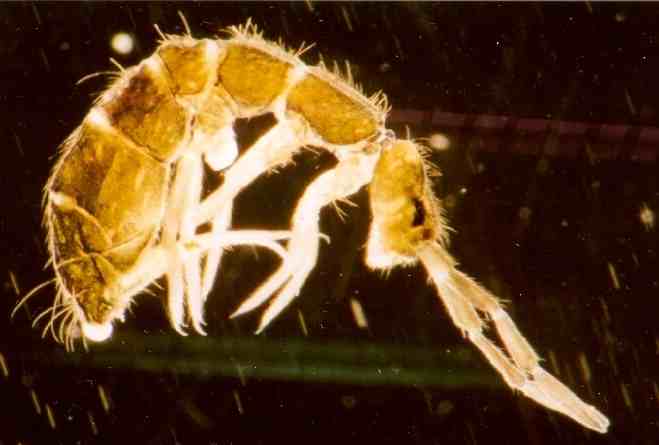
Springtails are minute, wingless arthropods belonging to the class Collembola. Typically only 0.2–6 mm long, they are among the most abundant soil animals on Earth. Their common name refers to a forked appendage called the furcula that folds beneath the abdomen and can snap downward, propelling the animal into the air.
Image gallery
10 Images


Key characteristics
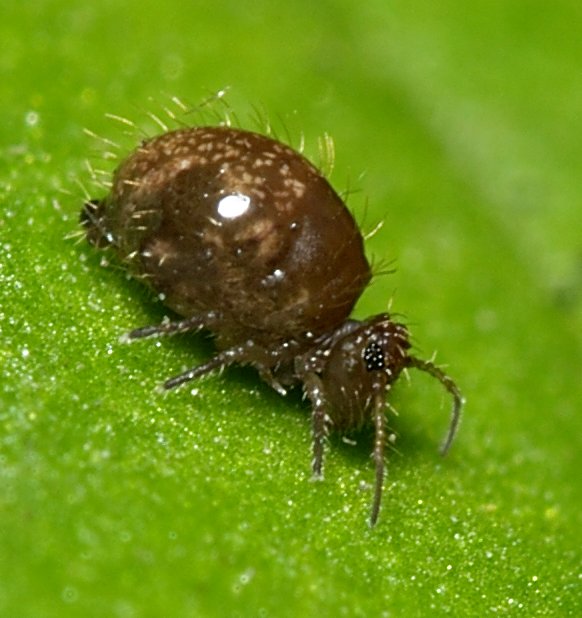
- Body form: soft, elongated or globular bodies with six legs (hexapods) but lacking insect features such as wings and compound eyes in many species.
- Jumping organ: the furcula and the ventral tube (collophore) are distinctive—used respectively for jumping and moisture regulation.
- Size & color: usually tiny, colors range from white and gray to blue and black; some species are visible on snow surfaces.
Although springtails have six legs and were once grouped with primitive insects, modern classification places them in a separate lineage of hexapods. For a concise taxonomic note see classification and terminology. They do not develop wings at any stage.
Habitat and ecology
Springtails thrive in damp microhabitats—soil, leaf litter, compost, under bark and in mosses—because they require humidity to avoid desiccation. Their moisture needs are well documented: moisture and microhabitat requirements. They are cosmopolitan and can be abundant in forests, grasslands, agricultural fields and urban gardens.
Diet and ecological role
Most springtails feed on fungal hyphae, spores, decaying plant material and pollen; some graze on algae or are predatory on smaller microfauna. Their feeding accelerates decomposition and nutrient cycling, helps regulate fungal populations, and contributes to soil structure by fragmenting organic matter. Typical food items include spores and pollen as noted in sources about dietary components.
Reproduction varies among species: many lay eggs in the soil or in crevices, and development may involve several molts. Some species show direct development while others have more complex life cycles; generation times depend on temperature and moisture.
Interactions with people and notable facts
- Agriculture & horticulture: springtails are usually beneficial decomposers, but extremely high populations in greenhouse or nursery media can damage seedlings or root hairs.
- Snow fleas: a few species are visible on snow surfaces in winter and are colloquially called snow fleas because of their dark color and jumping behavior.
- Research & indicators: because of their sensitivity to moisture and soil conditions, springtails are used as indicators of soil health and in ecotoxicology studies.
Although tiny and often overlooked, springtails are ecologically significant, abundant worldwide, and exhibit several anatomical and behavioral adaptations—most famously the furcula—that distinguish them from true insects.
Related articles
Author
AlegsaOnline.com Springtail (Collembola): small soil arthropods with a springing tail Leandro Alegsa
URL: https://en.alegsaonline.com/art/92884
Sources
- eurekamag.com : "Damage to potato foliage by Sminthurus viridis (L.)"
- doi.org : 10.1111/j.1365-3059.1983.tb02864.x