
Hexapoda — six-legged arthropods and their major groups
Hexapoda is the arthropod subphylum defined by three pairs of legs. It includes the true insects and several small, wingless lineages; this entry covers anatomy, major groups, taxonomy debates, and ecological roles.
Overview
Hexapoda (literally "six feet") is a major grouping of arthropods whose members characteristically bear three pairs of legs attached to a thorax. The clade traditionally includes the class Insecta and several much smaller, wingless lineages often grouped as the Entognatha. Together these animals occupy nearly every terrestrial habitat and represent the most diverse assemblage of animals on Earth. For context about arthropods as a whole, see arthropods.
Image gallery
5 Images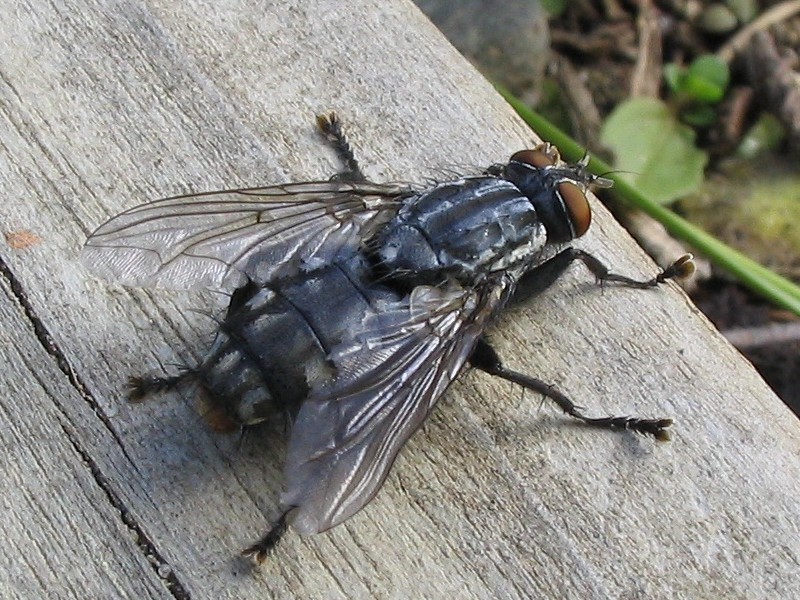


Anatomy and key characteristics
Hexapods share a basic body plan divided into head, thorax and abdomen. The thorax bears three pairs of walking legs, a defining trait emphasized by the name Hexapoda; readers can find a brief note on that body region at thorax. Most hexapods also have a single pair of antennae and a chitinous exoskeleton. True insects commonly possess compound eyes, distinct mouthparts and, in many lineages, wings; many of the smaller hexapod groups lack wings entirely. The presence of three pairs of legs is what distinguishes these animals from other multi-legged arthropods — compare millipedes and centipedes — and more generally from groups with more than three leg pairs; see a basic discussion of legs at legs.
Major groups within Hexapoda
The subphylum traditionally comprises two broad assemblages: the insects and the Entognatha. Entognatha is a small grouping of wingless, soft-bodied orders whose mouthparts are recessed within the head (entognathous). The principal entognathous orders are:
- Collembola (springtails), minute soil and leaf-litter animals important in decomposition.
- Protura, tiny blind soil-dwelling hexapods with simple body plans; see Protura.
- Diplura, small, eyeless animals with paired cerci at the rear; see Diplura.
The insects (Insecta) are by far the largest component, including dozens of orders from beetles to butterflies to flies, many of which developed wings and specialized life cycles.
Classification and taxonomic debate
Historically all six-legged arthropods were treated together as insects, but subsequent research revealed differences suggesting mixed evolutionary origins. Some analyses recover Hexapoda as monophyletic (a single lineage), while others indicate the wingless entognathous groups and the true insects may not form a single cohesive clade. As a result, taxonomists sometimes present alternative arrangements: elevating Insecta in rank and treating the minor groups separately, or retaining Hexapoda but recognizing its internal complexity. When relationships are unclear, taxa may be labelled incertae sedis in broader classification schemes. For a synthesis of the entognath/insect distinction see Entognatha.
Ecological roles, uses and human significance
Hexapods perform many ecological functions. Insects pollinate crops and wild plants, recycle nutrients as detritivores, and form essential links in food webs. The smaller entognathans contribute to soil structure and decomposition. Conversely, some hexapods are agricultural pests or disease vectors, giving them major economic and public-health relevance. Because of their diversity and rapid life cycles, insects are also widely used in research on evolution, behavior, ecology and genetics.
Notable distinctions and facts
Key distinctions within Hexapoda include the contrast between internalized mouthparts (entognathous groups) and exposed mouthparts of most insects, the presence or absence of wings, and variation in developmental patterns (for example, incomplete versus complete metamorphosis). These traits underpin identification, ecological role and evolutionary interpretation. For general further reading and taxonomic overviews see arthropods and more focused summaries on Insecta and the smaller orders such as Protura, Diplura and the collective Entognatha.
Questions and answers
Q: What is the subphylum Hexapoda?
A: The subphylum Hexapoda is the largest group of arthropods that includes the insects and three smaller groups without wings.
Q: What are the three smaller groups included in the subphylum Hexapoda?
A: The three smaller groups included in the subphylum Hexapoda are Collembola, Protura, and Diplura.
Q: Were all these groups once called insects?
A: Yes, all these groups were once called insects.
Q: What does polyphyletic mean in the context of Hexapoda?
A: In the context of Hexapoda, polyphyletic means that the group is composed of the insects and the three smaller groups that evolved independently from each other.
Q: Why are hexapods called so?
A: Hexapods are called so because they have a thorax with three pairs of legs.
Q: What is meant by incertae sedis?
A: Incertae sedis is a Latin term meaning "of uncertain placement" used for a taxonomic group when its broader relationships are unknown or undefined.
Q: How can the Hexapoda be eliminated?
A: The Hexapoda can be eliminated because they are polyphyletic, the Insecta promoted to sub-phylum, and the minor groups become incertae sedis.
Related articles
Author
AlegsaOnline.com Hexapoda — six-legged arthropods and their major groups Leandro Alegsa
URL: https://en.alegsaonline.com/art/44001