
Protura: tiny soil-dwelling hexapods with unique sensory legs
Protura are small, eyeless, wingless hexapods that live in soil and leaf litter. Distinctive for using their forelegs as sensory organs, they have been variously classified and play subtle roles in decomposition and soil ecology.
Overview
Protura are a group of minute, soil-dwelling hexapods sometimes called coneheads because of their tapered heads. They are not true insects in the traditional sense and have been treated at times as an order, a separate class, or placed among the entognathous hexapods. Modern studies emphasize their distinct anatomy and debated evolutionary position within the hexapods; some analyses suggest they diverged early from other lineages, while other work raises questions about hexapod relationships.
Image gallery
4 Images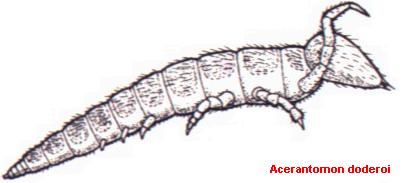


Characteristics
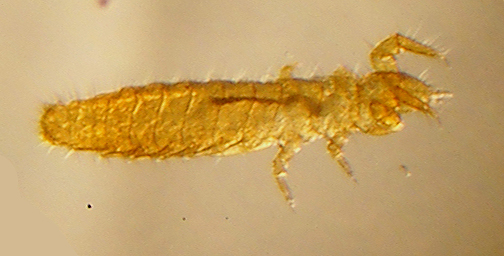
Protura are typically tiny and inconspicuous. Common features include the absence of eyes and wings, a lack of antennae, and mouthparts that are partly enclosed within the head (entognathy). Their forelegs are modified and held forward to function as primary sensory organs, effectively replacing antennae. Development is anamorphic: juveniles hatch with fewer abdominal segments and gain additional segments through successive molts.
Anatomy and life cycle
- Size and form: Adults are usually only a few millimetres long and pale, adapted to life in soil pores and leaf litter.
- Sensory adaptations: The forelegs bear sensory setae and are held aloft like feelers.
- Development: Growth involves molting and segment addition; reproduction and life spans are poorly known for many species.
Ecology and importance
Protura live in moist microhabitats such as topsoil, rotting wood and leaf litter, where they feed on fungal hyphae, detritus and possibly spores. Because of their diet and habitat they contribute modestly to nutrient cycling and the breakdown of organic matter in soils, though they are not as well studied as larger soil fauna.
Classification and evolutionary notes
Historically proturans were grouped with insects, and some older sources treated them as a class. Today they are commonly placed as an order within the non-insect hexapods; see Protura (order) for overview treatments. They have sometimes been associated with Collembola and Diplura among the Entognatha, but their exact position is debated. Molecular and morphological studies have produced differing trees, and some analyses suggest hexapods may be polyphyletic; see discussions of basal relationships at basal hexapod hypotheses.
How they differ from insects and related groups
Key distinctions include the absence of antennae and the use of forelegs as sensory appendages, entognathous mouthparts, and anamorphic development. Because of these and other anatomical traits they are often contrasted with true insects; further reading on insect distinctions is available at insect classification resources. For historical perspectives on their rank as a separate class, consult historical classifications.
Although small and rarely seen, proturans are an interesting example of the diversity of hexapod life and of how tiny soil organisms can challenge our ideas about classification and evolution.
Related articles
Author
AlegsaOnline.com Protura: tiny soil-dwelling hexapods with unique sensory legs Leandro Alegsa
URL: https://en.alegsaonline.com/art/79554