
Diabase (dolerite, microgabbro): composition, formation, and uses
Diabase is a fine- to medium-grained mafic intrusive rock (dolerite/microgabbro) rich in plagioclase and pyroxene, forming dikes and sills; used as crushed stone and dimension stone.
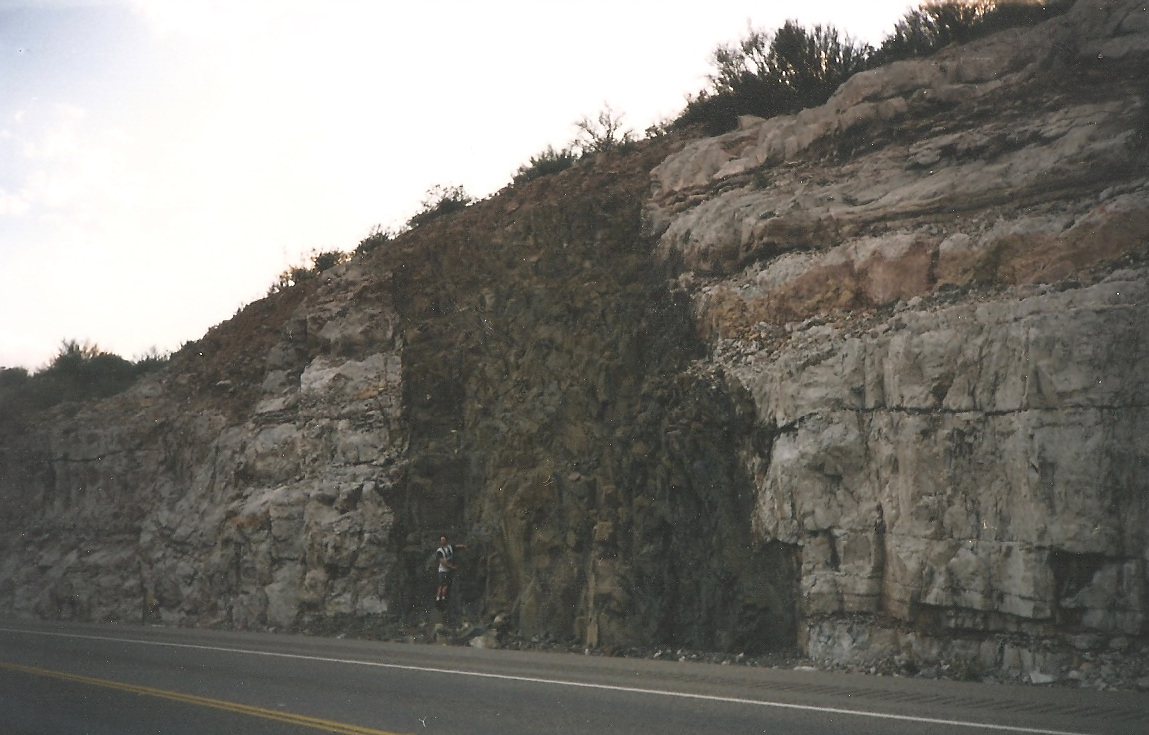
Diabase (also called dolerite or microgabbro) is a mafic intrusive igneous rock commonly found as shallow sills and dikes. It typically appears dark gray to black, occasionally showing bluish iridescence where plagioclase phenocrysts are present. As an igneous rock, diabase records magmas that cooled moderately quickly beneath the surface, producing a fine- to medium-grained texture that lies between basalt and gabbro.
Image gallery
6 Images



Composition and texture
Diabase is dominated by calcium-rich plagioclase feldspar and pyroxene. The plagioclase is often a labradorite composition and makes up a large fraction of the rock. Typical minerals include:
- Feldspar — commonly a labradorine variety of plagioclase: labradorite.
- Pyroxene — usually augite and related minerals.
- Hornblende — present in some intermediate compositions.
- Olivine — may occur in more magnesian varieties.
- Accessory phases such as magnetite and, rarely, quartz.
On a chemical level the rock is mafic and relatively rich in magnesium and iron. Microscopically it often shows an ophitic or sub‑ophitic texture in which plagioclase laths are intergrown with pyroxene crystals.
Formation and occurrences
Diabase commonly forms as dikes and sills that inject into surrounding country rock during episodes of magma intrusion. It represents magma that cooled at shallow crustal levels — slower than lava flows but faster than deep plutonic gabbro — which produces its characteristic grain size. Diabase is widespread in continental flood basalt provinces, rift zones and as concordant sheets that can cap hills and form resistant ridges in the landscape.
Uses, examples and importance
Because of its hardness and durability, diabase is widely used as crushed stone for road aggregate, railroad ballast and concrete aggregate. Blocks and slabs of diabase are sometimes employed as dimension stone and for decorative polished surfaces, particularly when plagioclase shows attractive sheen. Small amounts of magnetic minerals in diabase can be of interest in geological mapping and prospecting.
- Construction aggregate and roadstone.
- Dimension stone and ornamental slabs.
- Geological marker for shallow intrusive events and regional mapping.
Diabase should be distinguished from related rocks: basalt is an extrusive equivalent with finer grains, while gabbro is the coarse-grained plutonic equivalent. Terminology varies by region: igneous petrologists in some countries prefer dolerite or microgabbro as synonyms. For further general information on igneous rock classification and mineralogy see resources on silicate systems and feldspar-pyroxene assemblages.
Understanding diabase helps geologists reconstruct shallow magmatic processes and landscape evolution, as its resistance to erosion often produces distinctive topographic features. For additional reading on field identification and thin-section characters consult introductory petrology guides and local geological surveys (appearance, chemical and mineralogical summaries are commonly listed).
Questions and answers
Q: What is diabase?
A: Diabase is an igneous rock that is often blue in colour and rich in magnesium and iron.
Q: What are dikes and sills made of?
A: Dikes and sills in igneous rock are often made of diabase.
Q: What is the main mineral in diabase?
A: The main mineral in diabase is silicate feldspar known as labradorite, which makes up about 40% to 70% of the rock.
Q: What other minerals are commonly found in diabase?
A: Pyroxene minerals, usually augite, are also common in diabase. Small amounts of hornblende, olivine, magnetite, and quartz are also present in some diabase rocks.
Q: What is the colour of diabase?
A: Diabase is often blue in colour.
Q: What elements is diabase rich in?
A: Diabase is rich in magnesium and iron.
Q: How is diabase characterized?
A: Diabase is characterized by its blue colour and its high content of magnesium and iron. It is often found in dikes and sills, and contains silicate feldspar (labradorite) and pyroxene minerals (augite).
Related articles
Author
AlegsaOnline.com Diabase (dolerite, microgabbro): composition, formation, and uses Leandro Alegsa
URL: https://en.alegsaonline.com/art/27070