
Labradorite — iridescent plagioclase feldspar prized for labradorescence
Labradorite is a calcium–sodium plagioclase feldspar known for its iridescent play of color (labradorescence). It occurs in igneous and metamorphic rocks and is used in jewelry and decoration.
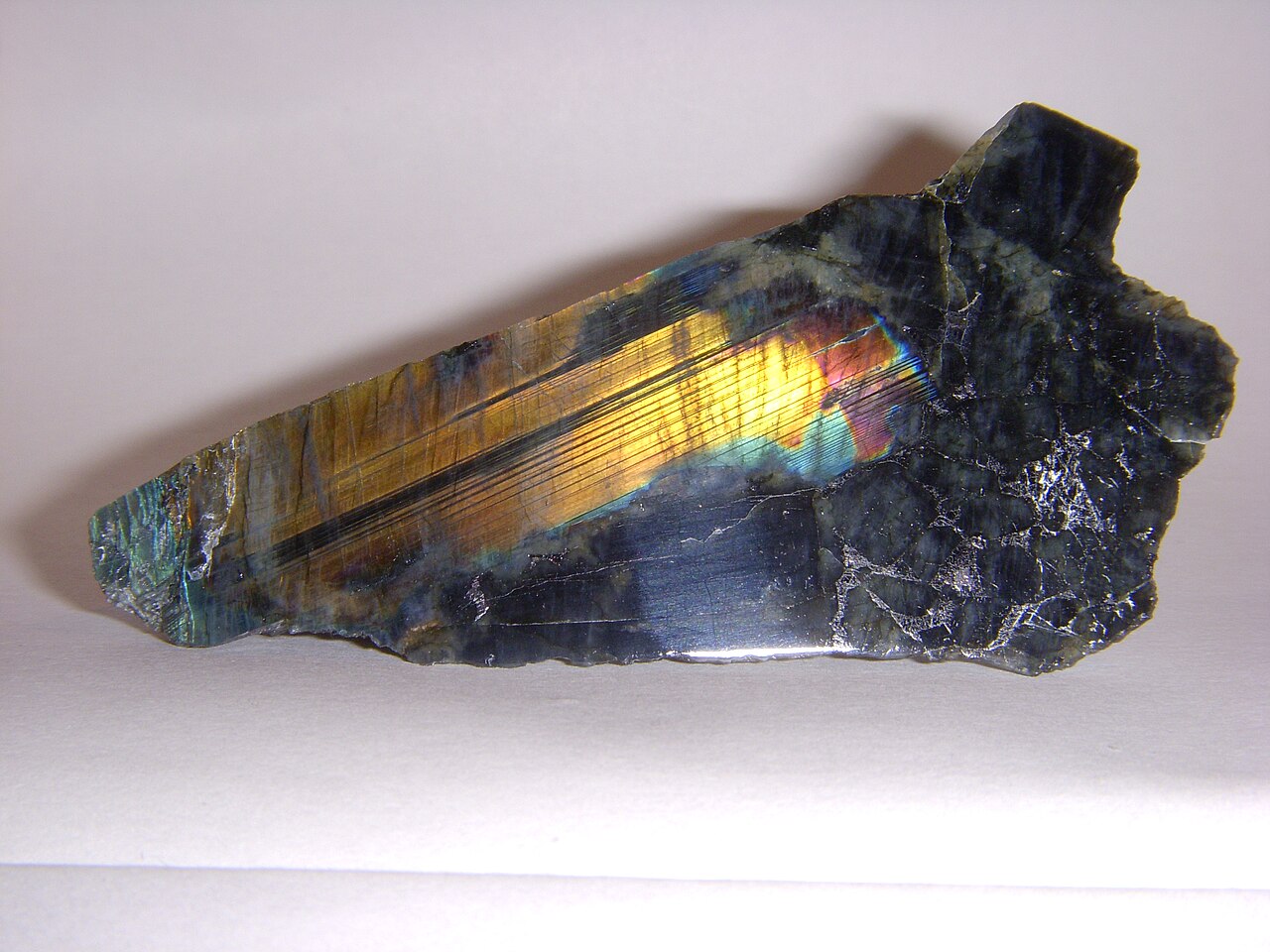
Overview. Labradorite is a member of the plagioclase series within the feldspar group. It is a silicate mineral with a composition that reflects mixtures of sodium and calcium in its crystal lattice. What makes labradorite distinctive is an optical effect called labradorescence — a metallic iridescence that can flash blue, green, gold, and sometimes red when the stone is viewed from different angles.
Image gallery
10 Images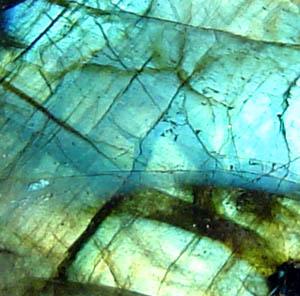



Characteristics and appearance
Labradorite often forms as blocky, tabular crystals or as massive aggregates embedded in host rocks. The visible effect arises from thin internal lamellae and twinning planes that scatter light; this is a physical, not a pigmentary, phenomenon. Typical specimens range from translucent to opaque and may show a dark gray, brown, or black base color beneath the iridescent sheen.
History and occurrence
The mineral was named after the Canadian peninsula of Labrador, where striking examples were first reported in the late 18th century. High-quality material is also found in Finland (marketed as "spectrolite" for its broad color spectrum), Madagascar, Russia, and parts of the United States. Labradorite is commonly associated with igneous rocks such as basalt and gabbro and can also appear in high-grade metamorphic rocks.
Uses and trade
Because of its play of color, labradorite is popular in cabochons, beads, polished slabs, and decorative inlays. It is used in both affordable and higher-end jewelry. Large polished slabs may be employed as countertop panels or interior ornamentation. Some sellers use names like "labradorite moonstone" or "sunstone" for marketing when stones show similar adularescent or aventurescent effects; however, those terms more properly refer to related but chemically and structurally different feldspars.
Notable facts, care, and distinctions
- Optical effect: Labradorescence is distinct from adularescence (moonstone) and aventurescence (sunstone), though casual trade names sometimes blur these distinctions.
- Trade names: "Spectrolite" is used for particularly colorful Finnish material, and lower-grade material is sold simply as labradorite.
- Care: Labradorite is relatively durable but can be scratched or fractured by hard blows; clean gently with mild soap and water and avoid harsh chemicals.
- Context: For general mineral classification see silicate minerals and for geological background on formation and occurrences consult introductory geology sources such as field guides.
Labradorite remains valued both by collectors for fine specimens and by craft jewelers for its striking visual effects. Its combination of common geological occurrence and dramatic iridescence gives it a special place among ornamental minerals.
Related articles
Author
AlegsaOnline.com Labradorite — iridescent plagioclase feldspar prized for labradorescence Leandro Alegsa
URL: https://en.alegsaonline.com/art/55240