
Dextromethorphan
A widely used over-the-counter cough suppressant and psychoactive compound with diverse pharmacology, medical uses, and potential for misuse and interaction with other drugs.
Overview
Dextromethorphan (often abbreviated DXM or DM) is a synthetic cough suppressant found in many nonprescription cold and cough medicines. Sold in syrups, tablets, lozenges and combination products, it is the dextrorotatory enantiomer of the morphinan class. In its pure form it is a white crystalline powder. At recommended doses it acts primarily to reduce the cough reflex; at higher doses it produces psychoactive and dissociative effects and therefore has potential for misuse.
Image gallery
4 Images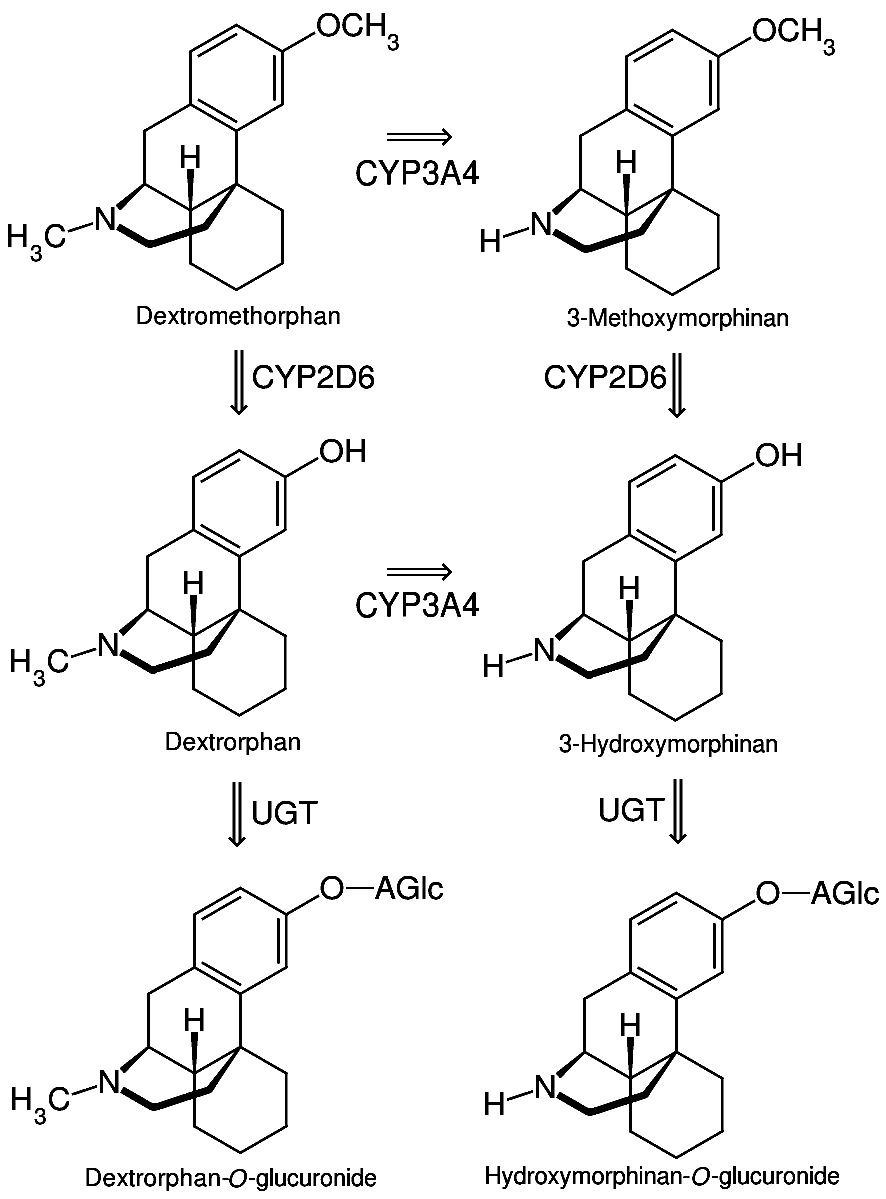


Pharmacology and mechanism
Dextromethorphan interacts with multiple sites in the central nervous system. Its actions include modulation of the NMDA receptor (largely through the active metabolite dextrorphan), agonism at the sigma-1 receptor, and inhibition of monoamine transporters to a variable degree. The drug is metabolized by hepatic enzymes, notably CYP2D6, to dextrorphan; genetic differences in metabolism influence both effects and side effects. Although structurally related to opioid compounds, dextromethorphan does not produce classic opioid respiratory depression at therapeutic doses and the exact basis of its antitussive effect involves central nervous system targets rather than peripheral opioid receptors.
Medical uses and formulations
The principal licensed use of dextromethorphan is as an antitussive ingredient in many over-the-counter remedies for cough. It is available alone or combined with expectorants, antihistamines, decongestants, and analgesics. Prescription formulations combining dextromethorphan with other agents exist for specific indications; for example, a combination with quinidine has been approved in some regions to treat pseudobulbar affect, a condition of uncontrollable emotional expression. Research has explored DXM's potential in pain modulation and certain neuropsychiatric conditions, but these applications are subject to ongoing clinical study and regulatory approval in different jurisdictions.
Recreational use, effects and risks
When taken in doses well above therapeutic levels, dextromethorphan can produce dose-dependent psychoactive effects that range from mild stimulation and euphoria to dissociation and hallucinations, sometimes compared to ketamine or phencyclidine. Excessive use can lead to confusion, impaired coordination, nausea, rapid heartbeat, and, in severe cases, dangerously altered mental status. Concurrent use with serotonergic drugs (such as SSRIs or MAO inhibitors) raises the risk of serotonin syndrome, a potentially life-threatening reaction. Because of these effects and interactions, misuse of cough medicines containing DXM has been a public-health concern.
Safety, interactions and metabolism
Safety considerations include metabolic variability (CYP2D6 polymorphism), which can produce unusually high or low levels of active metabolites in some people, and drug interactions that modify dextromethorphan levels or add pharmacodynamic risk. Combining DXM with strong CYP2D6 inhibitors or with other central nervous system depressants or serotonergic agents can increase adverse effects. Medical guidance is recommended when DXM is used alongside prescription medicines, and products intended for children should be used only as directed.
History and notable facts
Dextromethorphan was developed as a non-opioid antitussive alternative and has been widely used since the mid-20th century. Its diverse pharmacology—affecting glutamatergic, sigma, and monoaminergic systems—has made it an object of both clinical interest and recreational misuse. Different countries regulate over-the-counter sales and age limits for products containing DXM in response to concerns about abuse.
Further reading and resources
- Product and regulatory information
- Guidance on cough and cold medicines
- Over-the-counter medication resources
- Clinical summaries for cold remedies
- Formulation types and dosing forms
- Information on serotonin and drug interactions
- Basic neuropharmacology references
- Notes on dissociative effects
- Reports on hallucinations and altered perception
- Risk and public-health discussions
- Comparisons with other NMDA antagonists
- Information on related compounds
- Context on opioid-related chemistry
- Regulatory and safety advisories
Related articles
Author
AlegsaOnline.com Dextromethorphan Leandro Alegsa
URL: https://en.alegsaonline.com/art/27018
Sources
- deadiversion.usdoj.gov : DEXTROMETHORPHAN (Street Names: DXM, CCC, Triple C, Skittles, Robo, Poor Man’s PCP)