
Serotonin (5‑Hydroxytryptamine): Roles, Biology, and Clinical Significance
An accessible overview of serotonin (5-HT): its chemistry, synthesis, distribution, physiological and clinical roles, historical discovery, and notable distinctions within the nervous and peripheral systems.
Serotonin is a biologically important signalling molecule best known as a neurotransmitter in the central nervous system and a signalling amine in peripheral tissues. Its chemical name is 5‑hydroxytryptamine (5‑HT). Serotonin is synthesised from the essential amino acid tryptophan and participates in many physiological processes. In technical contexts it is described as a neurotransmitter, but that single label understates the variety of roles 5‑HT performs throughout the body.
Image gallery
4 Images
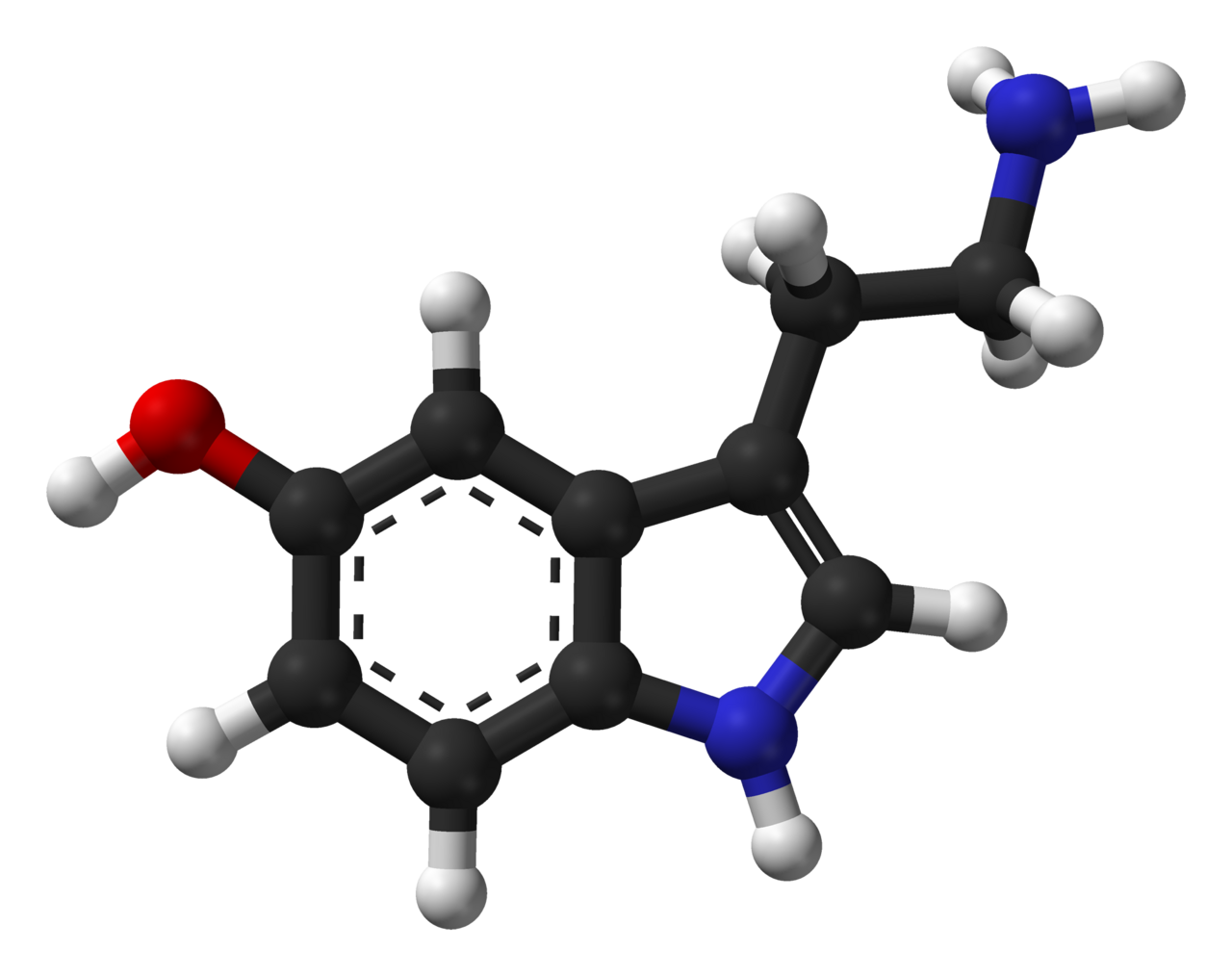


Distribution and basic properties
Serotonin is present across vertebrate species and in many non‑vertebrate organisms. In humans the largest pool is found in the gastrointestinal tract, where enterochromaffin cells produce serotonin that influences gut motility and secretion. Another important peripheral reservoir is in blood platelets: platelets take up serotonin and release it during clotting, affecting vascular tone and haemostasis. A separate pool exists in the central nervous system, where serotonergic neurons modulate mood, sleep, appetite and cognition. Because serotonin does not readily cross the blood–brain barrier, central and peripheral pools are largely independent.
Synthesis, receptors and mechanisms
Biochemically, serotonin is produced by two enzymatic steps from tryptophan: first hydroxylation to 5‑hydroxytryptophan by tryptophan hydroxylase, then decarboxylation to 5‑HT. Serotonin signals through a diverse family of receptors (conventionally labelled 5‑HT1 through 5‑HT7), which include ion channels and G‑protein coupled receptors. This receptor diversity allows 5‑HT to produce different effects depending on cell type and location.
Physiological and clinical significance
Serotonin influences multiple organ systems. In the brain it is associated with mood regulation and is a therapeutic target in mood and anxiety disorders; many antidepressant drugs act by increasing synaptic serotonin levels (for example, selective serotonin reuptake inhibitors). Serotonin also affects sleep, appetite, memory and pain perception. Peripherally, it modulates gut motility, vascular tone and platelet function. Drugs that target specific serotonin receptors are used in clinical practice—for instance, triptans act on 5‑HT1 receptors to treat migraine, and 5‑HT3 antagonists are used to control chemotherapy‑related nausea.
History, ecology and notable facts
The substance now called serotonin was identified and characterised during the mid‑20th century; earlier work had noted a blood‑derived factor that constricted blood vessels and a peptide‑like compound in gut tissue, later recognised as the same molecule. Serotonin or serotonin‑like compounds are found in fungi, plants and invertebrates and can play ecological roles: in some seeds they may affect passage through animal guts, and in certain venoms serotonin contributes to pain and local tissue effects. Studies in a range of animals have also linked serotonin signalling to social behaviours and dominance hierarchies, illustrating the molecule's influence beyond simple mood modulation.
Safety, disturbances and distinctions
Because serotonin affects many systems, both deficiency and excess can cause problems. Low serotonergic function has been associated with mood disorders, though human behaviour is multi‑determined and causation is complex. Excessive serotonergic activity can produce serotonin syndrome, a potentially serious condition marked by autonomic instability and neuromuscular symptoms. Serotonin is often compared with other neurotransmitters such as dopamine: a useful distinction is that serotonin is broadly implicated in mood regulation, inhibition and internal state, while dopamine is central to reward, motivation and motor control—though the systems interact closely.
Further reading and resources
- Serotonin in vertebrates
- Platelet storage and release of serotonin
- Central nervous system roles of serotonin
- Origins of the name 'serotonin'
- Serum and vascular effects
- Vascular tone and serotonin
- Comparison with dopamine
- Serotonin and mood
- Dopamine: reward pathways
- Antidepressant mechanisms
- Serotonin in plants, fungi and venoms
- Serotonin and animal social behaviour
Related articles
Author
AlegsaOnline.com Serotonin (5‑Hydroxytryptamine): Roles, Biology, and Clinical Significance Leandro Alegsa
URL: https://en.alegsaonline.com/art/89084
Sources
- mayoclinic.org : "Selective serotonin reuptake inhibitors (SSRIs)"
- ncbi.nlm.nih.gov : "Mechanism of action of serotonin selective reuptake inhibitors. Serotonin receptors and pathways mediate therapeutic effects and side effects"
- worldcat.org : 0165-0327
- pubmed.ncbi.nlm.nih.gov : 10333979
- ncbi.nlm.nih.gov : "How to increase serotonin in the human brain without drugs"
- worldcat.org : 1180-4882
- ncbi.nlm.nih.gov : 2077351
- pubmed.ncbi.nlm.nih.gov : 18043762
- doi.org : 10.1007/s00253-009-1956-1
- pubmed.ncbi.nlm.nih.gov : 19308403
- news-medical.net : "Serotonin in Plants"
- io9.gizmodo.com : "Why is There Serotonin in Animal Venom?"
- science.sciencemag.org : "Hormonal control of behavior: amines and the biasing of behavioral output in lobsters"
- doi.org : 10.1126/science.2902685
- pubmed.ncbi.nlm.nih.gov : 2902685