
Der Stürmer: Nazi Weekly Tabloid and Vehicle of Antisemitic Propaganda (1923–1945)
Der Stürmer was a sensationalist weekly published in Germany from 1923–1945 that spread virulent antisemitic propaganda under publisher Julius Streicher and played a role in Nazi incitement.
Overview
Der Stürmer was a weekly paper published in Germany from 1923 until 1945. It operated as a vehicle for antisemitic propaganda and aligned with the political aims of the Nazi movement while functioning as a sensationalist, tabloid-style periodical. Contemporary observers and later historians characterize the paper as part of the broader Nazi press ecosystem that sought to mobilize public opinion through repeated vilification of Jews and other targets.
For contemporary copies and discussions see primary collections and secondary treatments of propaganda scholarship that analyze its role within the Nazi information environment political context. The paper was distributed in Germany and aimed at ordinary readers rather than technical audiences domestic circulation.
Image gallery
4 Images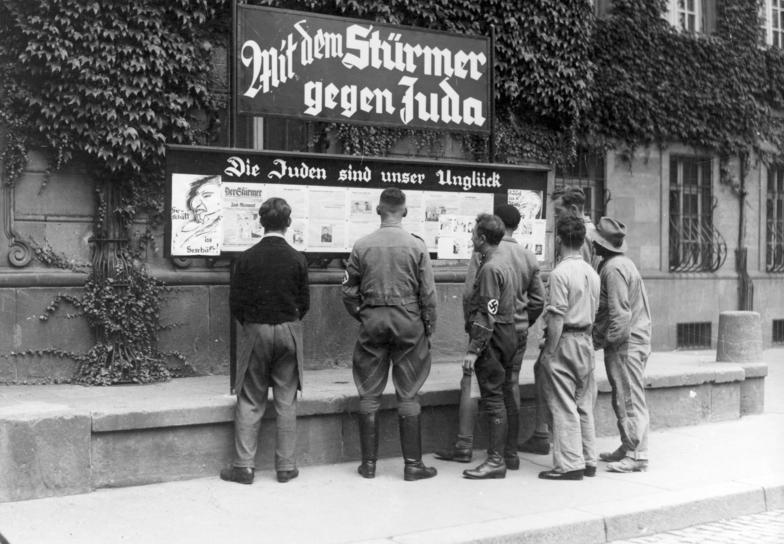



Content, style, and typical material
Der Stürmer used a deliberately coarse, sensational format to reach readers. It mixed short reports, cartoons, and repeated personal attacks in a form similar to modern tabloids. Its pages regularly featured caricatures and demeaning illustrations intended to dehumanize Jewish people and to incite hostility.
- Tabloid presentation and lurid headlines: presentation
- Explicit antisemitic articles and slogans: editorial themes
- Sexualized allegations and accusations used to provoke outrage: accusatory claims
- Racialized stereotypes and pseudoscientific rhetoric: racial rhetoric
History and publication
The paper was founded and published by Julius Streicher and first appeared in Nuremberg on 20 April 1923. Streicher ran the title independently though it operated in tandem with National Socialist aims and content. Its publication spanned the rise of the Nazi Party and continued through the regime’s collapse at the close of World War II.
Key figures and moments in the paper’s history are examined in biographies of its publisher Julius Streicher and in municipal histories of Nuremberg where it was produced local records. The paper’s life paralleled the political trajectory of Adolf Hitler and the party leadership until the end of the war in 1945 final phase.
Legal consequences and closure
After the fall of the Nazi regime the publication ceased. In the postwar prosecutions the publisher was held responsible for the paper’s consistent calls that encouraged persecution. Julius Streicher was tried and convicted by an international tribunal for crimes related to incitement and was executed following conviction. The trial materials and judgments discuss the paper’s repeated demands and campaign rhetoric that urged destructive policies against Jews trial records and cite its advocacy of exterminatory measures prosecutorial evidence. The publication’s false charges, including notorious blood libel and other invented crimes, were part of the prosecution’s examination of hate speech used to facilitate violence specific allegations.
Impact, legacy, and distinctions
Der Stürmer is frequently cited as a case study in how periodical media can advance extremist ideology and normalize hatred. Its combination of visual propaganda, repetitive messaging, and appeals to emotion made it an effective tool for incitement in a broader system of state propaganda. Scholars analyze its cartoons and articles to understand mechanisms of dehumanization visual analysis and to trace links between media rhetoric and policy outcomes. Recalling this history informs contemporary study of hate speech, media ethics, and prevention of mass violence comparative studies.
Because the subject involves crimes and targeted persecution, accounts emphasize evidence-based descriptions and avoid repeating slurs; the paper is discussed as an historical phenomenon that illustrates the dangers of organized media-driven hate campaigns further reading.
Related articles
Author
AlegsaOnline.com Der Stürmer: Nazi Weekly Tabloid and Vehicle of Antisemitic Propaganda (1923–1945) Leandro Alegsa
URL: https://en.alegsaonline.com/art/26735