
Donald Duck
Donald Duck is a classic Disney cartoon character: a short-tempered, sailor-outfitted white duck who appears in animated shorts, comics, television and theme parks worldwide.
Overview
Donald Duck is a prominent animated cartoon character created for the Walt Disney studio by a team led by Walt Disney. He is typically depicted as a white duck with an orange bill and legs, wearing a blue sailor shirt, a small hat, and a bow tie. Donald is best known for his distinctive, often unintelligible voice, his short temper and comic misadventures. He ranks among the most recognizable and influential characters in 20th-century animation.
Image gallery
10 Images



Design and personality
Visually, Donald is defined by his nautical outfit: a cropped blue sailor jacket, a small sailor hat and cap elements such as a peaked cap. The simplicity of his costume made him easy to animate and instantly recognizable. Personality-wise, Donald combines bravado and insecurity; his anger, stubbornness and comic frustration generate much of his humor. He frequently alternates between being the story's protagonist and an exasperated foil to everyday obstacles.
Creation and early development
Donald made his first film appearance in the 1934 short "The Wise Little Hen" and soon became a staple of Disney's theatrical shorts. Over the years he appeared alongside characters from the same ensemble cast, including Mickey Mouse and others. The character evolved as different directors, writers and performers refined his mannerisms, voice and role within Disney's storytelling. Donald also has family relationships that recur in stories: he is a nephew of Scrooge McDuck, often paired with his romantic interest Daisy Duck, and serves as guardian to the mischievous triplets Huey, Dewey and Louie.
Comics, film and television
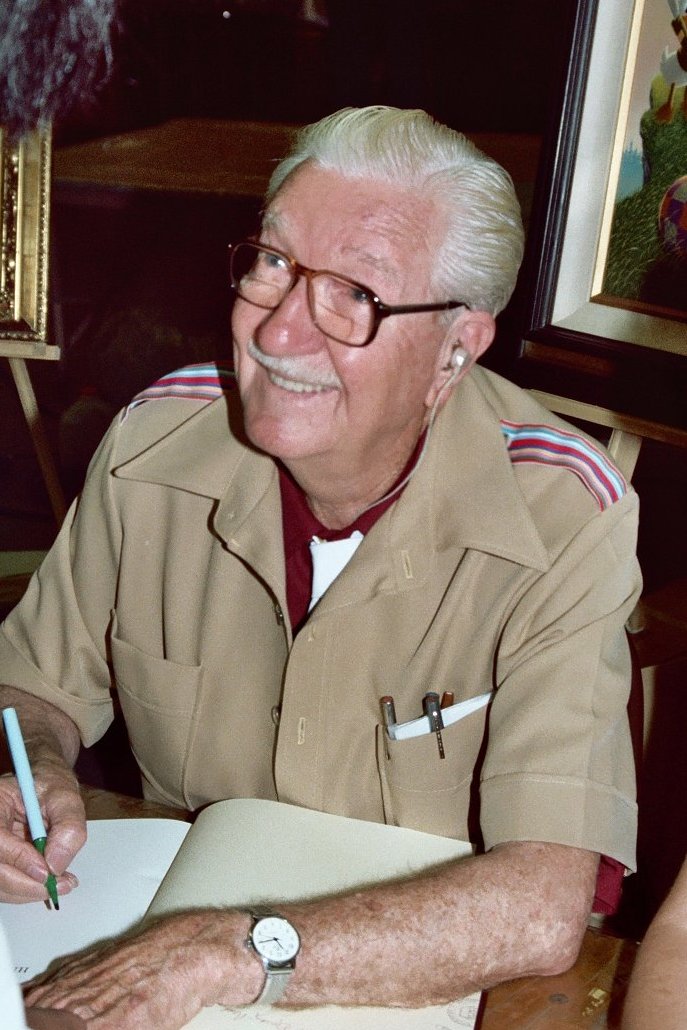
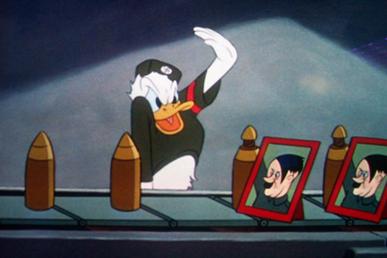
Beyond theatrical shorts, Donald became a major comic-book and newspaper-strip figure. Creators such as Carl Barks and others expanded his world, introducing new settings, relatives and long-form adventures that were especially popular in Europe. Donald has appeared in numerous animated shorts, feature films, television series and contemporary programs such as Mickey Mouse Clubhouse. He has also featured in wartime propaganda and educational films, where his personality was used for satire, morale-building and public information.
Legacy and cultural influence
Donald Duck is often cited as one of the most popular animated figures alongside Mickey Mouse and Bugs Bunny. His appeal crosses generations and international boundaries; in some countries comic-book stories starring Donald have enjoyed longer or more intense popularity than the animated shorts. The character was honored with a star on the Hollywood Walk of Fame. Donald's combination of flawed temperament, resilience and comic timing has made him a frequent subject of academic discussion about animation, humor and popular culture.
Notable facts and creators
- First theatrical appearance: the 1934 short "The Wise Little Hen."
- Key creative figures: the character was developed at Disney under Walt Disney and animated by many artists; comic stories were notably expanded by creators such as Carl Barks.
- Recurring cast: family ties to Scrooge McDuck, relationship with Daisy Duck, and guardianship of Huey, Dewey and Louie.
- Present-day appearances: Donald continues to appear in theme parks, merchandise, comics and television, including ensemble shows with Mickey Mouse Clubhouse and other Disney media.
Donald Duck remains a durable figure in global popular culture: a visually simple yet emotionally complex character whose voice, outfit and antics have made him a lasting emblem of animated comedy and family entertainment.
Related articles
Author
AlegsaOnline.com Donald Duck Leandro Alegsa
URL: https://en.alegsaonline.com/art/28389
Sources
- disneyabcpress.com : "Fact Sheet | Disney Junior Press"
- chipandco.com : "Bring Home this Fast Paced Fun of Mickey and the Roadster Racers on Disney DVD"