
Denton Cooley: American cardiovascular surgeon and surgical pioneer
Surgeon Denton A. Cooley (1920–2016) led advances in heart surgery, founded the Texas Heart Institute, and performed the first implantation of a total artificial heart in a human patient.
Denton Arthur Cooley (August 22, 1920 – November 18, 2016) was a prominent American cardiothoracic surgeon and medical leader noted for major advances in surgical treatment of heart disease. He is widely remembered for performing the first implantation of a complete artificial heart in a human patient, an event often cited as a landmark in the development of mechanical circulatory support and transplant surgery (first implantation of a complete artificial heart). Over several decades he served as founder and surgeon-in-chief of the Texas Heart Institute and held senior surgical posts in Houston while teaching at the medical school level (University of Texas Medical School at Houston).
Image gallery
3 Images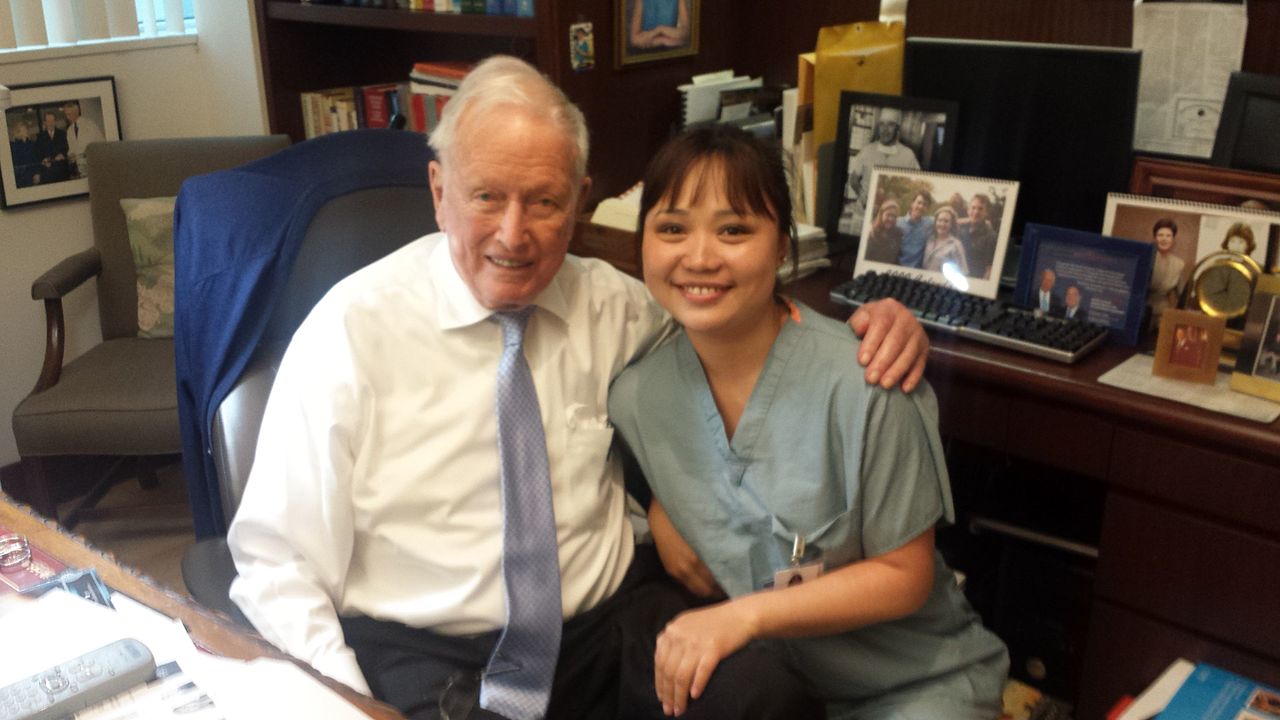

Early life and education
Cooley grew up in Texas and completed undergraduate studies in zoology at the University of Texas, graduating in 1941. He began formal medical training at the University of Texas Medical Branch in Galveston, then completed his medical degree and surgical training at the Johns Hopkins School of Medicine in Baltimore, Maryland. While at Johns Hopkins he worked with Alfred Blalock and assisted in early operations to correct congenital heart defects, commonly referred to as the Blue Baby procedure.
Training, service, and formative experience
After World War II Cooley served as chief of surgical services with the U.S. Army Medical Corps at a station hospital in Linz, Austria. Following his military service he returned to academic surgery at Johns Hopkins and later broadened his experience with additional training in London under leading British cardiac surgeons. These years established his clinical skills and shaped his interest in complex cardiac operations and new mechanical devices.
Career and contributions
Cooley became widely known for surgical innovations and for building institutions to treat heart disease. He founded the Texas Heart Institute, directed cardiovascular surgery at major hospitals, and trained generations of surgeons. His clinical interests included valve repair and replacement, coronary bypass procedures, and experimental work on mechanical hearts and assist devices. He occupied leadership roles such as chief of cardiovascular surgery at St. Luke's Episcopal Hospital and consultant positions at pediatric centers, while maintaining an academic appointment at the medical school (University of Texas Medical School at Houston).
Achievements, controversies, and legacy
- Performed pioneering operations that expanded the scope of cardiac surgery and the use of mechanical circulatory support.
- Founded and grew the Texas Heart Institute into a major center for care, research, and training.
- Was a public face of cardiac surgery through teaching, publications, and advocacy for surgical innovation.
Cooley's career also included high-profile professional disagreements with contemporaries about surgical priority and device use. Such disputes were part of a broader era when cardiac surgery and mechanical heart technology advanced rapidly and attracted intense attention. Today Cooley's name remains associated with audacious clinical innovation and with the institutional legacy of the centers he led.
Cooley retired from active surgical practice but remained influential through mentorship and institutional leadership. He died in Houston on November 18, 2016, at age 96, leaving a complex but widely acknowledged legacy in modern cardiovascular surgery.
Related articles
Author
AlegsaOnline.com Denton Cooley: American cardiovascular surgeon and surgical pioneer Leandro Alegsa
URL: https://en.alegsaonline.com/art/26651
Sources
- achievement.org : "Denton Cooley Biography"