
Baltimore — Maryland's largest independent city and historic port
Baltimore is Maryland's largest city, an independent city on the Patapsco River and Chesapeake Bay with a long maritime, industrial, cultural and educational history.
Overview
Baltimore is the largest city in the U.S. state of Maryland and functions as an independent city rather than as part of any county. It sits on the Patapsco River estuary leading into the Chesapeake Bay and developed historically as a major Atlantic port. At the 2010 census the city had roughly 620,000 residents; like many older American cities, its population and economy have changed significantly over recent decades.
Image gallery
10 Images




Geography, neighborhoods and urban character
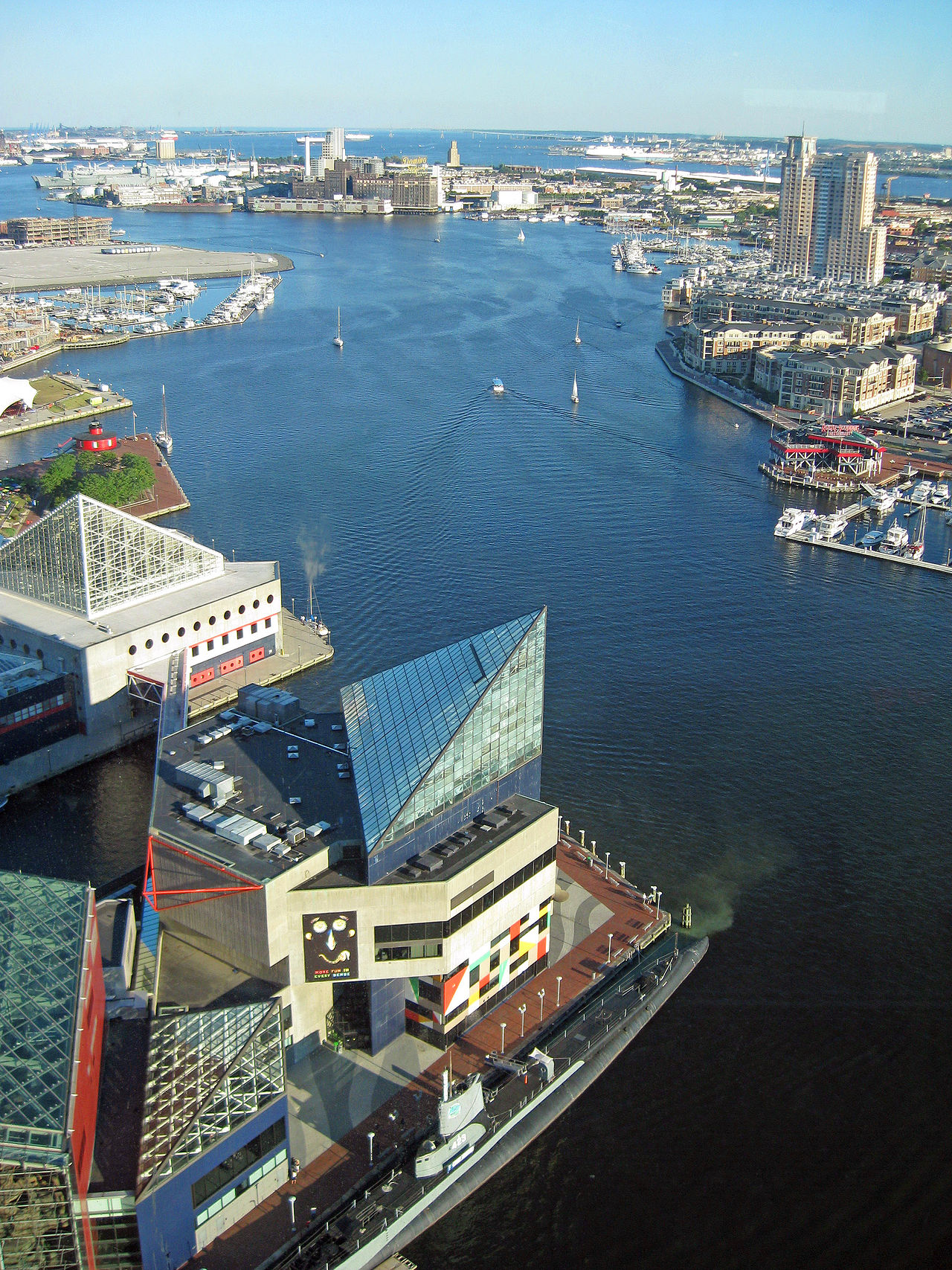
The city's waterfront and harbor have shaped its layout and identity. The Inner Harbor, once a working shipping basin, was redeveloped for public use and is now notable for attractions, museums and restaurants. Baltimore's urban fabric includes dense historic neighborhoods, rowhouse districts, industrial waterfronts and community parks. The city is connected to surrounding suburbs and the broader Chesapeake Bay region by roads, rail and port facilities.
History and development
Baltimore was established in the early 18th century and named for the Calvert family, the Lords Baltimore, who founded the Maryland colony. Its fortunes rose with maritime trade and later industrial expansion in the 19th and early 20th centuries. During the War of 1812 the bombardment of Fort McHenry inspired Francis Scott Key to compose the words that became the U.S. national anthem, a key episode in the city's historical narrative. Industrial decline and suburbanization in the mid-20th century prompted waves of redevelopment and preservation efforts.
Economy, education and culture
Baltimore's economy blends port and logistics operations, higher education and health care, cultural institutions and service industries. Johns Hopkins University and its associated medical institutions are major employers and research centers, drawing students and professionals. Museums, theaters, and cultural festivals contribute to a lively urban scene; the National Aquarium and several maritime and history museums are clustered around the Inner Harbor. Redevelopment has emphasized tourism, nightlife and adaptive reuse of historic buildings while remaining connected to regional trade and manufacturing.
Sports, recreation and civic life
Professional sports are an important part of civic identity: Baltimore is home to teams in major leagues and to local traditions such as horse racing at historic courses. City government is organized under an elected mayor and council and operates as an independent municipality. Baltimore's diverse neighborhoods and community organizations play significant roles in local governance, arts, and neighborhood revitalization efforts.
Notable people and legacy
The city has produced or been home to a number of nationally recognized figures in law, literature, music, sports and film. Among them are Supreme Court Justice Thurgood Marshall; writer and poet Edgar Allan Poe; baseball legend Babe Ruth; jazz singer Billie Holiday; and filmmaker John Waters. These figures reflect Baltimore's varied cultural and social contributions to American life.
Related topics and resources
- Baltimore city profile
- State of Maryland overview
- Maryland history and government
- Independent city status explained
- Chesapeake Bay region
- Maritime trade and ports
- History of shipping in the United States
- Inner Harbor redevelopment
- Museums in Baltimore
- Baltimore Ravens
- American football in Baltimore
- Baltimore Orioles
- Major league baseball context
- Professional sports and the city
- Horse racing traditions
- Historic racetracks
- Colleges in Baltimore
- Universities and research centers
- Johns Hopkins University
- Lord Baltimore and the Calvert family
- Founding of the Maryland colony
- Mayor and city government
- Path from mayor to statewide office
- War of 1812 events
- Francis Scott Key and Fort McHenry
- Origins of the national anthem
- "The Star-Spangled Banner"
- Thurgood Marshall biography
- Civil rights and the law
- Edgar Allan Poe
- Literary history of Baltimore
- Babe Ruth and baseball history
- Billie Holiday
- Jazz and popular music
- John Waters and film
- American independent cinema
- Notable residents and biographies
Questions and answers
Q: What is the population of Baltimore?
A: In 2010, Baltimore had about 620,961 people living there.
Q: What is the main newspaper in Baltimore?
A: The main newspaper in Baltimore is the Baltimore Sun.
Q: What famous event happened in Baltimore during the War of 1812?
A: During the War of 1812, when the British attacked the city and Francis Scott Key wrote a song about it called "The Star-Spangled Banner". It is now the national song of the United States.
Q: Where is Baltimore located?
A: Baltimore is located next to Chesapeake Bay in Maryland. It is an independent city and not part of any county.
Q: What are some popular attractions in Inner Harbor?
A: Popular attractions in Inner Harbor include shopping and restaurants, as well as National Aquarium and other museums.
Q: When was Baltimore founded?
A:Baltimore was founded in 1729.
Q: Who was mayor of this city before Stephanie Rawlings-Blake?
A:The mayor before Stephanie Rawlings-Blake was Sheila Dixon, who was also first woman to be mayor of Baltimore.
Related articles
Author
AlegsaOnline.com Baltimore — Maryland's largest independent city and historic port Leandro Alegsa
URL: https://en.alegsaonline.com/art/8610
Sources
- redorbit.com : "Baltimore's New Bait: The City is About to Unveil a New [[Slogan]], 'Get In On It,' Meant to Intrigue Visitors"
- citypaper.com : "Mob Rules"
- washingtonexaminer.com : "Dispatch from Bodymore, Murderland"
- mht.maryland.gov : "Baltimore Heritage Area"
- baltimore.org : "Baltimore: A City of Firsts"
- citypaper.com : "Best Monument"
- preview.baltimoreravens.com : "Ravenstown"
- citypaper.com : "More Literate than Akron"
- census.gov : 2010 Census U.S. Gazetteer Files: Counties.
- geonames.usgs.gov : "USGS detail on Baltimore"
- census.gov : "Annual Estimates of the Population of Metropolitan and Micropolitan Statistical Areas: April 1, 2000 to July 1, 2009"
- 2010.census.gov : "U.S. Census Bureau Delivers Maryland's 2010 Census Population Totals"
- books.google.com : English and Catholic: the Lords Baltimore in the Seventeenth Century
- books.google.com : Principles and Acts of the Revolution in America
- history.state.gov : "Henry Fite's House, Baltimore"