
Alkali metals (Group 1 elements)
Alkali metals are soft, highly reactive metals in group 1 that form +1 ions. Common members include lithium, sodium and potassium; they react vigorously with water and occur only in compounds.
Overview
Alkali metals are the set of metallic chemical elements found in group 1 of the periodic table. They are characterized by having a single valence electron in their outer shell, which makes them prone to oxidation and to forming +1 cations. In elemental form they are usually silvery and soft; in nature they occur almost exclusively as compounds rather than free metals.
Image gallery
10 Images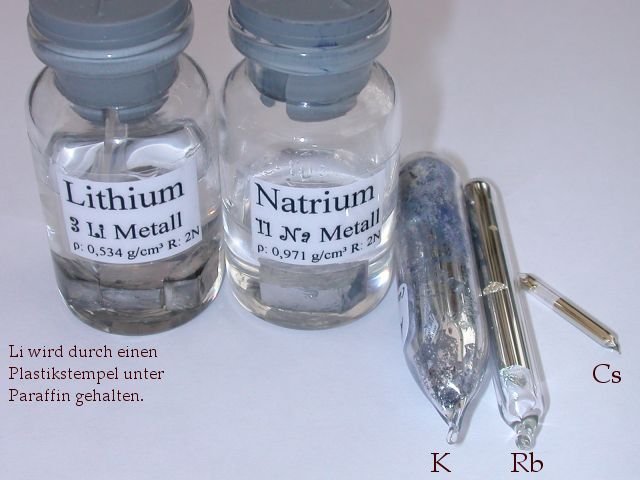





Physical and chemical characteristics
These metals are typically soft enough to be cut with a knife and have relatively low densities and melting points compared with many other metals. They tarnish quickly in air because the clean metal reacts with oxygen and moisture. Alkali metals are famous for the way they react with water, producing a hydroxide and hydrogen gas, sometimes violently. Positioned in the first group of the table, they form ionic bonds readily and will react with most elements except the inert noble gases.
Members of the group
- Lithium (Li) — the lightest alkali metal; used in batteries and lightweight alloys.
- Sodium (Na) — abundant in salts such as sodium chloride and important in industry and biology.
- Potassium (K) — essential for living organisms and a major component of fertilizers.
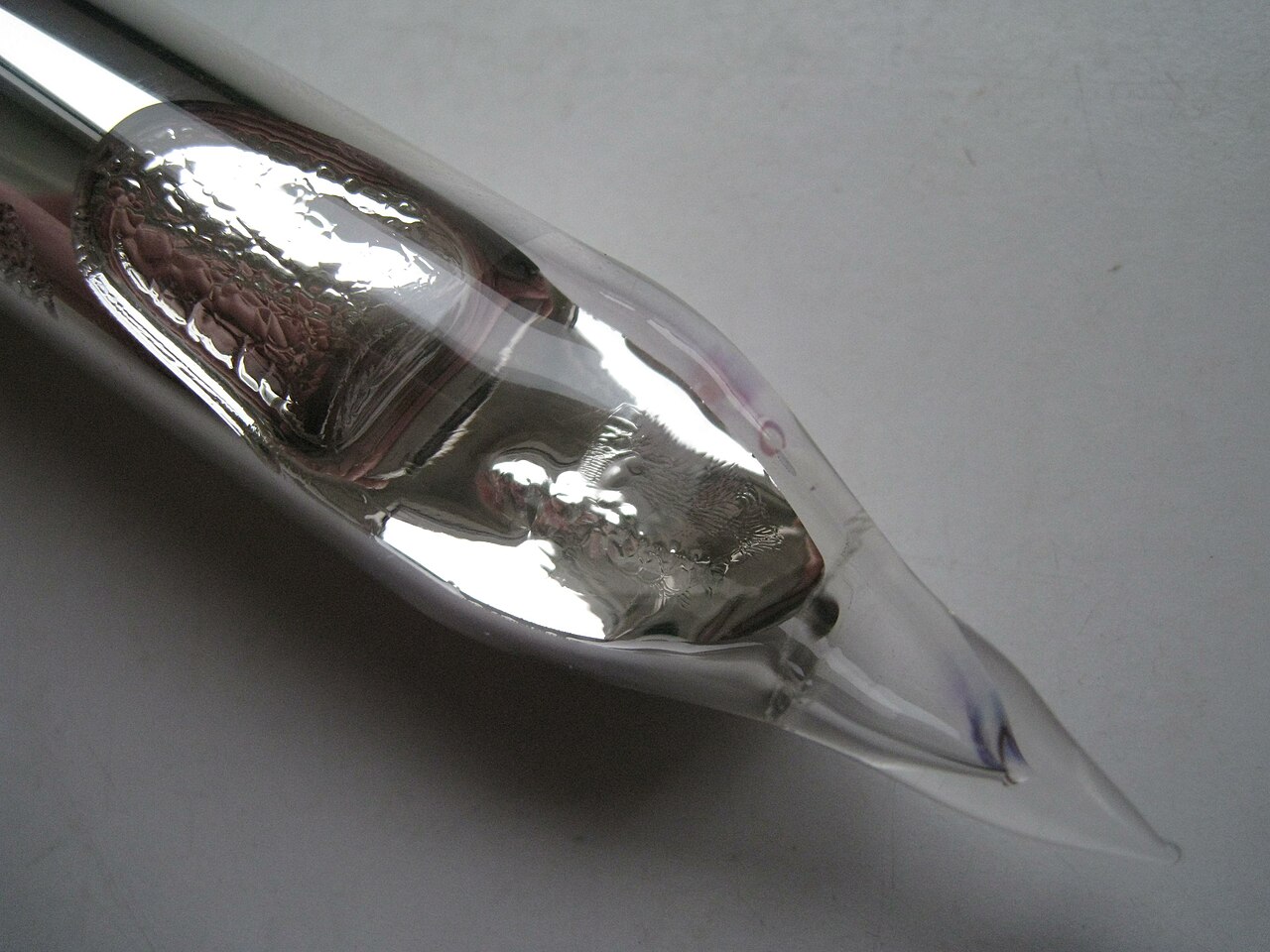
- Rubidium (Rb) — less common, used in research and specialty applications.
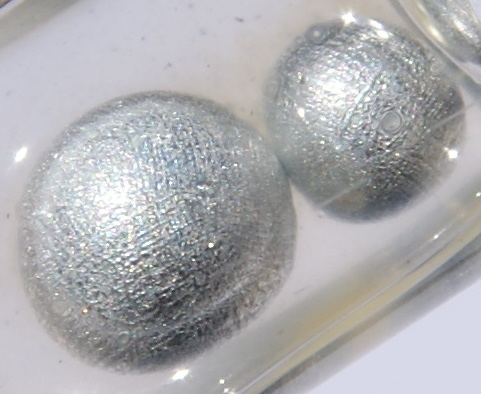
- Caesium (Cs) — heavy and highly reactive; notable for its use in atomic clocks.
- Francium (Fr) — extremely rare and radioactive; only trace amounts occur naturally and it is not used in routine applications.
Reactivity and common compounds
Because they readily lose their single outer electron, alkali metals form ionic compounds in which the metal carries a +1 charge. Many important industrial and everyday substances are alkali-metal compounds: common salt (sodium chloride), potash fertilizers (potassium compounds) and hydroxides. For example, sodium hydroxide is a widely used alkali that functions as a strong base in chemical manufacture. Reactions with water produce hydroxides and hydrogen; because of this vigorous behaviour the pure metals are often stored under oil or inert atmospheres.
History, uses and importance
Isolating and studying the alkali metals was an important chapter in early modern chemistry: several members were separated from their compounds in the late 18th and early 19th centuries by electrochemical methods. Today these elements have diverse applications: lithium in rechargeable batteries and lightweight alloys, sodium and its compounds in chemical synthesis and glassmaking, potassium in agriculture and biochemistry, and caesium in precision timekeeping. Rubidium and francium are mainly of interest for research due to scarcity or radioactivity.
Safety and notable facts
Alkali metals require careful handling because of their reactivity: contact with water or damp air can cause fires or explosions. They are not found free in nature because of their tendency to form compounds. Reactivity increases down the group in general—lithium is relatively less reactive—though predictions about the very heaviest members are influenced by relativistic effects and experimental data are limited for francium. Quick corrosion to dark oxides, storage under oil, and the production of caustic hydroxides are recurring practical concerns when working with these elements.
Related articles
Author
AlegsaOnline.com Alkali metals (Group 1 elements) Leandro Alegsa
URL: https://en.alegsaonline.com/art/2658