
Alkane (saturated hydrocarbon)
Alkanes are saturated hydrocarbons made of carbon and hydrogen with single C–C and C–H bonds. They occur in natural gas and petroleum and serve as fuels, solvents and chemical feedstocks.
Overview
An alkane is a saturated hydrocarbon: a class of chemical compounds composed exclusively of carbon and hydrogen. Each carbon atom in a straight or branched alkane is bonded only by single covalent links to other atoms, producing the general molecular formula CnH2n+2 for open-chain (acyclic) members. The simplest member is methane, CH4. Alkanes range from gases to liquids and waxy solids at room temperature, depending primarily on chain length and structure.
Image gallery
10 Images



Structure and properties
Carbon atoms in alkanes are sp3-hybridized and form four sigma bonds, either C–C or C–H. This tetrahedral geometry gives individual carbon centers approximately 109.5° bond angles and allows free rotation about single bonds (single bonds). Because alkanes contain only single bonds they are distinguished from unsaturated hydrocarbons such as alkenes and alkynes, which contain double or triple bonds. The sigma bond character of C–C and C–H contacts explains the relatively low chemical reactivity of alkanes under many conditions; however, they do undergo reactions such as combustion and radical halogenation (sigma bonds are cleaved under appropriate energy input).
Common members and trends
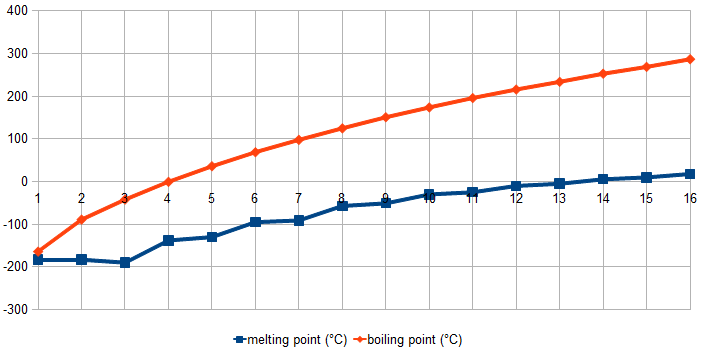
Early, commonly cited alkanes include methane, ethane, propane and butane. As carbon count increases the molar mass rises, which typically raises melting and boiling points and decreases volatility. Branching lowers surface area and intermolecular contact, often reducing boiling points relative to straight-chain isomers. Long-chain alkanes are found in waxes and paraffinic materials; medium-length alkanes are used as fuels and solvents.
Origin, occurrence and production
Most naturally occurring alkanes are produced from fossil organic matter that, under heat and pressure over geological timescales, yielded the complex mixtures in crude oil and the gaseous hydrocarbons of petroleum and natural gas. Alkanes are separated and refined by fractional distillation and chemical processing (cracking, reforming, hydroprocessing) to produce fuels, lubricants and chemical feedstocks.
Uses and environmental notes
Alkanes are foundational to modern industry: short-chain gases (methane, propane, butane) are fuel and heating sources; liquid alkanes serve as gasoline and diesel components or as solvents; longer chains provide lubricants, paraffin waxes and materials for further chemical conversion. Their combustion releases energy but also emits carbon dioxide and other pollutants; methane in the atmosphere acts as a potent greenhouse gas until oxidized, so both use and leakage have environmental significance.
Reactivity, derivatives and distinctions
Alkanes are chemically less reactive than unsaturated hydrocarbons but participate in important transformations. Typical reactions include combustion, free-radical halogenation, cracking (thermal or catalytic bond cleavage), and catalytic isomerization to give branched isomers. A fragment derived from an alkane by removal of one hydrogen is called an alkyl group (often abbreviated R). Cyclic saturated hydrocarbons (cycloalkanes) are closely related but follow different molecular formulas and properties. For further reading, consult introductory resources on hydrocarbons and organic functional groups via links provided below.
Related articles
Author
AlegsaOnline.com Alkane (saturated hydrocarbon) Leandro Alegsa
URL: https://en.alegsaonline.com/art/2664