
Rubidium — properties, history, occurrence and uses
Rubidium (Rb) is a soft, highly reactive alkali metal (atomic number 37) used in research, atomic clocks and specialty chemical processes. Discovered in 1861 by Bunsen and Kirchhoff.
Overview
Rubidium is a chemical element with the symbol Rb. It has atomic number 37 and an average atomic mass near 85.47. As an alkali metal it sits in the periodic table alongside lithium, sodium and potassium. Rubidium is a soft, shiny metal that tarnishes quickly in air and is considerably more reactive than most common metals.
Image gallery
10 Images





Physical and chemical properties
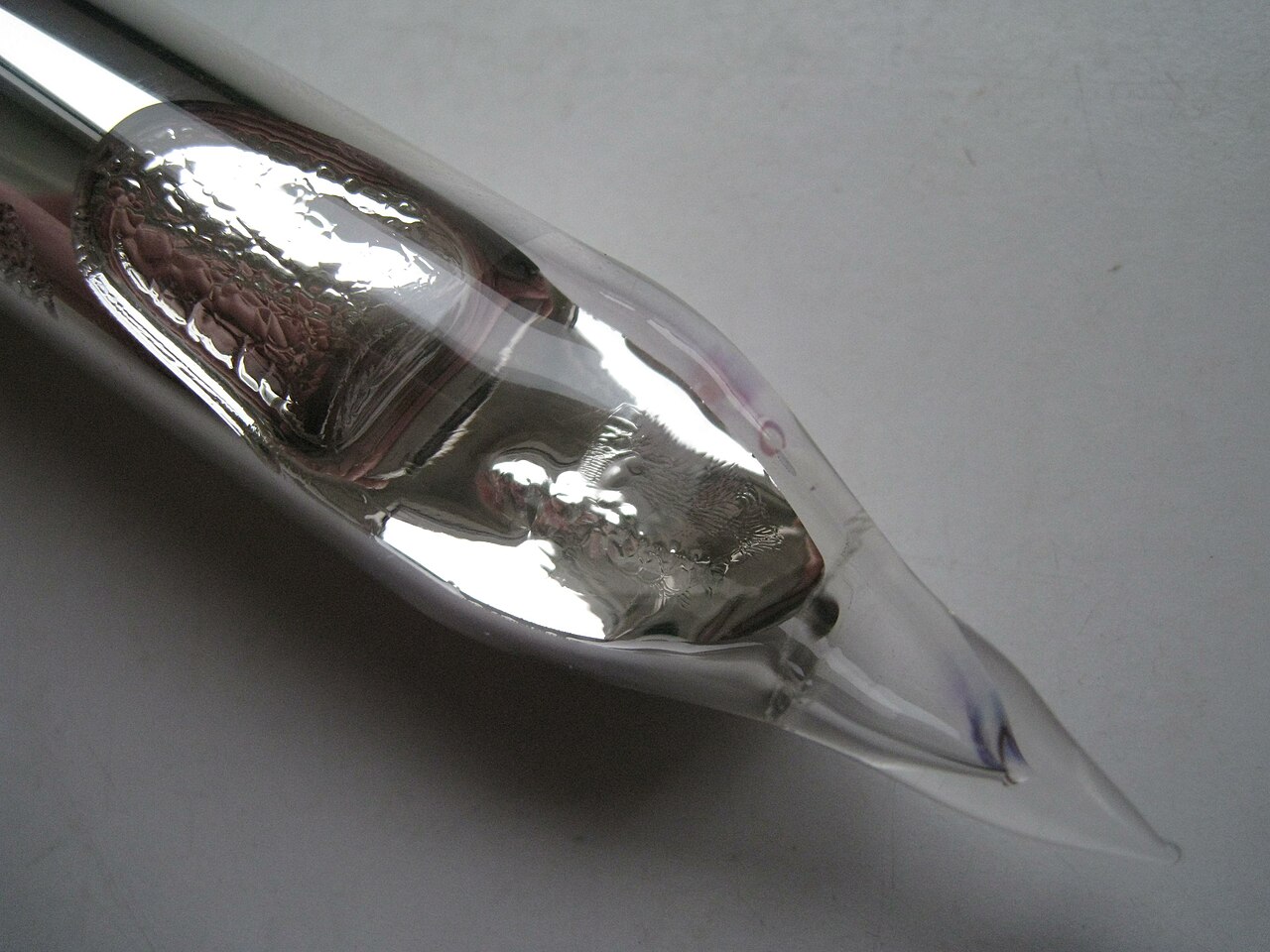
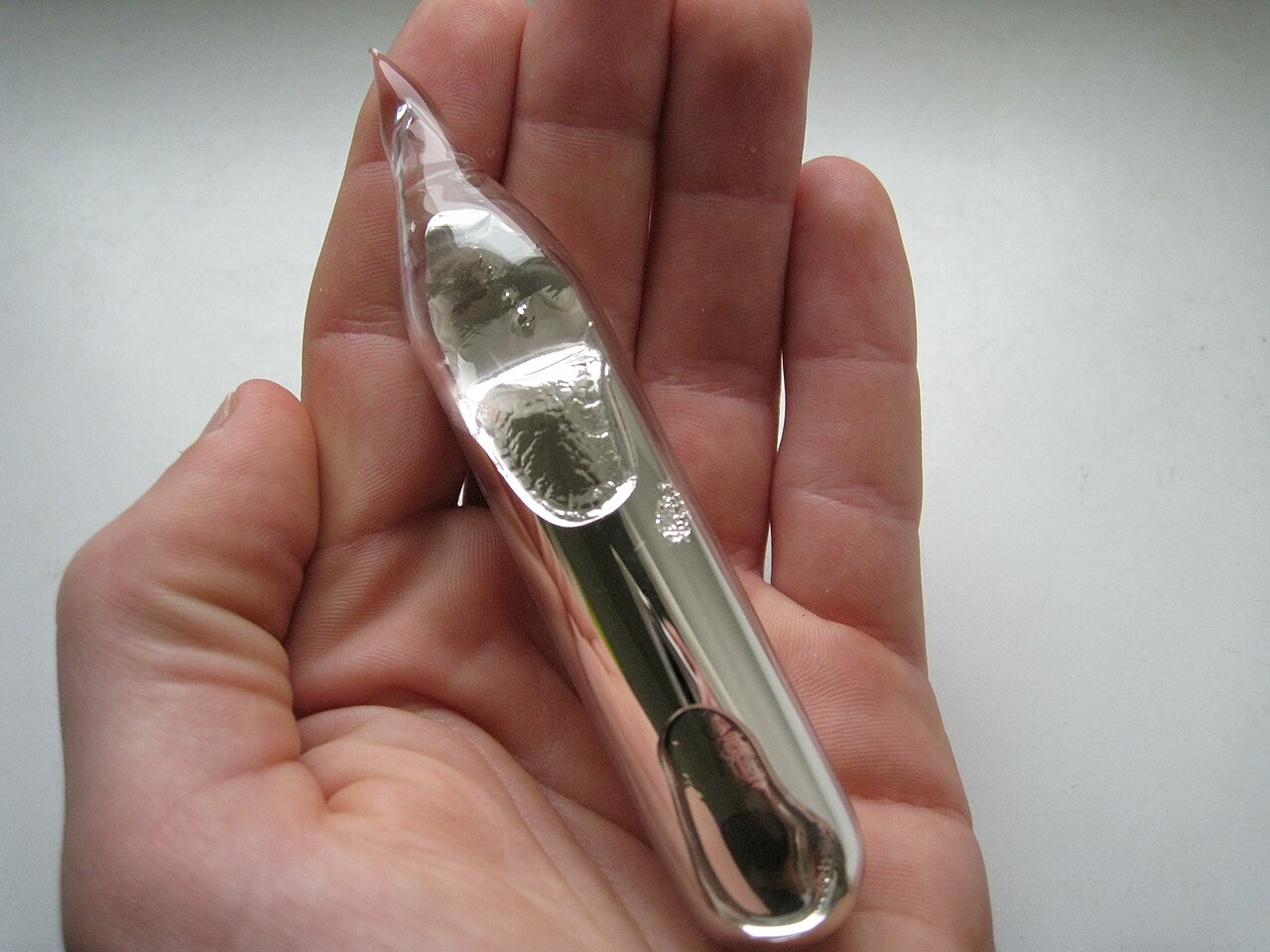
Rubidium is notable for being a low‑density, easily cut metal with a silvery appearance; it is often described simply as a soft, silvery metal. In its neutral atom form it has 37 protons and 37 electrons. Like other group 1 elements, it readily loses its single valence electron to form Rb+ ions and reacts violently with water to produce hydroxides and hydrogen gas. It is stored under oil or in an inert atmosphere to prevent oxidation and accidental reaction.
Occurrence and production
Rubidium does not occur freely in nature; it is found in trace amounts in a variety of minerals and in some salt brines. Commercial rubidium is typically recovered from mineral sources such as lepidolite and from lithium‑rich brines. Separation and purification often employ fractional crystallization or chemical extraction methods tailored to these source materials.
History and name
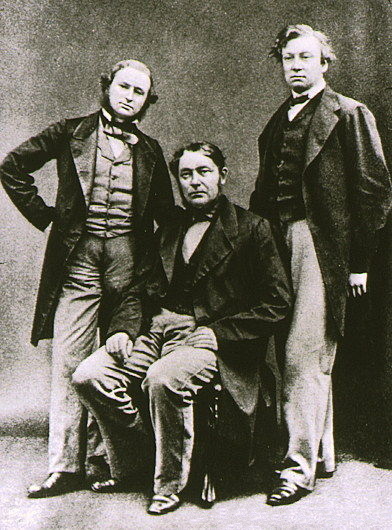
Rubidium was discovered in 1861 by the German chemists Robert Bunsen and Gustav Kirchhoff using flame spectroscopy in Heidelberg, Germany. They detected characteristic deep red spectral lines, and the element's name derives from the Latin rubidus, meaning deep red.
Uses and importance
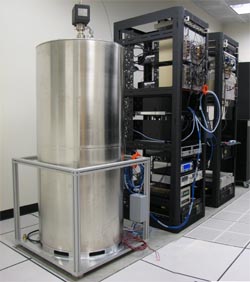
- Electronics and timekeeping: rubidium vapour and rubidium clocks are used where compact, stable frequency standards are needed.
- Scientific research: certain isotopes of rubidium are widely used in atomic physics and in experiments that produce ultracold gases.
- Specialty chemicals: rubidium compounds serve as reagents in research and niche industrial processes.
Isotopes, safety and notable facts
Natural rubidium contains more than one stable isotope and a naturally occurring radioactive isotope often exploited in scientific and medical contexts. While rubidium salts show limited biological roles and low chronic toxicity, elemental rubidium is highly reactive and must be handled with care to avoid fire or explosion hazards. Because of its chemical similarity to potassium, rubidium can interact in biological systems, but it is used only sparingly in medical and technological applications.
For concise technical resources and safety data consult dedicated reference materials and specialized databases via authoritative sources: atomic data, periodic table entries, or laboratory safety guides linked through trusted publications.
Questions and answers
Q: What is rubidium?
A: Rubidium is a chemical element found on the periodic table with the symbol Rb.
Q: What is the atomic mass of rubidium?
A: The atomic mass of rubidium is 85.47.
Q: How many protons does rubidium have?
A: Rubidium has 37 protons.
Q: When and where was rubidium first discovered?
A: Rubidium was first discovered in 1861 by Robert Bunsen and Gustav Kirchoff in Heidelberg, Germany.
Q: What is the color of rubidium?
A: Rubidium is a soft silver colored metal.
Q: How many electrons does rubidium have?
A: Rubidium has 37 electrons.
Q: Why is rubidium important?
A: Rubidium is important in various applications such as in the medical field for treating bipolar disorder and depression, and in atomic clocks for measuring time accurately.
Related articles
Author
AlegsaOnline.com Rubidium — properties, history, occurrence and uses Leandro Alegsa
URL: https://en.alegsaonline.com/art/84576
Sources
- rsc.org : "Visual Elements: Rubidium"
- wikidata.org : wikidata.org/wiki/Q895
- catalogue.bnf.fr : cb12165566c
- data.bnf.fr : (data)
- d-nb.info : 4178576-9
- id.loc.gov : sh85115684