
Deep Impact (NASA comet impactor mission)
Deep Impact was a NASA mission that struck comet Tempel 1 in 2005 to expose and study subsurface material, revealing ice, dust and organic-rich constituents and advancing comet formation theories.
Overview
Deep Impact was a NASA spacecraft mission designed to study the composition and internal structure of a comet by creating an artificial impact and observing the resulting debris cloud. Operated by NASA as a targeted investigation into cometary material and origins, the project combined a flyby bus and a deliberately colliding impactor to expose subsurface ice and dust that are otherwise hidden on cometary surfaces. For official mission information see mission summaries and broader project descriptions.
Image gallery
10 Images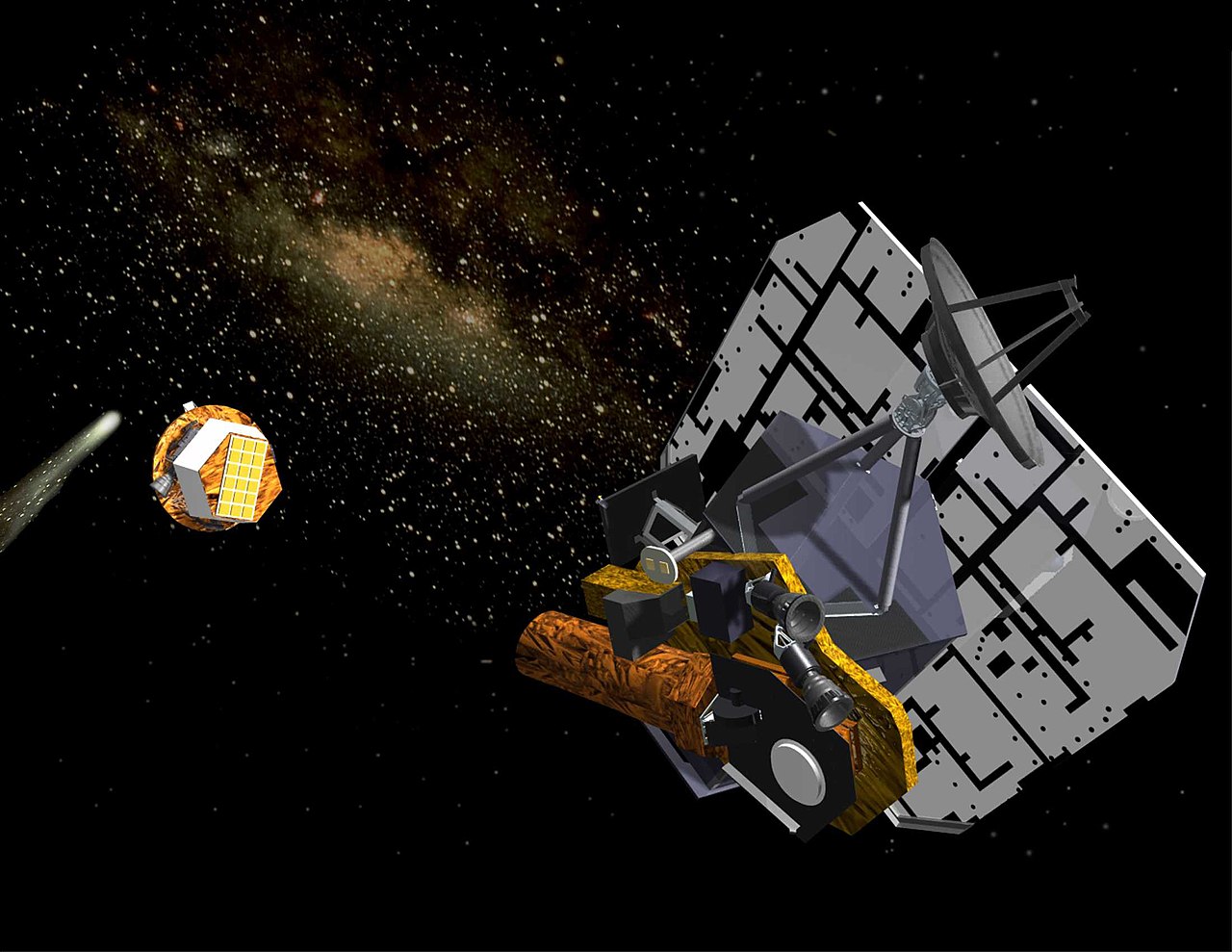




Target and objective
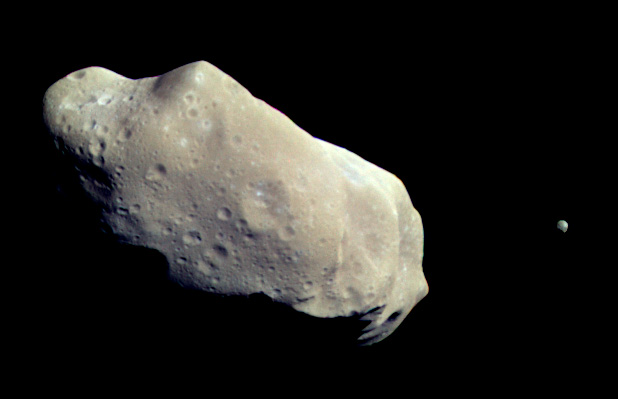
The primary target was Comet 9P/Tempel 1, chosen for its predictable orbit and suitability for remote imaging. The objective was to excavate material from beneath the comet's surface to gain direct evidence about its volatile and refractory components, and to use those observations to test models of comet formation and the early Solar System. Deep Impact belonged to a class of experiments aimed at advancing the scientific study of comets and small bodies (comet research).
Spacecraft, instruments and impactor
- Configuration: The mission used a two-part design: a flyby spacecraft that carried science instruments and communications, and a smaller autonomous impactor vehicle built to collide with the comet.
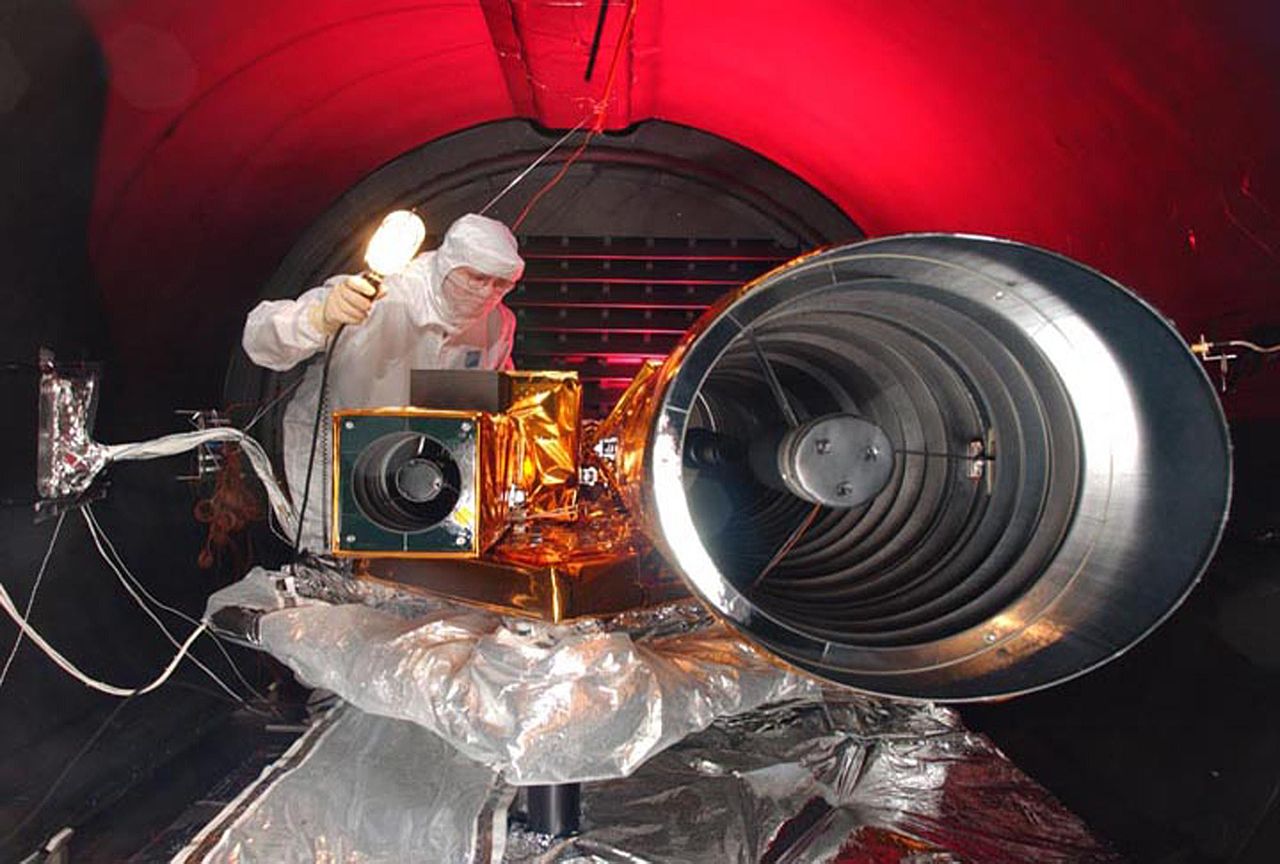
- Instruments: Imaging systems and spectrometers on the flyby bus recorded visible and infrared light from the comet and ejecta. The impactor itself carried a camera to document the final approach and the moment of collision.
- Mass and launch: The impactor mass was on the order of a few hundred kilograms. The mission launched from Cape Canaveral on a medium-lift Delta II rocket; see launch site notes at Cape Canaveral and state context at Florida. The rocket type is noted on mission logs at Delta II listings.
Timeline and operations
Launched in early 2005, the spacecraft reached Comet Tempel 1 in mid-2005. During final approach the flyby bus observed the comet while the impactor separated to strike the surface. The collision produced a transient crater and a cloud of ejecta composed of dust and volatile-rich material. The flyby vehicle recorded the evolution of the ejecta and relayed data and images back to Earth.
Scientific results and significance
Analysis of the ejecta revealed sub-surface ices (including water ice), fine dust grains and organic-bearing materials, offering direct evidence of volatile inventory beneath the surface crust. These results supported models that comets contain preserved primitive material from the early Solar System and helped refine ideas about where certain comets may have formed—models suggest many originated in the giant-planet region beyond the classical asteroid belt, in the neighborhood of the outer planets such as Uranus and Neptune. The experiment thus provided a rare, controlled way to probe interior composition without a sample return.
Follow-up, legacy and notable facts
- Deep Impact's spacecraft was later repurposed for extended investigations combining cometary science and extrasolar planet observations; those efforts broadened the mission's scientific return.
- Plans to target additional comets were part of the extended timeline; one proposed target could not be recovered at its expected position and was not observed during a planned encounter, illustrating challenges in small-body tracking.
- The mission motivated later revisits to Tempel 1 by other spacecraft, which imaged the impact site and helped constrain crater morphology, surface strength and ejecta distribution.
Deep Impact remains a milestone in planetary science because it demonstrated the value of a kinetic impactor experiment for probing the interior of small icy bodies. For mission documents, outreach and scientific papers consult the archived project pages and detailed analyses at Tempel 1 mission page and related resources linked from the main project entry.
Related articles
Author
AlegsaOnline.com Deep Impact (NASA comet impactor mission) Leandro Alegsa
URL: https://en.alegsaonline.com/art/26215
Sources
- nasa.gov : "NASA - Overview"
- nasa.gov : "NASA - Launch Coverage"
- nasa.gov : "NASA - Deep Impact Team Reports First Evidence of Cometary Ice"
- scientificamerican.com : "Destination: Missing--Comet Once Targeted by NASA Mission Vanished"