
Delta II — American medium-lift launch vehicle and workhorse rocket
Delta II, a reliable medium-lift expendable launch vehicle derived from the Thor family, served from 1989 to 2018 for civil, military and scientific payloads including GPS and planetary missions.
Overview
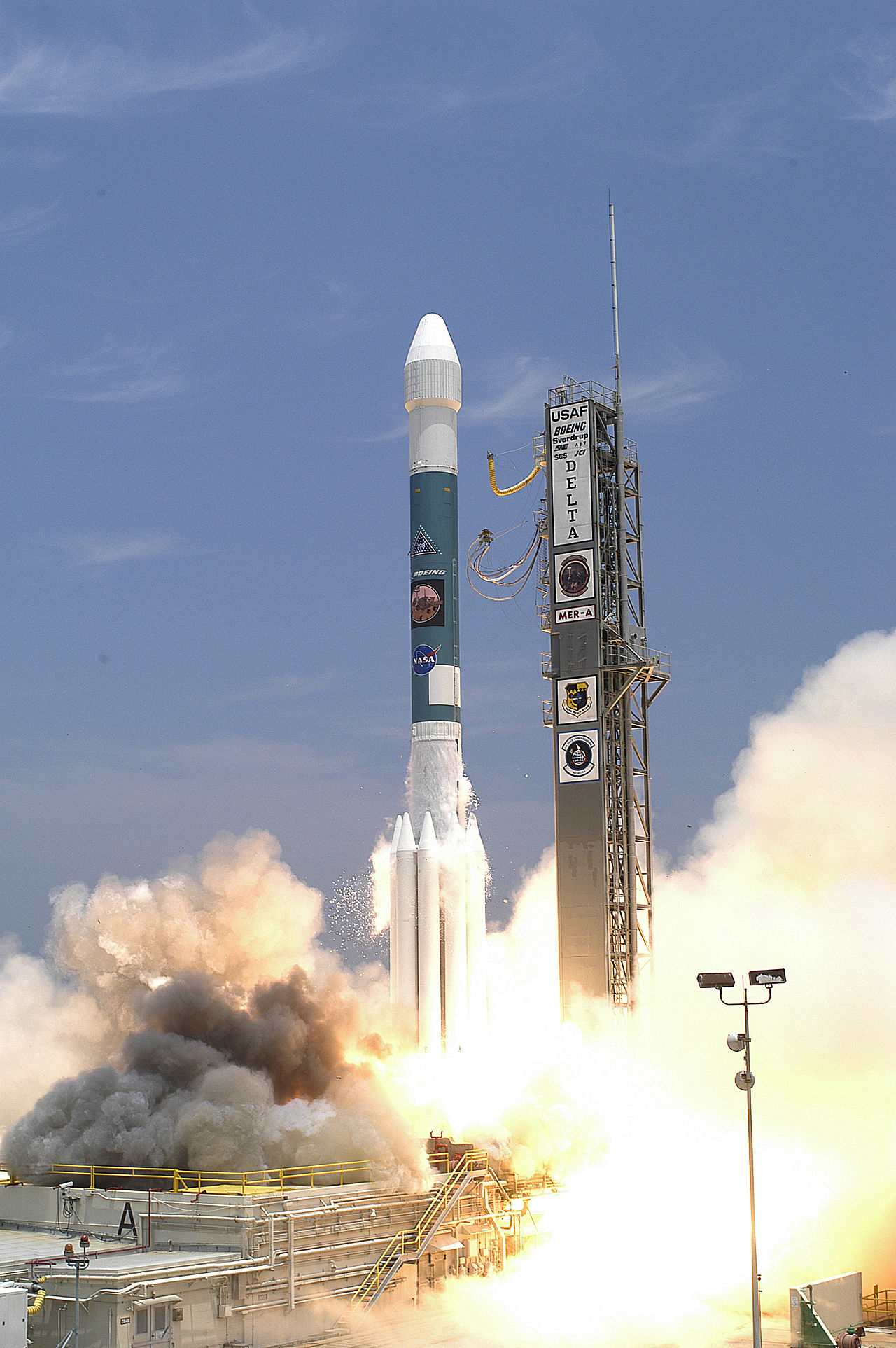
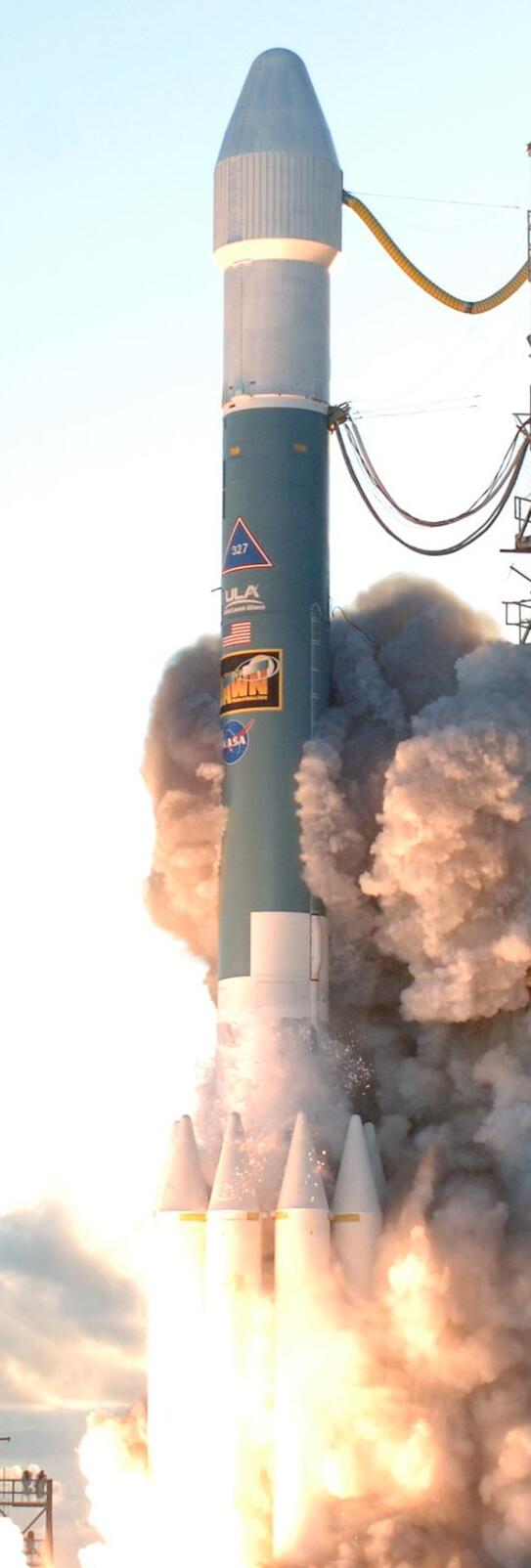
The Delta II was a United States medium-lift expendable launch vehicle that became known for high reliability and a long operational life. Developed from the Cold War-era Thor missile family, the Delta II entered service in 1989 to provide dependable access to space for government, scientific and commercial payloads. It was built and operated through several corporate transitions, originally by McDonnell Douglas, later involving Boeing, and ultimately produced by United Launch Alliance — a joint venture between Boeing and Lockheed Martin. The vehicle flew from both East and West Coast launch sites, supporting a wide range of missions during nearly three decades of service.
Image gallery
9 Images




Design and characteristics
Delta II traces its lineage to the Thor intermediate-range ballistic missile of the 1950s. The vehicle combined a liquid-fueled core stage derived from that heritage with strap-on solid rocket boosters to increase lift performance. Typical Delta II configurations used two or three stages, with an optional solid upper stage for high-energy trajectories. The design emphasized configurability, allowing variations in the number of solid boosters, the presence of upper stages, and payload fairing sizes to match mission requirements.
- Class: medium-lift expendable launch vehicle
- Heritage: Thor rocket family
- Propulsion: liquid core stage plus strap-on solid rocket boosters and optional solid upper stage
- Capabilities: low Earth orbit (LEO), sun-synchronous, geosynchronous transfer orbit (GTO) and interplanetary trajectories
Operational history
The Delta II was introduced after the 1986 Space Shuttle disaster when the United States sought more diversified and reliable launch options, particularly for placing military navigation satellites into orbit. The first Delta II flight occurred on 14 February 1989. Over its program life the Delta II performed well: by the time of its retirement it had completed well over a hundred launches with a very high success rate. Most flights launched from East Coast pads near Cape Canaveral or from SLC-2 at Vandenberg Air Force Base on the West Coast, supporting both polar and equatorial mission profiles.
Notable missions and payloads
Delta II carried a broad mix of payloads — military navigation satellites, Earth-observing platforms, scientific observatories and planetary probes. Notable missions included deployment of multiple blocks of GPS satellites that formed the backbone of the modern navigation constellation. The vehicle also launched important planetary and scientific payloads that captured public attention and advanced research:
- Mars landers and rovers that expanded exploration of the Red Planet.
- Space-based observatories and Earth science satellites for climate and remote sensing.
- Interplanetary missions and technology demonstrators bound for deep-space targets.
Failures, retirement and legacy
No operational launch system is flawless; across its career Delta II experienced a small number of partial or total failures that prompted investigations and design or procedural refinements. Despite those setbacks the platform earned a reputation as a dependable "workhorse" for a wide variety of missions. The final Delta II flight took place on 15 September 2018, carrying the ICESat-2 Earth-observation satellite. With its retirement, newer families of rockets assumed its missions, but Delta II's long record of service, adaptability and contribution to both civil and military space infrastructure left a lasting impact on American launch capability.
For more detail about the vehicle's industrial history and specific missions see the original manufacturers and program summaries: McDonnell Douglas, Boeing, the joint venture with Lockheed Martin, and the broader context of post-Shuttle launch policy following the Space Shuttle era and the Challenger accident. The Delta II fleet supported critical systems such as GPS satellites and operated from major U.S. launch sites including Cape Canaveral.
Related articles
Author
AlegsaOnline.com Delta II — American medium-lift launch vehicle and workhorse rocket Leandro Alegsa
URL: https://en.alegsaonline.com/art/26443
Sources
- spaceflight101.com : "Archived copy"
- boeing.com : "Archived copy"
- nasaspaceflight.com : "Delta II successfully launches NPP satellite on behalf of NASA and NOAA"
- nasaspaceflight.com : "ULA Delta II successfully lofts OCO-2 to orbit" · web.archive.org · archive.today
- marketwatch.com : marketwatch.com/story/nasa-selects-launch-services-contract-for-three-missions-2012-07-16
- nasa.gov : "NASA Selects Launch Services for ICESat-2 Mission" · web.archive.org