
Dayak peoples of Borneo
An overview of the Dayak: the diverse indigenous peoples of Borneo, their cultures, languages, traditional beliefs, social life, and contemporary challenges and revitalization.
Overview
The term indigenous or ethnic group known as the Dayak refers to many distinct communities native to the island island of Borneo. They inhabit territories now within the modern states of Brunei, Indonesia (Kalimantan) and Malaysia (Sarawak and Sabah). "Dayak" is an outsider label that groups together dozens of peoples who speak related languages and share some cultural patterns, while each group retains its own identity and names.
Image gallery
10 Images
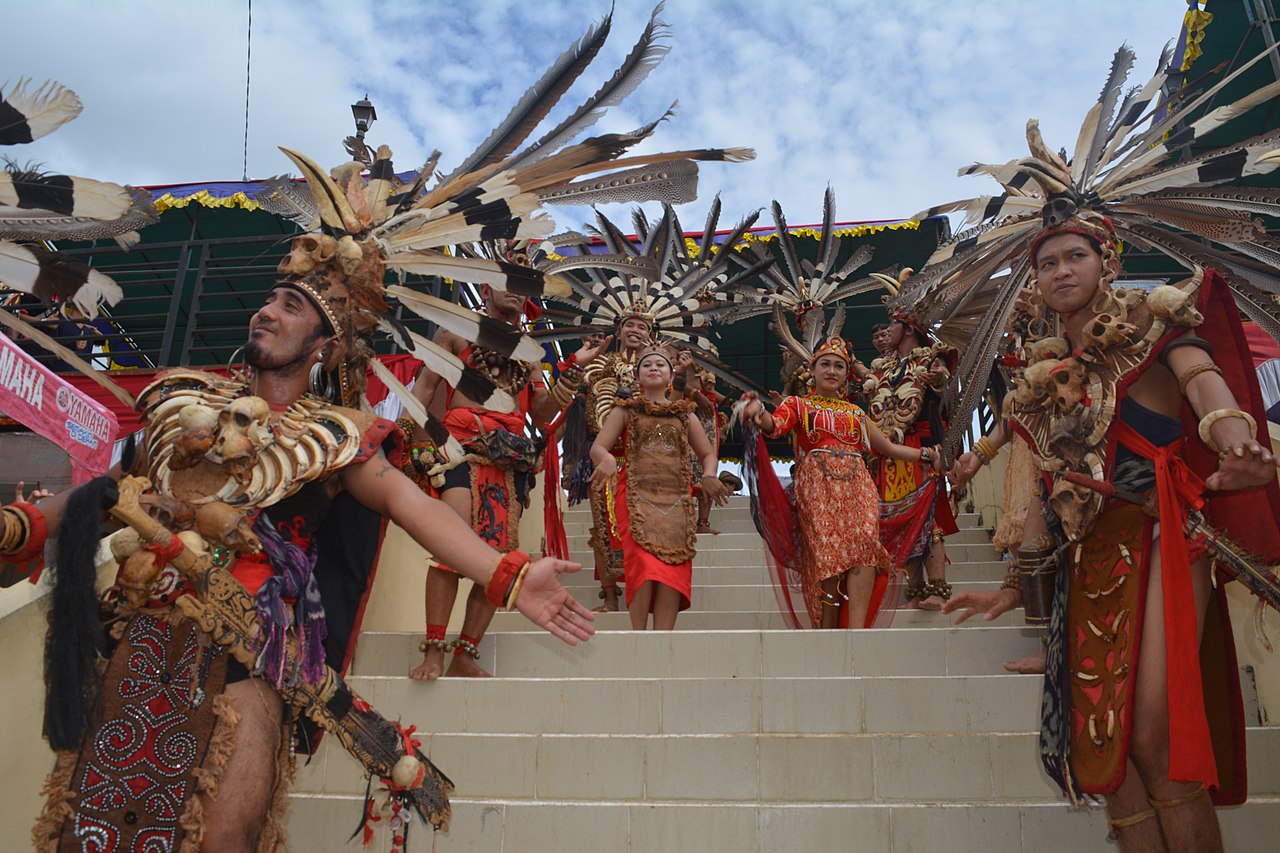


Culture and social organization
Dayak societies traditionally emphasize communal living and river-based economies. Longhouses — extended communal dwellings — remain a potent cultural symbol for many groups. Subsistence practices have included shifting (swidden) agriculture, sago and rice cultivation, hunting, fishing and trade along rivers. Social life is governed by customary law or adat, which regulates land use, marriage and ritual obligations.
- Architecture: longhouses and stilted riverside settlements.
- Arts: carved wooden ornamentation, intricate beadwork and tattooing.
- Economy: swidden farming, handicrafts, and increasingly cash crops and wage labor.
- Language: a range of Austronesian languages and dialects.
Beliefs and religion
Traditional spiritual systems combined animism and shamanism, with healers and ritual specialists mediating between humans and spirits. A notable indigenous religion called Kaharingan remains practiced by many in central Borneo; in national contexts it has sometimes been classified under Hinduism. During the 19th and 20th centuries a substantial number of Dayak people adopted Christianity or Islam, while others maintain customary faiths and rituals.
History and contemporary issues
Historically, some Dayak groups engaged in intergroup warfare and headhunting practices which were part of ritual and social systems; these practices largely disappeared under colonial rule and modern law. Contact with Malay traders, missionaries and colonial administrations brought new trade, religion and political arrangements. In recent decades, logging, plantation expansion and infrastructure projects have threatened traditional territories and resources, prompting legal and social struggles over indigenous land rights.
Significance and present-day life
Today Dayak communities balance cultural continuity and change: many celebrate traditional festivals, produce crafts for markets, and participate in local and national politics. Cultural revival movements promote language, music and ritual knowledge, while activists press for formal recognition of customary land (adat) and sustainable management of forests and rivers. For further introduction to specific Dayak groups, social organization and contemporary issues see local ethnographies and regional overviews via resources such as Dayak cultures and other community-focused studies.
Further reading can clarify differences among subgroups (for example Iban, Bidayuh, Kayan, Kenyah and Ngaju) and explore how modernization, conservation and indigenous rights intersect across Borneo's diverse landscapes. See also regional summaries and cultural guides for more detailed accounts.
Related articles
Author
AlegsaOnline.com Dayak peoples of Borneo Leandro Alegsa
URL: https://en.alegsaonline.com/art/25887