
Denisovans (Denisova hominins)
Denisovans are an archaic human group known from DNA and sparse fossils in Asia; they interbred with modern humans and contributed genes to some present-day populations.
Overview
The Denisovans, often called Denisova hominins, are an archaic group of humans identified through ancient DNA and a small number of fossil remains. They are placed within the broader genus Homo and have been described variably as a distinct species or a subspecies related to other archaic humans. Knowledge of Denisovans is based on genetic analyses and a handful of bones, teeth and artifacts recovered from sites in Asia, with the type locality being the Denisova Cave in the Altai Mountains of Siberia.
Image gallery
10 Images



Discovery and context
The first recognition of Denisovans came in 2010 when researchers sequenced mitochondrial DNA from a small finger bone found in Denisova Cave; later work recovered portions of the nuclear genome. The cave itself contains evidence of multiple hominin occupations, including those of Neanderthals and later modern humans, showing a complex regional history of interaction and replacement. Additional Denisovan-like genetic signatures have since been detected across Asia and Oceania, indicating a wider geographic presence than the limited fossil record alone would suggest.
Physical traits and evidence
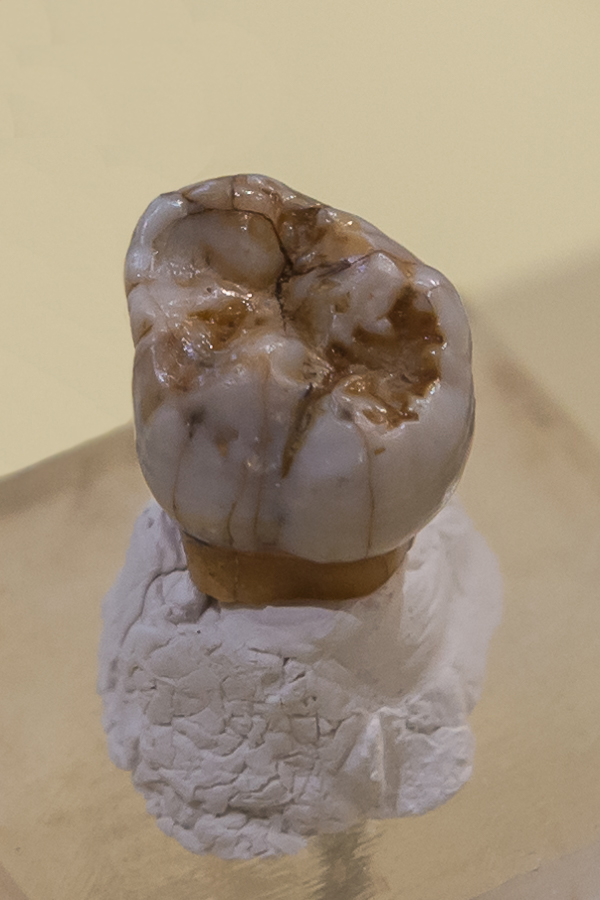
Fossils attributed to Denisovans are sparse: a juvenile finger bone, several teeth and a few other fragments. Because skeletal material is limited, direct reconstructions of their appearance remain uncertain. Instead, most inferences come from genetic data. Key points include:
- Ancient mitochondrial DNA from the Denisova specimen was distinct from both Neanderthals and living humans.
- Analysis of the nuclear genome shows Denisovans share a closer ancestry with Neanderthals than with modern humans, while still representing a separate lineage.
- Genetic markers suggest a split from the ancestors of Neanderthals and modern humans hundreds of thousands of years ago, with dating estimates that vary and are subject to refinement.
Distribution, admixture and modern descendants
Although most fossils come from Siberia, genetic traces indicate Denisovan-related populations once ranged across parts of Asia. Modern human groups in Oceania and parts of Southeast Asia carry Denisovan-derived DNA: for example, many Melanesians and Aboriginal Australians possess measurable Denisovan ancestry. Genetic studies also reveal episodes of interbreeding between Denisovans, Neanderthals and incoming modern humans, producing a patchwork of archaic gene flow into later populations.
Archaeology and functional legacy
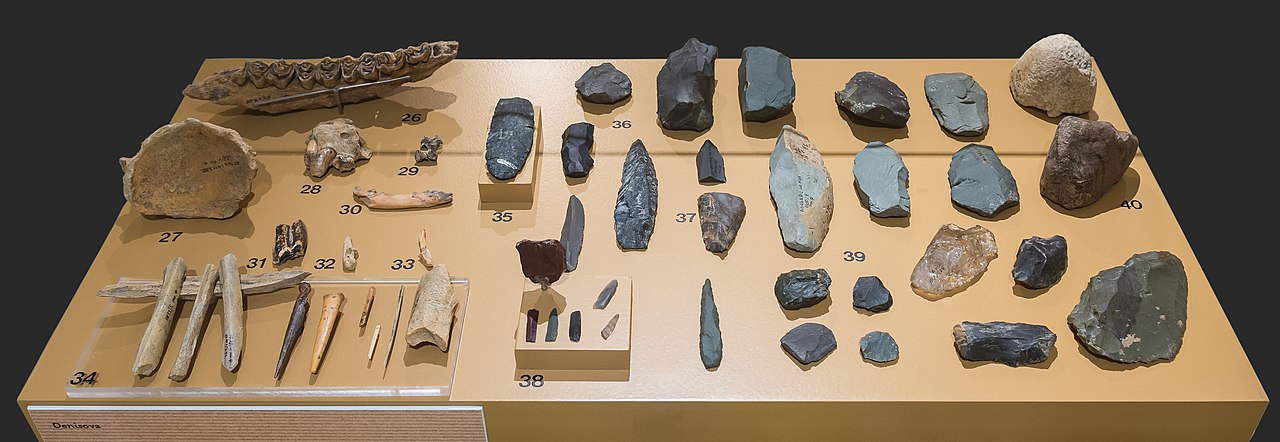
Denisovan contexts in caves have yielded stone tools and personal ornaments, suggesting technological and cultural behaviors beyond what the bones alone imply. Notably, a gene region involved in adaptation to high-altitude hypoxia in Tibetans appears to derive from Denisovan-like ancestors, demonstrating a lasting biological contribution to contemporary human populations. These adaptive gene transfers highlight the evolutionary significance of Denisovan–modern human interactions.
Outstanding questions and significance
Many aspects of Denisovan biology, behavior and taxonomy remain unresolved. Researchers continue to debate whether they represent a single population or several distinct groups spread across Asia, how they related to contemporaneous hominins such as Homo erectus, and the timing and routes by which their ancestors left Africa during prehistoric migrations often broadly framed as Out of Africa. New discoveries and wider sampling of ancient DNA and fossils are expected to clarify these issues. For further reading and databases, see genetic and archaeological resources linked here: overview, taxonomy, species debate, subspecies view, Denisova Cave research, Neanderthal comparisons, modern human interactions, Melanesian studies, Australian evidence, mtDNA analyses, nuclear genome papers, migration theories, early Homo context.
Questions and answers
Q: Who are the Denisovans?
A: The Denisovans are archaic humans in the genus Homo.
Q: Where were the Denisovans discovered?
A: The Denisovans were first discovered in the Denisova Cave in the Altai Mountains in Siberia.
Q: What other hominins lived in the Denisova Cave?
A: The Neanderthals and modern humans also lived in the Denisova Cave.
Q: When did the juvenile female Denisovan live?
A: The juvenile female Denisovan lived about 41,000 years ago.
Q: What percentage of DNA in Melanesians and Aboriginal Australians derives from Denisovans?
A: About 3% to 5% of the DNA in Melanesians and Aboriginal Australians derives from Denisovans.
Q: What does the mtDNA analysis suggest about the origin of Denisovans?
A: The mtDNA analysis suggests that Denisovans were the result of a migration out of Africa that came between a migration by Homo erectus individuals and later ones by some ancestors of most modern humans.
Q: When did modern humans, Neanderthals, and the Denisova hominin last share a common ancestor?
A: Modern humans, Neanderthals, and the Denisova hominin last shared a common ancestor around 1 million years ago.
Related articles
Author
AlegsaOnline.com Denisovans (Denisova hominins) Leandro Alegsa
URL: https://en.alegsaonline.com/art/26589
Sources
- theworld.org : "Scientists map an extinct Denisovan girl's genome"
- washingtonpost.com : "DNA from bone shows new human forerunner, and raises array of questions"
- ui.adsabs.harvard.edu : 2010Natur.464..894K
- doi.org : 10.1038/nature08976
- pubmed.ncbi.nlm.nih.gov : 20336068
- doi.org : 10.1038/news.2011.551
- cnn.com : Oldest human DNA found in Spain
- scientificamerican.com : "Humans interbred with Denisovans"
- nytimes.com : "Denisovans Were Neanderthals' Cousins, DNA Analysis Reveals"
- ncbi.nlm.nih.gov : PMID 28695206