
Dawson College shooting (September 13, 2006)
A 2006 shooting at Dawson College in Montreal in which a lone gunman wounded 20 people, killed one student, and then died; the attack prompted debate about media, online subcultures, and campus safety.
The Dawson College shooting was a fatal campus attack that took place on September 13, 2006, at Dawson College in Montreal, Quebec, Canada. It is generally described as a school shooting in contemporary accounts. The assailant wounded multiple people during a brief rampage in and around the college building; one student was killed and the attacker later died.
Image gallery
3 Images
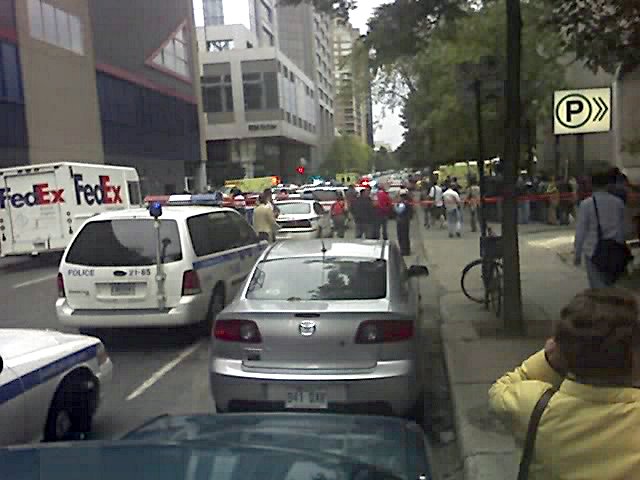

Attack and immediate timeline
On the morning of September 13 the gunman entered the campus and fired at students in public areas. Emergency services and on-site security responded quickly. Police engaged the shooter and an officer struck him in the arm during the confrontation; shortly afterward the attacker died by suicide. Authorities reported that around twenty people were shot during the incident, and one student was killed. The rapid first response and the subsequent investigation focused on scene security, witnesses, and forensic evidence.
Shooter background and online interests
The attacker was a twenty-five-year-old man of Indo-Canadian background who was not a student at Dawson. Investigators and media examined his personal history, social connections and online presence. He had maintained a profile on the social networking site Vampirefreaks.com (Vampirefreaks) and referenced music by the heavy metal band Megadeth, specifically the song "À Tout le Monde", in material discovered after the attack. Reports about his tastes and internet activity prompted discussion about the role of subcultures and online communities in violent behavior. His ethnic background was noted in some reports as Indo-Canadian, while law enforcement examined whether any ideological motive existed.
Casualties, victims and community impact
The shooting left the college community shaken. Many survivors and witnesses required medical treatment and counselling; college authorities and local health services organized support for students, staff and families. A number of memorials and moments of tribute were later held on campus to commemorate the victim and to mark the community's recovery. The incident also raised concerns about campus security procedures and emergency planning.
Media reaction, debate and musical controversy
The media coverage included debates over what influences, if any, contributed to the attack. Some early reports linked the shooter's interest in heavy metal and online role‑playing sites to the event, sparking controversy. Members of the music community, including Megadeth's frontman, publicly addressed the association between violent acts and musical expression; the band's lead singer and guitarist spoke to reporters and to audiences about the tragedy and their frustration at being blamed. Affected parties argued both for careful reporting and for restraint in drawing causal links between art and violence. For one contemporary coverage of reactions, see statements by the band's personnel and news interviews (Dave Mustaine).
Aftermath, investigation and legacy
Investigators reconstructed the sequence of events and examined the shooter's history for motives and warning signs. The incident contributed to wider conversations in Canada about public-safety measures, mental health services and how campuses prepare for rare but severe violent incidents. Institutions reviewed emergency procedures and some implemented changes in access control, communication with first responders, and student support programs. The Dawson community continues to observe anniversaries and maintain exercises in remembrance and resilience.
- Key facts: date (September 13, 2006), location (Dawson College, Montreal), casualties (around twenty shot, one killed).
- Related topics: campus safety, media responsibility, online subcultures and violence.
- Further reading and reports include official investigations and contemporary news coverage; selected sources and interviews appear in public archives and media reports (overview, police accounts).
The Dawson College shooting remains a reference point in Canada for discussions about preventing campus violence, supporting survivors, and balancing public debate about cultural influences with careful, evidence-based inquiry.
Related articles
Author
AlegsaOnline.com Dawson College shooting (September 13, 2006) Leandro Alegsa
URL: https://en.alegsaonline.com/art/25867
Sources
- chartattack.com : "Megadeth Criticize Fan Who Shot Up Dawson College" · web.archive.org
- tvanouvelles.ca : "Le geste de Kimveer Gill était prémédité" · web.archive.org