
Dassault Mirage IV
French twin‑engine supersonic strategic bomber developed by Dassault for nuclear deterrence; later adapted for reconnaissance and retired from service in 2009.
The Dassault Mirage IV is a French twin‑engine, delta‑wing supersonic strategic bomber developed in the 1950s to give France an independent nuclear strike capability. Designed and built by Dassault Aviation, the type entered flight testing in the late 1950s and formed the core of France's airborne nuclear deterrent during the Cold War. It was notable for its clean delta planform, long range for its era, and conversion to reconnaissance duties later in its career. twin‑engine design and French origin are central identifiers for the type.
Image gallery
10 Images

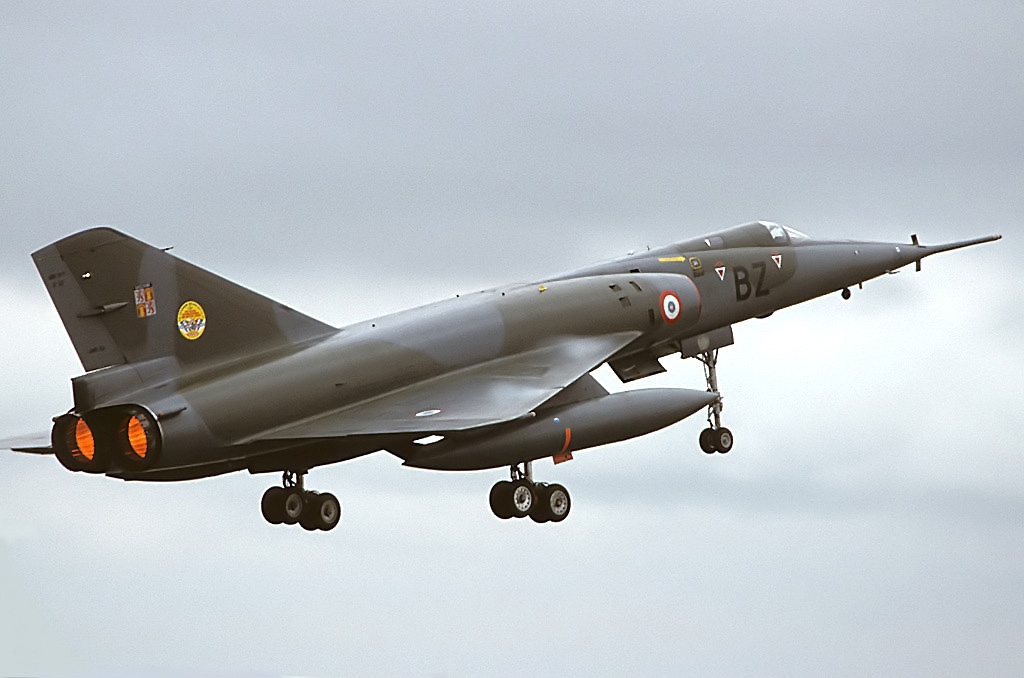


Characteristics and design
The Mirage IV combined a slender delta wing with a streamlined fuselage to achieve high subsonic and supersonic cruise at altitude. It typically carried a two‑crew layout with cockpit provisions for a pilot and a navigator/weapons officer. Its aerodynamic layout emphasized speed, altitude and range rather than low‑level survivability, reflecting its original mission as a high‑altitude nuclear bomber. Key design aspects include the delta wing planform, internal bomb/weapon carriage, and provision for reconnaissance sensors in later conversions. For technical summaries and illustrations see technical overview and design notes.
History and development
Conceived during the 1950s, the Mirage IV first flew in 1959 and entered French Air Force service in the 1960s. It was produced to meet a strategic requirement for an independent deterrent, known in France as the Force de Frappe. Several production marks and airframe upgrades extended its operational life. Although developed contemporaneously with other Dassault fighters, the Mirage IV was not offered on the export market and remained in French inventory. See development timeline and program context at first flight, prototype details and nuclear mission.
Operational use and conversion
The primary role of the Mirage IV was nuclear strike, carrying France's early free‑fall nuclear ordnance and later stand‑off planning. From the 1990s, as strategic doctrine and weapons systems evolved, surviving Mirage IVs were progressively converted to reconnaissance platforms with cameras and sensors to support intelligence and targeting. The type was phased out of active service by 2009. References on roles and service life include weapon carriage, service entry, and retirement.
Variants, legacy and preservation
Variants included initial bomber configurations and later reconnaissance conversions; some airframes received avionics upgrades or structural servicing to extend flying life. The Mirage IV left a lasting mark on French aviation as the country's first supersonic strategic bomber and a visible element of Cold War deterrence policy. No export sales were recorded, making it a uniquely national program. For variant lists and legacy analysis consult variants, reconnaissance conversion, and strategic impact.
Museum examples and public display
A number of Mirage IV airframes have been preserved in museums. An example displayed at the Musée de l'Air et de l'Espace at Paris–Le Bourget provides visitors with an opportunity to study the airframe and learn about its operational history. Additional preserved examples and archives are noted in several collections and online resources: preserved aircraft, museum exhibit, Le Bourget display, and broader curatorial notes at collection records, restoration projects, photographic archives, and visitor information.
- Role: Strategic bomber, later reconnaissance
- Manufacturer: Dassault Aviation
- Service life: Cold War through early 21st century
- Notable: Integral to France's independent nuclear deterrent
Related articles
Author
AlegsaOnline.com Dassault Mirage IV Leandro Alegsa
URL: https://en.alegsaonline.com/art/25622