
Alfred Russel Wallace: naturalist, biogeographer and co-discoverer of natural selection
British naturalist (1823–1913) who independently proposed natural selection, mapped the Wallace Line, and pioneered biogeography through extensive fieldwork in the Amazon and Malay Archipelago.
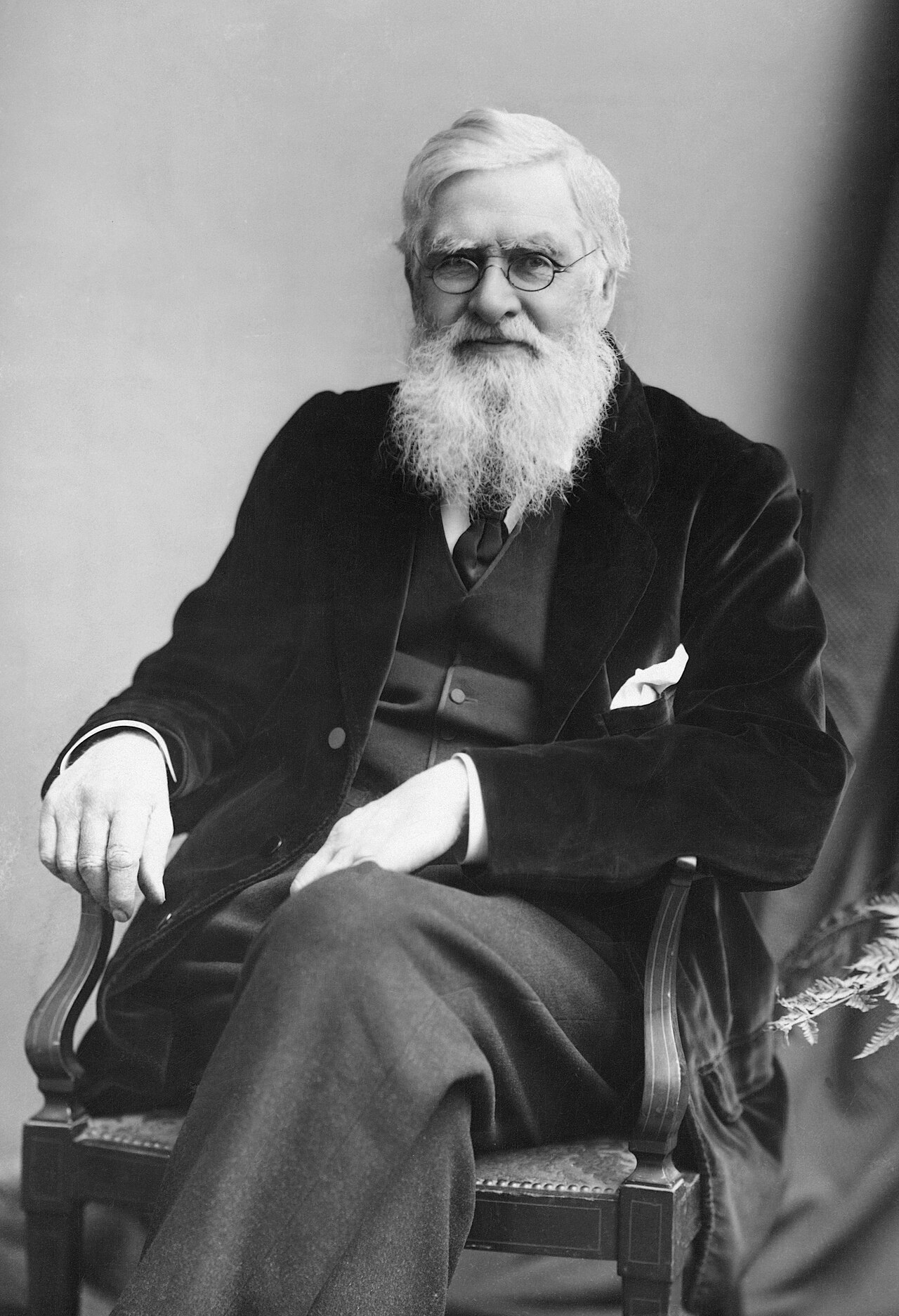
Alfred Russel Wallace (8 January 1823 – 7 November 1913) was a British naturalist, explorer and thinker whose field research and ideas helped shape modern evolutionary biology and biogeography. Famous for independently formulating a theory of natural selection, Wallace combined long periods of collecting in tropical regions with wide-ranging writings on the geographic distribution of species and on public issues of his day. He is remembered both for scientific achievements and for involvement in social and philosophical debates.
Image gallery
10 Images





Life and expeditions
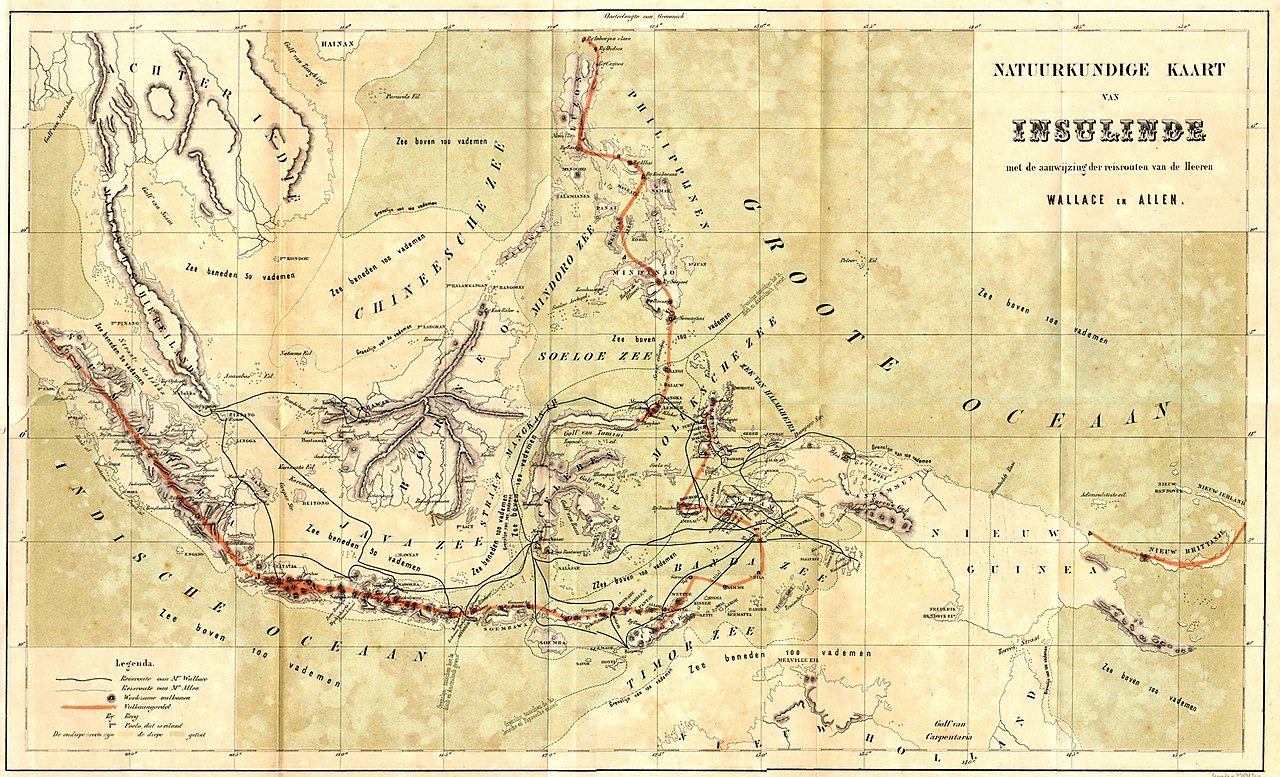
Wallace left Britain as a young naturalist to collect specimens and document life in distant regions. Early in his career he travelled in the Amazon River area with companions such as Henry Walter Bates, sending back thousands of specimens and notes on tropical diversity. Later he spent many years in the Malay Archipelago and what was then called Malaya and Indonesia, where sustained field observation led him to crucial insights about how species are distributed across islands and continents. Wallace's accounts of these journeys were published for general readers and scientific audiences alike.
Scientific contributions
Wallace is best known for independently proposing a mechanism of evolutionary change by natural selection; his essay on the subject prompted a joint presentation with Charles Darwin. He was a careful observer of distribution patterns and is widely credited with founding the discipline of biogeography. While working in the Indonesian region he proposed the boundary now called the Wallace Line, which separates fauna of primarily Asian origin from that of Australasia, a concept that clarified how geography and geological history shape regional faunas. Wallace's interest in broader natural history is reflected in many of his writings and public lectures on natural history.
Ideas beyond evolution
Aside from his biological work, Wallace engaged with social and philosophical issues. He wrote on economic and social reform and was identified as a social activist in his advocacy for causes like land reform. Late in life he also took up controversial subjects such as spiritualism and questions about human uniqueness; these positions sometimes put him at odds with other scientists but demonstrate the breadth of his interests. His reputation also brought civic recognition, and contemporary profiles note his standing among Victorian scientists (honours and records).
Field methods and legacy
Wallace's approach combined extensive specimen collecting, careful notes on ecology and geography, and comparative thinking across islands and continents. As a practical biologist and collector he contributed many specimens to museums and to scientific knowledge, and his clear expository books—especially accounts of the Malay Archipelago—helped popularize scientific ideas. He is often cited alongside other 19th-century naturalists as a major influence on how scientists understand species distributions and the process of evolution (biologist, natural selection).
Selected works and further reading
- The Geographical Distribution of Animals — classic treatment of biogeography
- The Malay Archipelago — field narrative and natural history observations
- Various essays and papers addressing species, distribution and natural history
- Biographical summaries and modern assessments of Wallace's influence
Wallace's work remains important for understanding the interplay between field observation and theory. His independent articulation of natural selection and his mapping of faunal boundaries left a lasting imprint on evolutionary science, while his writings and public engagement illustrate how scientific figures can influence both specialist and popular debates. For concise introductions and further primary sources, see specialist biographies and collected papers (Darwin-Wallace correspondence, accounts of companions, regional studies, summaries of selection theory, and general resources on his life and work at museum and archive entries).
Questions and answers
Q: Who was Alfred Russel Wallace?
A: Alfred Russel Wallace was a British naturalist, explorer, biologist, and social activist.
Q: What is Wallace best known for?
A: Wallace is best known for proposing a theory of natural selection, which was published in 1858 together with Charles Darwin's idea.
Q: Where did Wallace go exploring?
A: Wallace did extensive natural history exploring, including the Amazon River basin with Henry Walter Bates and later Malaya and Indonesia.
Q: What is the Wallace Line?
A: The Wallace Line is a line drawn by Wallace while he was in Indonesia, which divides Indonesia into two parts based on the animals living on each side. One side has animals of Australasia, while the other side has species mostly of Asian origin.
Q: What book did Wallace write about his adventures?
A: Wallace wrote books on both his adventures to the Amazon River basin and to Malaya and Indonesia.
Q: What is biogeography?
A: Biogeography is the study of the distribution of animals.
Q: Did Wallace contribute to the field of biogeography?
A: Yes, Wallace wrote a wonderful book on biogeography (the distribution of animals).
Tags
Related articles
Author
AlegsaOnline.com Alfred Russel Wallace: naturalist, biogeographer and co-discoverer of natural selection Leandro Alegsa
URL: https://en.alegsaonline.com/art/2505
Sources
- wku.edu : "On the tendency of varieties to depart indefinitely from the original type"