
British Malaya: colonial territories on the Malay Peninsula and Singapore
British Malaya refers to the British-controlled territories on the Malay Peninsula and Singapore from the 19th century to mid-20th century; a major tin and rubber exporter whose institutions shaped modern Malaysia and Singapore.
Overview
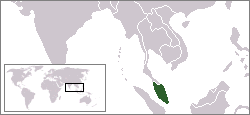
British Malaya was the collective name for the territories on the Malay Peninsula and the island of Singapore that came under significant British control from the early 19th century until the mid-20th century. Rather than a single colony, it comprised a mix of directly governed colonies and Malay states under British influence. Over the nineteenth and early twentieth centuries the region became integrated into global trade networks and the economy of the British Empire, rising to prominence for commodities such as tin and natural rubber and for its strategic ports.
Image gallery
10 Images


Political structure and administration
The political arrangement was a patchwork of administrative forms. The Straits Settlements were Crown colonies containing important port towns. Several Malay states entered into formal arrangements that produced the Federated Malay States, administered through British advisers and resident officials who coordinated policy across multiple states. Other Malay states preserved greater autonomy and are commonly described as the Unfederated Malay States, governed by local rulers assisted by British advisors. These varied relationships reflected treaties, protectorates and differing local responses to British influence.
Economy and infrastructure
The colonial economy relied on extractive industries and large-scale plantations. Tin mining and rubber cultivation became the backbone of exports and attracted investment, migrant labour and capital. To support extraction and trade, authorities and private companies built port facilities, railways and roads that linked interior production areas to coastal export points. Urban centres developed around these nodes of trade, administration and finance, and many modern ports and transport corridors trace their origins to this era.
Population and society
British Malaya’s labour demands led to significant migration, most notably of Chinese and Indian workers who joined the existing indigenous Malay populations. This created a plural society with distinct economic roles, languages and religious practices. Colonial legal systems, education policies and land regulations coexisted with local customs, shaping patterns of land ownership, political representation and communal identity. The demographic mix and colonial-era policies have had lasting effects on social and political life in the successor states.
War, occupation and disruption
During the Pacific War Japanese forces invaded Malaya and Singapore in late 1941 and early 1942, rapidly overwhelming British defences and occupying the territories for the remainder of the conflict. The occupation disrupted colonial administration, wartime economies and civilian life, and it undermined the image of imperial invulnerability. The experience of wartime occupation became an important factor in postwar politics and nationalist movements across the region.
Postwar reorganization and path to self-government
After 1945 the British government and local political leaders negotiated a series of constitutional proposals and reorganizations. Postwar plans and debates included proposals that briefly sought to centralize administration and others that restored greater federal or state autonomy. Political mobilization and party formation in the late 1940s and 1950s led to demands for self-government. These developments culminated in the creation of an independent Malayan state in 1957 and later in the formation of a larger federation that included additional territories in 1963.
Legacy and significance
The legacy of British Malaya is visible in modern legal systems, administrative institutions, transport and port infrastructure, plantation and industrial patterns, and in demographic distributions of ethnic communities. Debates about land use, economic strategy and intercommunal relations continue to be influenced by structures and policies established during the colonial period. Successor states, notably Malaysia and Singapore, emerged from this shared colonial history but followed different constitutional and political paths after independence.
Further reading and reference topics
- Malay Peninsula and regional geography
- Colonial administration and protectorates
- British imperial policy in Southeast Asia
- Tin mining and its economic role
- Rubber cultivation and plantation economies
- Path to Malayan independence
- Trade networks and port development
- Japanese invasion and wartime campaigns
- World War II in Southeast Asia and occupation effects
- Singapore's role in the colonial period and after
Related articles
Author
AlegsaOnline.com British Malaya: colonial territories on the Malay Peninsula and Singapore Leandro Alegsa
URL: https://en.alegsaonline.com/art/14274