
Copepod — small planktonic crustacean
Copepods are tiny, often planktonic crustaceans found in marine and freshwater habitats. They form a key link in aquatic food webs, with diverse free-living and parasitic forms and thousands of known species.
Overview
Copepods are minute, often microscopic animals in the subclass Copepoda, commonly described as shrimp-like or simple crustaceans. They occur throughout the world's waters—from open seas to inland lakes and shallow ponds—and occupy a wide range of ecological niches. Many species drift as part of the zooplankton, while others live on or in larger animals as parasites.
Image gallery
10 Images

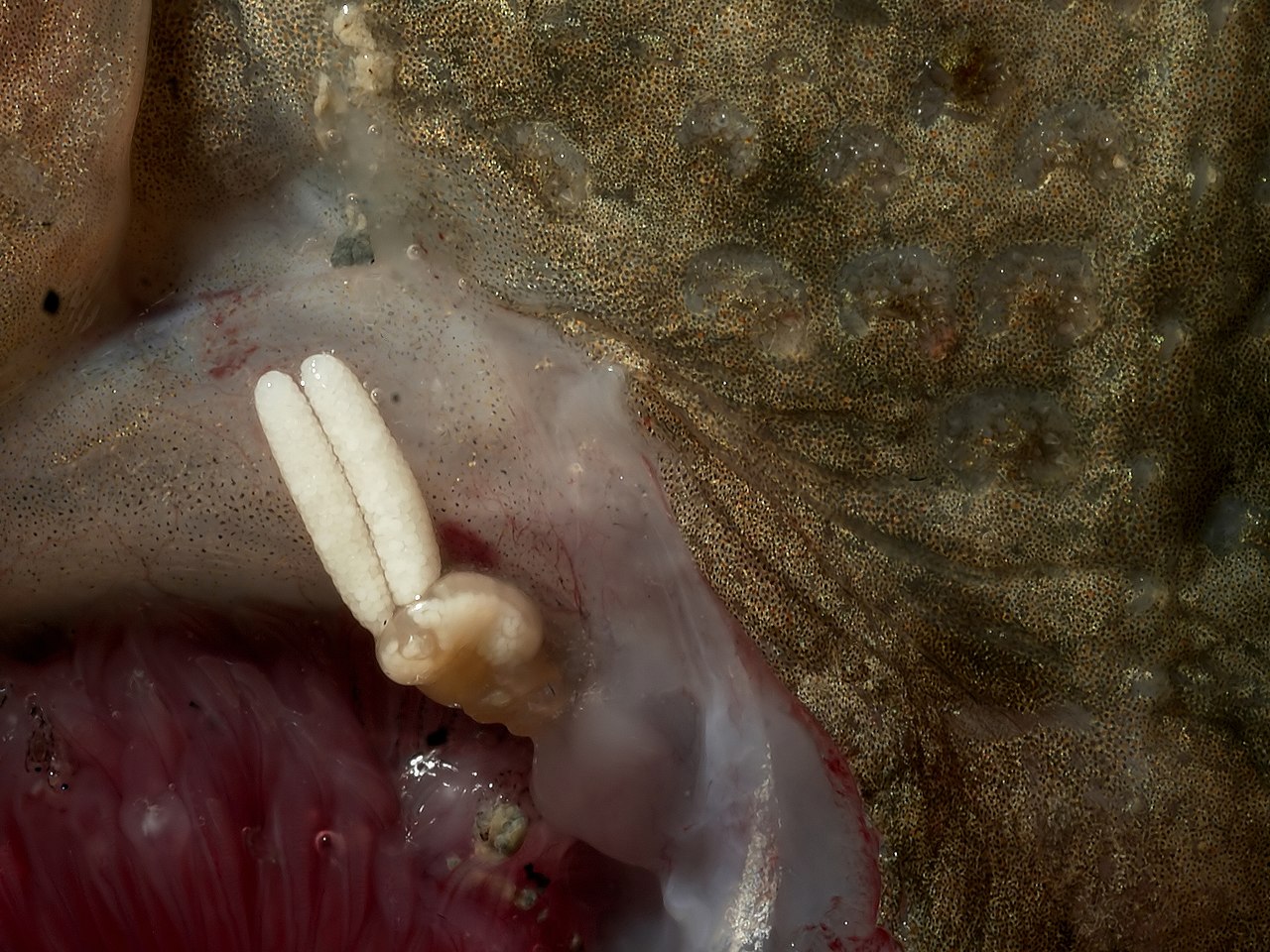
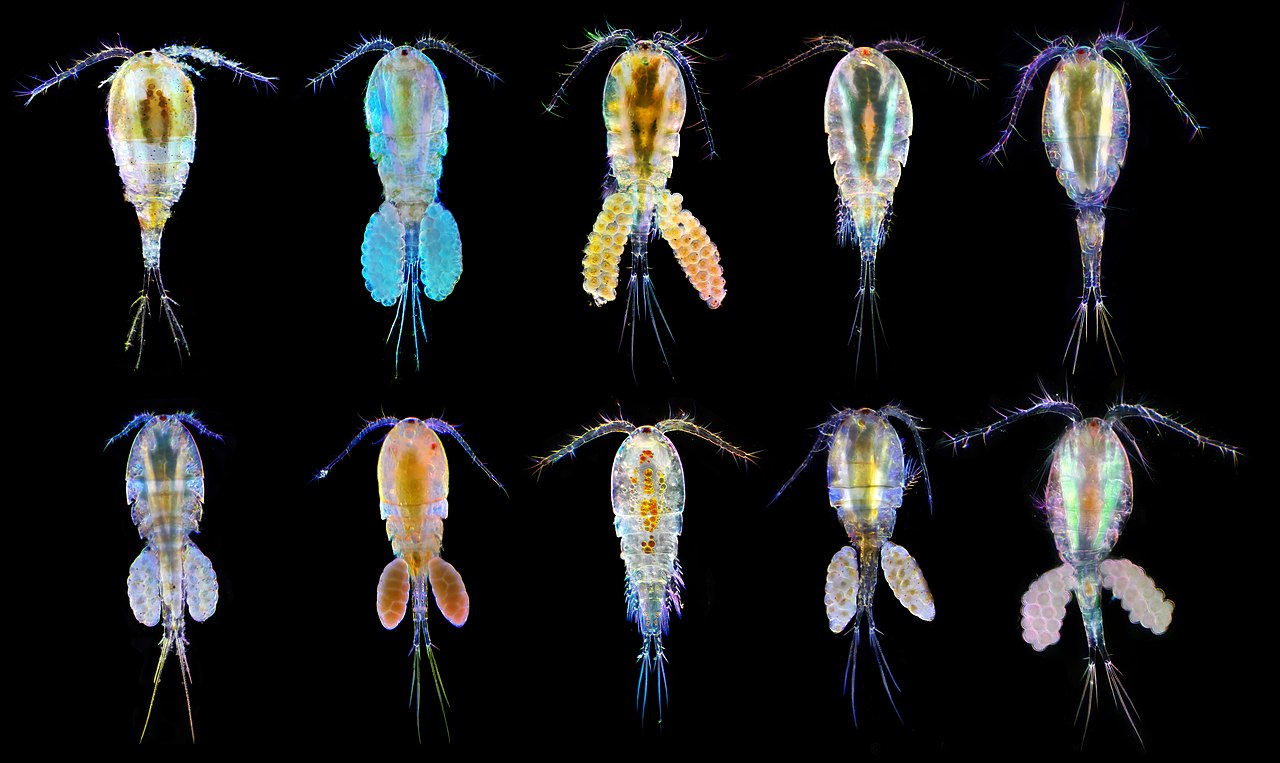


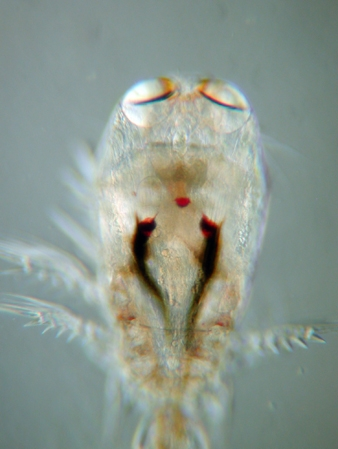
Characteristics and life cycle
Typical copepods are small (often 0.2–2 millimetres long) with a streamlined body, a single median eye in many planktonic species, and a set of thoracic limbs adapted for swimming. Movement is produced by rhythmic or jerky strokes of paired appendages. Reproduction usually involves distinct egg stages, nauplius larvae and several juvenile stages before reaching adulthood; some parasitic forms have modified developmental sequences.
Ecology and importance
Copepods are central to aquatic food webs: they graze on phytoplankton, microalgae, and detritus, converting primary production into a form that larger animals can consume. As such they are a primary food source for larval and adult fish, baleen whales, seabirds and other invertebrates. Their feeding and vertical migrations also influence carbon transport from surface waters to the deep ocean, contributing to biogeochemical cycles.
Diversity and classification
Copepoda is diverse, traditionally divided into roughly ten major orders and containing several thousand described species. The group ranges from entirely free-living planktonic lineages to lineages that are sessile, commensal, or parasitic on fishes and invertebrates. Taxonomy continues to be refined as new species are discovered and molecular methods revise relationships.
Human relevance and notable facts
Beyond their ecological role, copepods affect human activities through fisheries productivity and, in some cases, as intermediate hosts for parasites that impact aquaculture or wildlife. Because of their abundance and sensitivity to environmental change, copepods are used as indicators in studies of water quality and climate-driven shifts in marine ecosystems.
Typical features at a glance
- Size: mostly microscopic to a few millimetres.
- Habitat: marine and freshwater, pelagic and benthic niches.
- Ecological role: primary consumers and prey for many larger animals; contributors to carbon cycling.
- Variety: free-swimming planktonic species and parasitic species with specialized morphologies.
For more introductory resources and images, see general summaries and identification guides that cover plankton, crustaceans and aquatic food chains (food web summaries and regional surveys).
Related articles
Author
AlegsaOnline.com Copepod — small planktonic crustacean Leandro Alegsa
URL: https://en.alegsaonline.com/art/22942