
Corn snake (Pantherophis guttatus): natural history, identification, and captive care
Comprehensive overview of the North American corn snake (Pantherophis guttatus): identification, distribution, ecology, color morphs, captive care, and its distinction from similar species.
Overview
The corn snake (Pantherophis guttatus) is a medium-sized, nonvenomous rat snake native to the southeastern and central United States. A constrictor, it subdues small vertebrate prey by coiling around them rather than using venom. Corn snakes are widespread in suitable habitats, adaptable to human-modified landscapes, and commonly kept as pets because of their generally docile temperament and the many captive-bred color and pattern varieties.
Image gallery
10 Images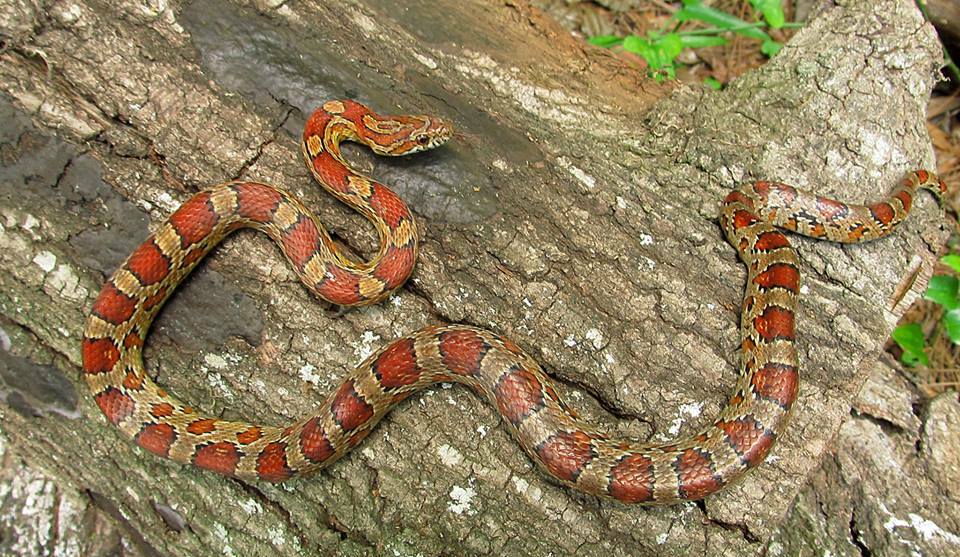




Physical description and size
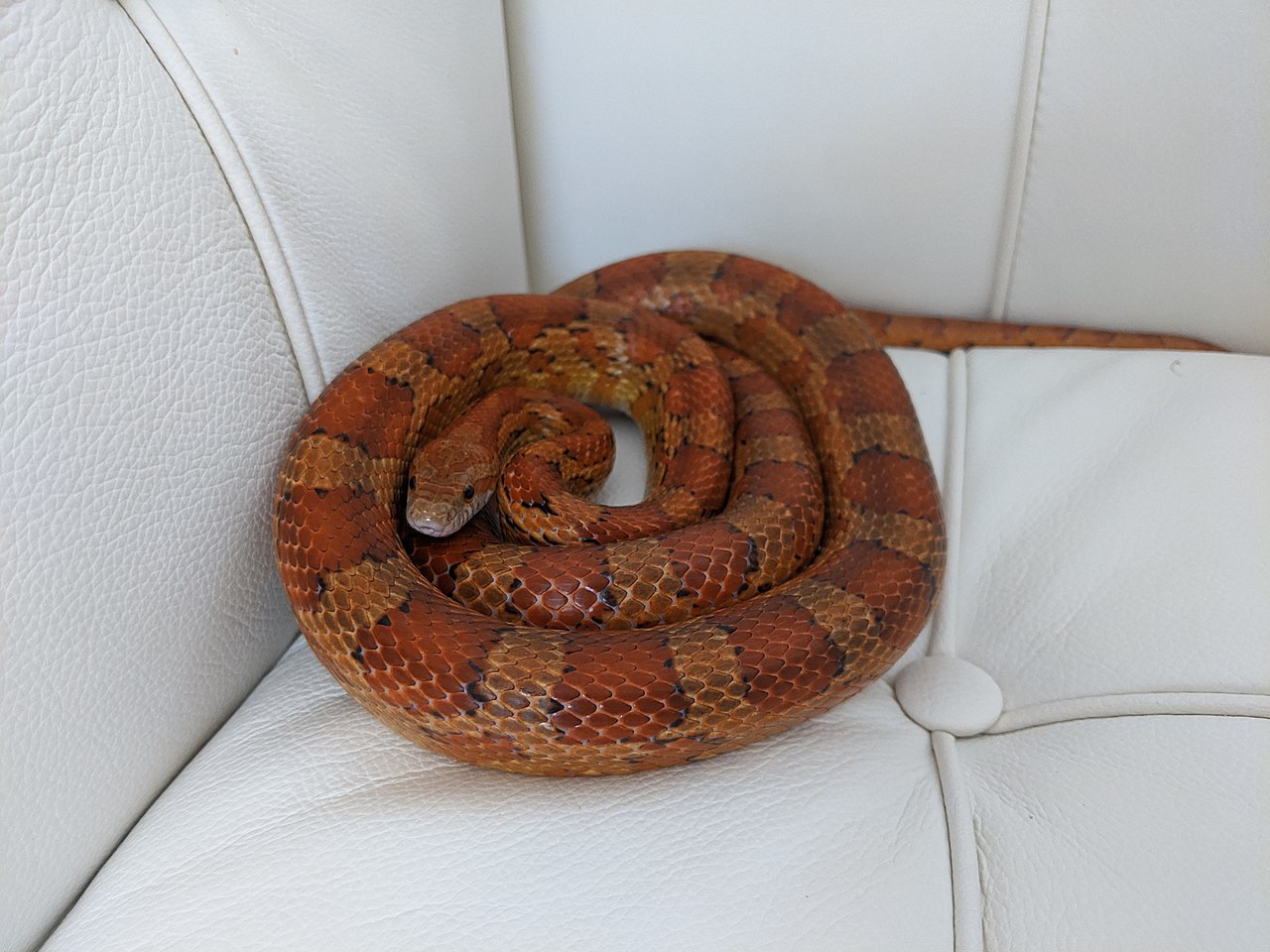
Adults are moderate in length and relatively slender, with smooth scales. Reported size ranges for adults commonly fall between roughly four and six feet (about 1.2–1.8 m), though individuals may be somewhat smaller or larger. Natural dorsal coloration and pattern typically include a sequence of reddish, orange, brown or gray blotches on a lighter background, and a distinctive checkered belly pattern. Breeders have produced many color and pattern morphs; two well-known pigment-related mutations are albinism (loss of dark pigment) and anerythrism (loss of red pigment), but selective breeding has produced dozens of named morphs beyond those simple variants.
Taxonomy and naming
The corn snake is placed in the genus Pantherophis in many recent treatments, and older literature may refer to it as Elaphe guttata. The common name likely refers either to the species' frequent presence near grain stores where it hunts rodents or to the resemblance of its belly pattern to kernels of variegated field corn. The historical usage of the name is documented in older dictionaries and natural history accounts.
Distribution, habitat and behavior
Corn snakes occur across much of the southeastern and parts of the central United States, occupying habitats that include open woodlands, edges, abandoned buildings, agricultural areas, rocky outcrops and wetlands margins. They are often associated with human structures such as barns where rodents are abundant. Activity patterns shift with weather and season; in warm months they may be more active at dusk and night, while cooler conditions encourage daytime activity. They are adept climbers and may ascend vegetation and structures to hunt or escape predators.
Diet and ecological role
Wild corn snakes feed mainly on small mammals such as mice and rats, but they also take birds, bird eggs, frogs and other small vertebrates when available. By preying on rodents, they provide an ecological service by helping limit populations of animals that can damage crops and spread disease. Because they are nonvenomous and generally not aggressive, they are considered beneficial to people in agricultural and suburban landscapes.
Reproduction and life history
Corn snakes are oviparous: females lay clutches of eggs in concealed, humid locations such as rotting logs, compost piles or burrows. Hatchlings are independent at birth. In the wild, many corn snakes live for several years; captive individuals, when properly cared for, commonly live substantially longer, with some reported to exceed two decades.
Identification and differences from similar species
Corn snakes are sometimes mistaken for venomous species such as the copperhead. Useful distinguishing features include the corn snake's slimmer head, rounded pupils, lack of heat-sensing pits between the eyes and nostrils, and the pattern shapes: copperheads typically show hourglass-shaped crossbands and a more muted, coppery tone. When in doubt, leave a snake alone and seek identification from a qualified field guide or local wildlife authority.
In captivity: husbandry basics
Because they adapt well to captivity, corn snakes are popular pets. Responsible care includes a securely locked enclosure, an appropriate temperature gradient with a warm basking zone and cooler retreat, fresh water, a hiding place, and a suitable substrate. Diet in captivity is typically laboratory-raised rodents offered at intervals appropriate for the snake's age and size. Regular, gentle handling can help maintain a docile temperament, but handling should be minimized during shedding or after feeding.
Conservation and human interactions
Overall populations are considered stable across much of the species' range, and captive breeding supplies most of the pet trade. Local threats include habitat loss, road mortality and intentional killing due to misidentification. Education about the species' role in controlling pests and how to tell it apart from venomous snakes can reduce unnecessary persecution.
Further reading and resources
For more information consult species accounts, field guides and husbandry resources: species overview, rat snake group, range and distribution, garter snake comparison, ball python comparison, venom and safety, rodent prey information, agricultural impact, name origins, diet details, historical usage, identification mnemonic.
Questions and answers
Q: What is the scientific name of the corn snake?
A: The scientific name of the corn snake is Pantherophis guttatus.
Q: Where are corn snakes found?
A: Corn snakes are found throughout the southeastern and central United States.
Q: How long can a corn snake live in captivity?
A: A corn snake can live up to 23 years or longer in captivity.
Q: How do you distinguish a corn snake from a copperhead?
A: Corn snakes can be distinguished from copperheads by their brighter colors, slender build and lack of heat-sensing pits.
Q: What does the name "corn snake" refer to?
A: The name "corn snake" refers to its regular presence near grain stores, where it preys on mice and rats that eat harvested corn. It may also refer to its distinctive pattern resembling variegated kernels of corn.
Q: What type of creatures do wild corn snakes usually eat?
A: In the wild, they usually feed on rodents, small amphibians, birds and/or their eggs, other types of eggs, etc., but not insects.
Q: What mutations can occur in a corn snake's appearance?
A: Possible mutations that can occur in a corn snake's appearance include albinism (lack of black pigment) and anerythrism (lack of red pigment).
Related articles
Author
AlegsaOnline.com Corn snake (Pantherophis guttatus): natural history, identification, and captive care Leandro Alegsa
URL: https://en.alegsaonline.com/art/23121
Sources
- iucnredlist.org : "Pantheropis guttatus"
- reptile-database.reptarium.cz : "Pantheropis guttatus"
- nationalzoo.si.edu : "Corn Snake Fact sheet"
- pondturtle.com : Elaphe guttata guttata
- fohn.net : "Corn Snake"
- dnr.state.md.us : "Did Someone Say Snakes?"
- virginiaherpetologicalsociety.com : "Reptiles and amphibians of Virginia"
- login.proxy.cc.uic.edu : "Shibboleth Authentication Request"
- flmnh.ufl.edu : "FLMNH - Eastern Corn Snake (Pantherophis guttatus)"
- petco.com : PetCo Corn Snake Care Sheet