
Agkistrodon contortrix (Eastern copperhead)
Venomous pit viper native to eastern North America. Mid-sized, copper-colored, ambush predator with distinctive hourglass bands; venom rarely fatal to healthy adults but can cause serious local injury.
Agkistrodon contortrix, commonly called the eastern copperhead, is a venomous pit viper found in much of eastern North America. Recognizable by its copper-colored head and hourglass-shaped dorsal bands, it is a medium-sized snake that occupies a variety of habitats and is an important predator of small vertebrates and large invertebrates.
Image gallery
10 Images



Description
Copperheads are typically stocky with keeled scales and a triangular head typical of vipers. Ground coloration ranges from light tan to pinkish or brown, marked with darker crossbands that narrow along the spine. Adult lengths are commonly around 60–90 cm (2–3 feet), although individuals exceeding four feet (about 1.2 m) have been recorded. Young snakes retain similar patterning and may display a yellow tail tip used to lure prey.
Distribution and habitat
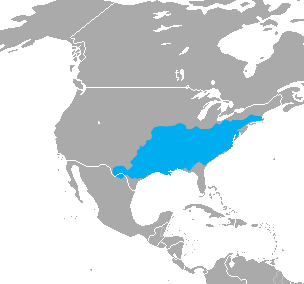
The species occurs across the eastern United States, from parts of New England and the Midwest southward through the Appalachian region to the Gulf Coast, and into areas drained by the Mississippi drainage. Copperheads use a range of habitats including deciduous forests, rocky outcrops, floodplain edges, swamps, and human-altered areas such as logging clearings and suburban yards where cover and prey are available.
Behavior, diet, and reproduction
Copperheads are ambush predators that feed on small mammals, birds, amphibians, large insects, and other reptiles. They rely on camouflage and heat-sensitive pits to detect warm-blooded prey. Activity peaks in warm months and during twilight. Reproduction is viviparous: females give birth to live young in late summer, with litter sizes typically a few to a dozen offspring depending on the female.
Venom, human interactions, and conservation
Their venom is primarily cytotoxic and hemotoxic, producing local pain, swelling, and tissue damage; systemic effects and fatalities are uncommon in healthy adults when modern medical care is available. Antivenom and supportive treatment are used for significant envenomation. Copperheads are generally not aggressive but will defend themselves if threatened; many bites occur when snakes are accidentally stepped on or handled. Populations are widespread and considered common in much of their range, though habitat loss and persecution can reduce local numbers.
Notable facts and distinctions
- They are members of the pit viper subfamily, possessing heat-sensing pits between the eyes and nostrils.
- The hourglass dorsal pattern helps conceal them among leaf litter and rocky terrain.
- Copperheads are sometimes mistaken for similar species, so identification should be left to experienced observers.
Questions and answers
Q: What is Agkistrodon contortrix?
A: Agkistrodon contortrix is a species of venomous snake commonly referred to as the eastern copperhead.
Q: Where does Agkistrodon contortrix live?
A: Agkistrodon contortrix lives mainly on the eastern coast of North America and in the Mississippi drainage.
Q: Is Agkistrodon contortrix a common species?
A: Yes, Agkistrodon contortrix is a common species.
Q: How likely is an eastern copperhead to bite if it feels threatened?
A: Compared to other species of snakes, Agkistrodon contortrix is more likely to bite if it feels threatened.
Q: How long can an eastern copperhead grow to be?
A: One of the largest recorded eastern copperheads measured a little over four feet long.
Q: Is the venom of Agkistrodon contortrix fatal to humans?
A: While the eastern copperhead is venomous, its venom is rarely fatal to humans.
Q: Is the eastern copperhead a large or small snake?
A: The eastern copperhead is a medium-sized snake.
Related articles
Author
AlegsaOnline.com Agkistrodon contortrix (Eastern copperhead) Leandro Alegsa
URL: https://en.alegsaonline.com/art/22959