
Confederation of the Rhine (1806–1813)
A Napoleonic client confederation of German states formed after the Holy Roman Empire's collapse; it reorganized German territories, supplied troops to France, and influenced later German unification.
Overview
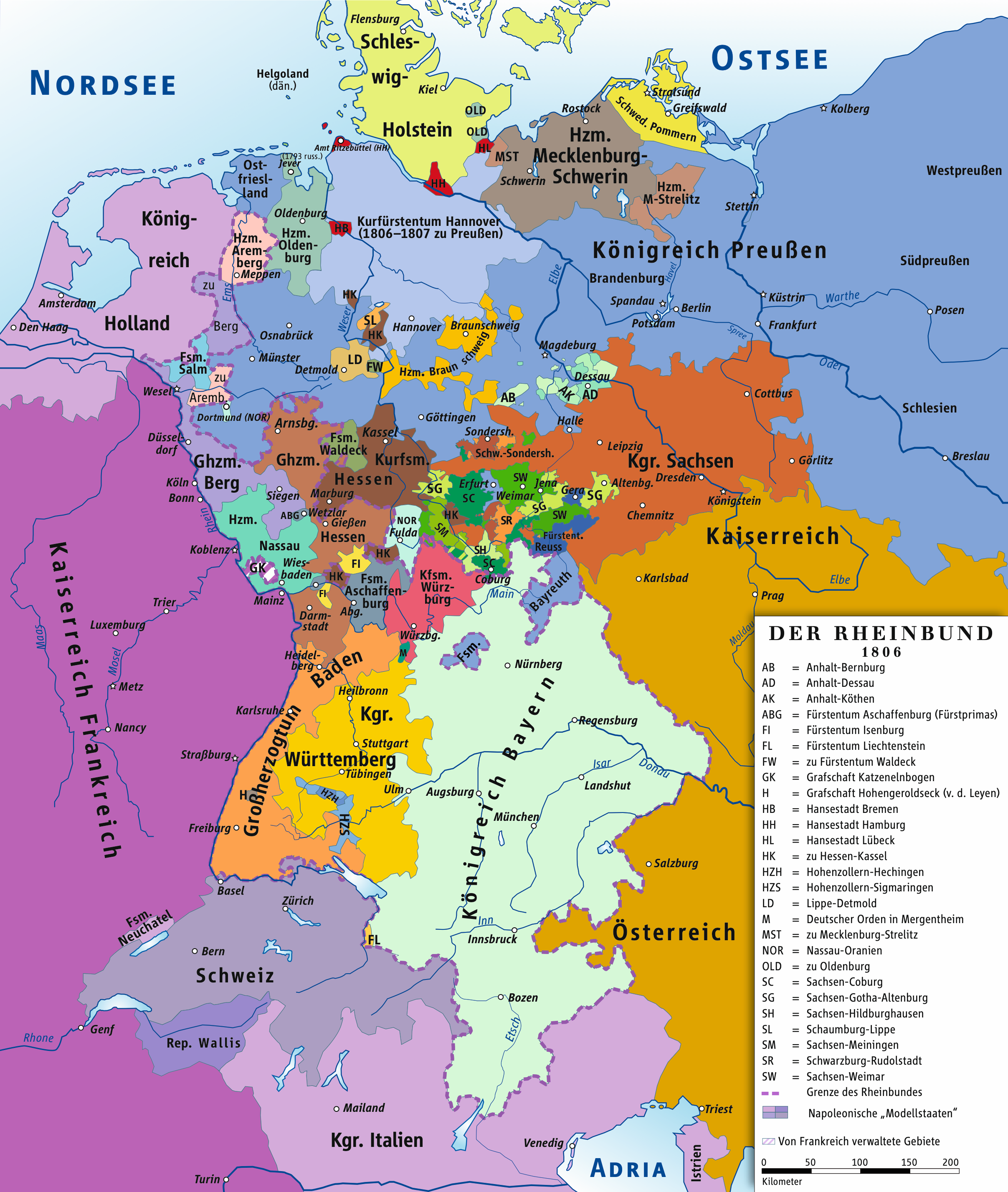
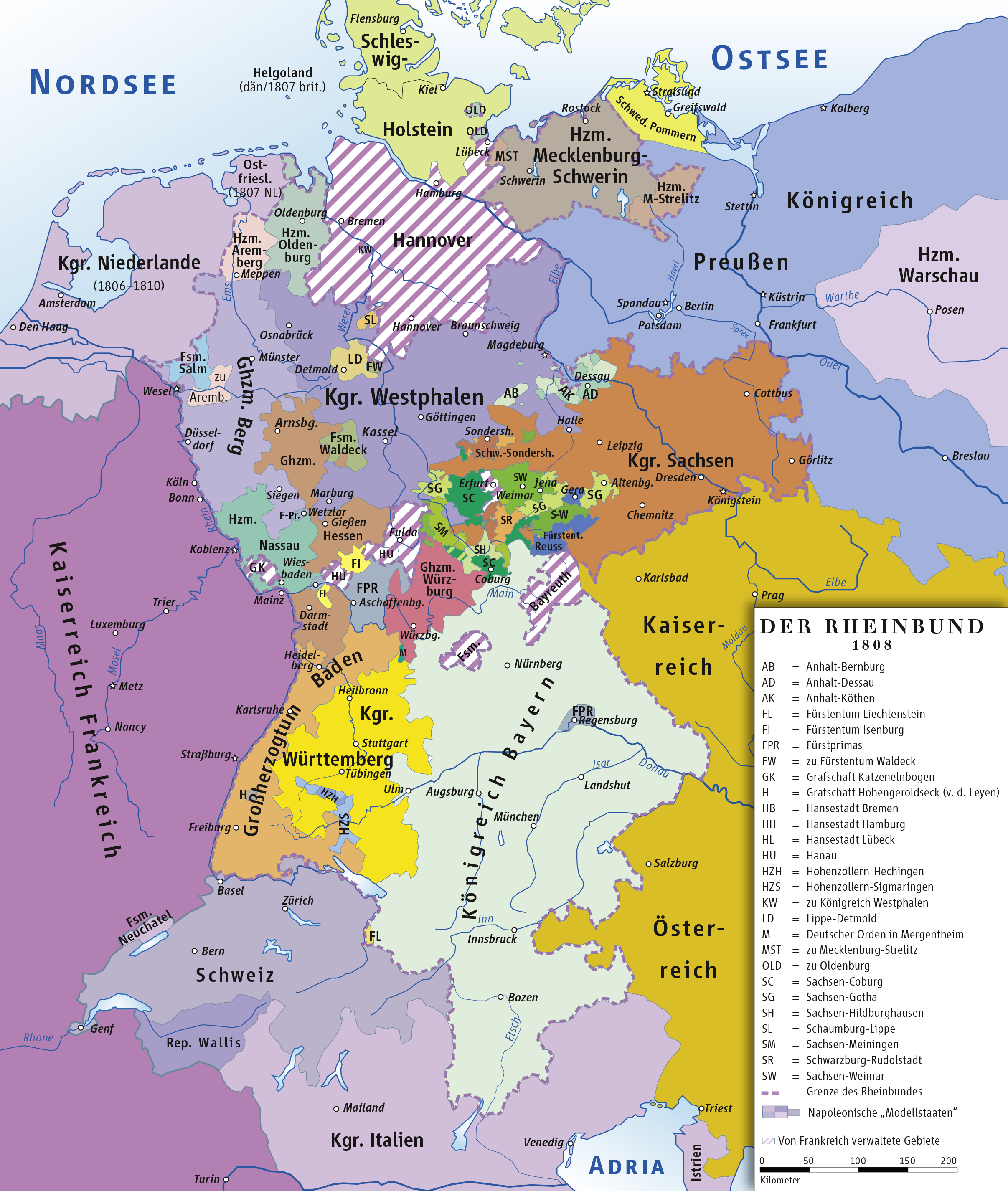
The Confederation of the Rhine was a league of German states established in 1806 under the influence of the First French Empire. Napoleon I acted as its nominal head, often styled the Protector of the Confederation, and many member rulers recognized French supremacy. The confederation brought dozens of previously independent principalities, duchies and free cities into a single diplomatic framework east of the Rhine River. It lasted from 1806 until the collapse of French power in 1813.
Image gallery
10 Images







Characteristics and membership
Rather than a federal state, the Confederation was a coalition of sovereign rulers who retained internal authority but accepted common military and foreign-policy obligations. Membership included larger reorganized states such as Bavaria, Württemberg and Baden as well as smaller territories that had been mediatized or secularized during the reorganization of the German lands. Notably, the confederation did not include the two great German powers of the period: Prussia and Austria.
- Major members: Bavaria, Württemberg, Baden, Saxony.
- Common features: dynastic rulers, raised troops for France, loss of some sovereignty compared with pre-1806 arrangements.
Origins and historical context
The confederation arose in the wake of French military victories and the formal end of the Holy Roman Empire in 1806. Napoleon sought to create a buffer of allied German states, simplify the patchwork of jurisdictions, and secure military support. The process accelerated secularization and mediatization: many ecclesiastical territories and free imperial cities were absorbed into larger principalities.
Role and legacy
Member states supplied troops to French campaigns and were bound by treaties that favored Paris. The Confederation's existence was short-lived: following Napoleon's defeat in Germany and the decisive Battle of Leipzig (1813) the league unraveled and most members defected or shifted allegiance. Its dissolution preceded the reorganization of central Europe at the Congress of Vienna and formation of the German Confederation in 1815. Historians regard the Rhine Confederation as an important transitional phase that altered territorial boundaries and contributed indirectly to later movements for German unification.
Notable facts
The Confederation illustrates early 19th-century state-building under great-power domination: it imposed a new legal and diplomatic order on previously fragmented lands, served strategic French interests, and changed the map of Germany in ways that survived beyond Napoleon's fall. Contemporary accounts and later scholarship emphasize both its short lifespan and its enduring institutional consequences for German politics.
For further reading about key personalities and treaties connected to the Confederation, see entries on Napoleon and the diplomatic realignments of the Napoleonic era.
Related articles
Author
AlegsaOnline.com Confederation of the Rhine (1806–1813) Leandro Alegsa
URL: https://en.alegsaonline.com/art/22470