
Chandrayaan-1: India's first mission to the Moon
Chandrayaan-1 was India's inaugural lunar orbiter, launched by ISRO in October 2008. It mapped most of the lunar surface, carried international instruments and provided key evidence for water-related molecules on the Moon.
Overview
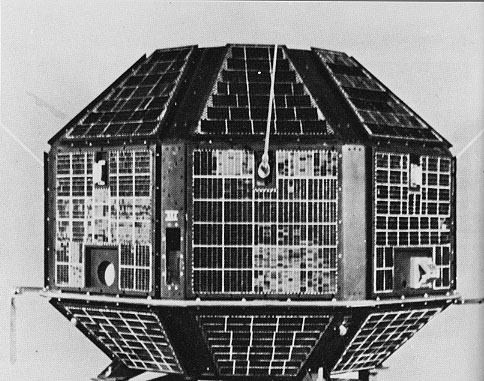
Chandrayaan-1 was the first Indian mission to explore the Moon, developed and operated by the Indian Space Research Organisation. The spacecraft lifted off on 22 October 2008 aboard a PSLV-class launch vehicle and was inserted into lunar orbit later that year. The mission combined remote sensing, mineralogical studies and impact experiments to increase understanding of lunar chemistry, geology and resources.
Image gallery
9 Images





Objectives
Primary goals included high-resolution mapping of the lunar surface, characterization of mineral composition, and searches for water- or hydroxyl-bearing materials. Chandrayaan-1 also aimed to demonstrate new technologies and to foster scientific collaboration by carrying instruments contributed by several international partners.
Spacecraft and instruments
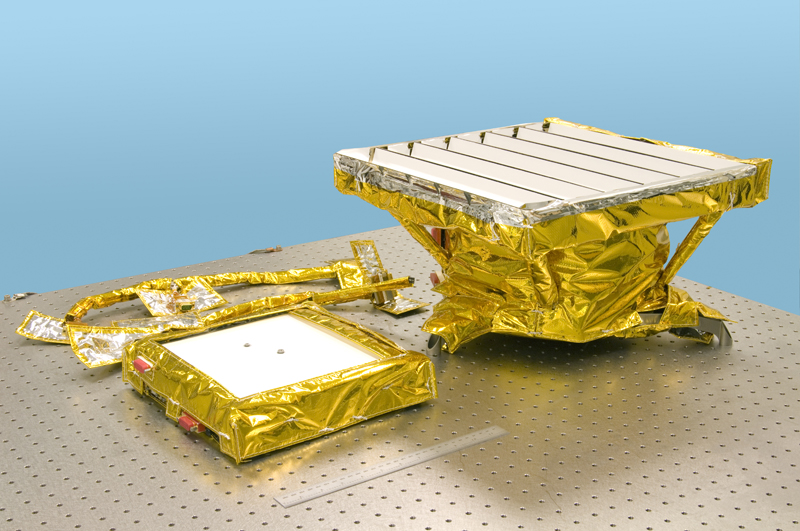
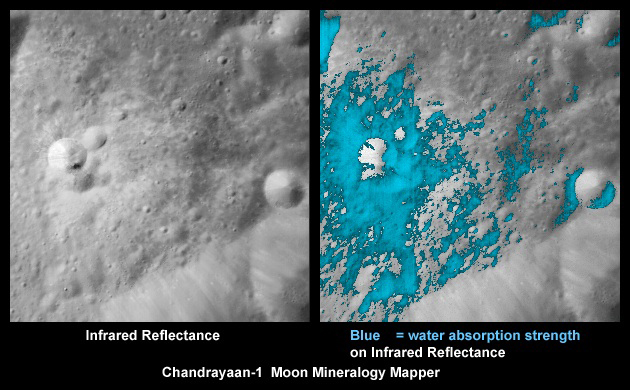
The orbiter carried a suite of scientific instruments from India and foreign agencies. Notable payloads included the externally provided Moon Mineralogy Mapper, a Moon Impact Probe that was released to make a controlled descent, and several cameras and spectrometers for imaging and elemental mapping. Together these sensors produced datasets used for global mineral maps and topographic studies.
Mission timeline and end of operations
Although designed for a nominal two-year lifetime, Chandrayaan-1 operated for about 312 days. During that time the mission mapped roughly 95% of the lunar surface, producing high-resolution imagery and compositional maps. Contact with the spacecraft was lost when uplink and downlink radio signals ceased on 29 August 2009; after unsuccessful recovery attempts, the mission was declared complete.
Key discoveries
One of Chandrayaan-1's most significant scientific outcomes was the detection of water-related signatures in lunar soils. Spectral measurements indicated the presence of hydroxyl and possible molecular water at or near the surface, a result that influenced subsequent scientific thinking about lunar volatiles and potential in-situ resources. The mission also provided improved maps of elemental abundance and mineralogy that support geological interpretations and future exploration planning.
Moon Impact Probe
The small Moon Impact Probe separated from the main orbiter and descended to the surface, carrying instruments to make in situ measurements during descent and impact. Its controlled release demonstrated an additional operational capability and contributed to localized observations of the landing area.
Legacy and international collaboration
Chandrayaan-1 marked a milestone in India's space program and strengthened partnerships with other space agencies and research institutions. The mission showcased effective collaboration by carrying instruments and experiments contributed by international teams, and it laid technical and scientific groundwork for follow-on lunar missions.
Quick facts
- Nation: India
- Spacecraft: Chandrayaan-1 (orbiter and impact probe)
- Launch vehicle: PSLV
- Target: Moon
- Operator: ISRO
- Launch date: 22 October 2008
- Operational duration: 312 days
Chandrayaan-1 remains an important milestone in planetary exploration for its scientific returns and for establishing operational experience that continues to influence lunar missions and research today.
Related articles
Author
AlegsaOnline.com Chandrayaan-1: India's first mission to the Moon Leandro Alegsa
URL: https://en.alegsaonline.com/art/18534
Sources
- newindianexpress.com : "IE Campus Now Home to Scale Model of PSLV-XL"
- science.nasa.gov : "NASA Space Missions: Chandrayaan 1"
- planetary.brown.edu : "A New Lunar Globe as Seen by the Moon Mineralogy Mapper..."
- isro.org : "Chandrayaan-I Spacecraft Loses Radio Contact"
- isro.org : "Objectives"