
Circinus (constellation)
Circinus is a small southern constellation named for the drafting compass. It contains faint stars, several variable stars, and the nearby active Circinus Galaxy. Best seen from southern latitudes.
Overview
Circinus is a small and faint constellation in the southern celestial hemisphere whose name means "the compass" (a drafting instrument). It occupies a modest area of sky and does not contain any very bright stars, but it lies in a rich region of the Milky Way and hosts a number of interesting astronomical objects that attract observers and researchers.
Image gallery
7 Images




Characteristics
Circinus is notable for its relatively faint stellar pattern: its brightest member, Alpha Circini, is only modestly bright and is known to be a peculiar A‑type star. The constellation contains a mix of main‑sequence and variable stars and sits close to the dense star fields and dust lanes of the southern Milky Way, which both hides and enriches the view with nebulae and distant galaxies seen through gaps in the dust.
History and name
The constellation was introduced in the 18th century by the French astronomer Nicolas‑Louis de Lacaille, who mapped many previously unrecorded southern constellations and often used names of scientific instruments. Lacaille assigned Circinus to represent a drafting compass, grouping it with several other instrument‑named constellations created during early southern‑hemisphere surveys.
Notable objects
- The Circinus Galaxy — a nearby spiral galaxy with an active nucleus; it is one of the best‑known deep‑sky residents of the constellation and has been studied as an example of an active galactic nucleus.
- Alpha Circini — the brightest star of the constellation and a rapidly oscillating chemically peculiar A‑type star (of interest to stellar astrophysicists).
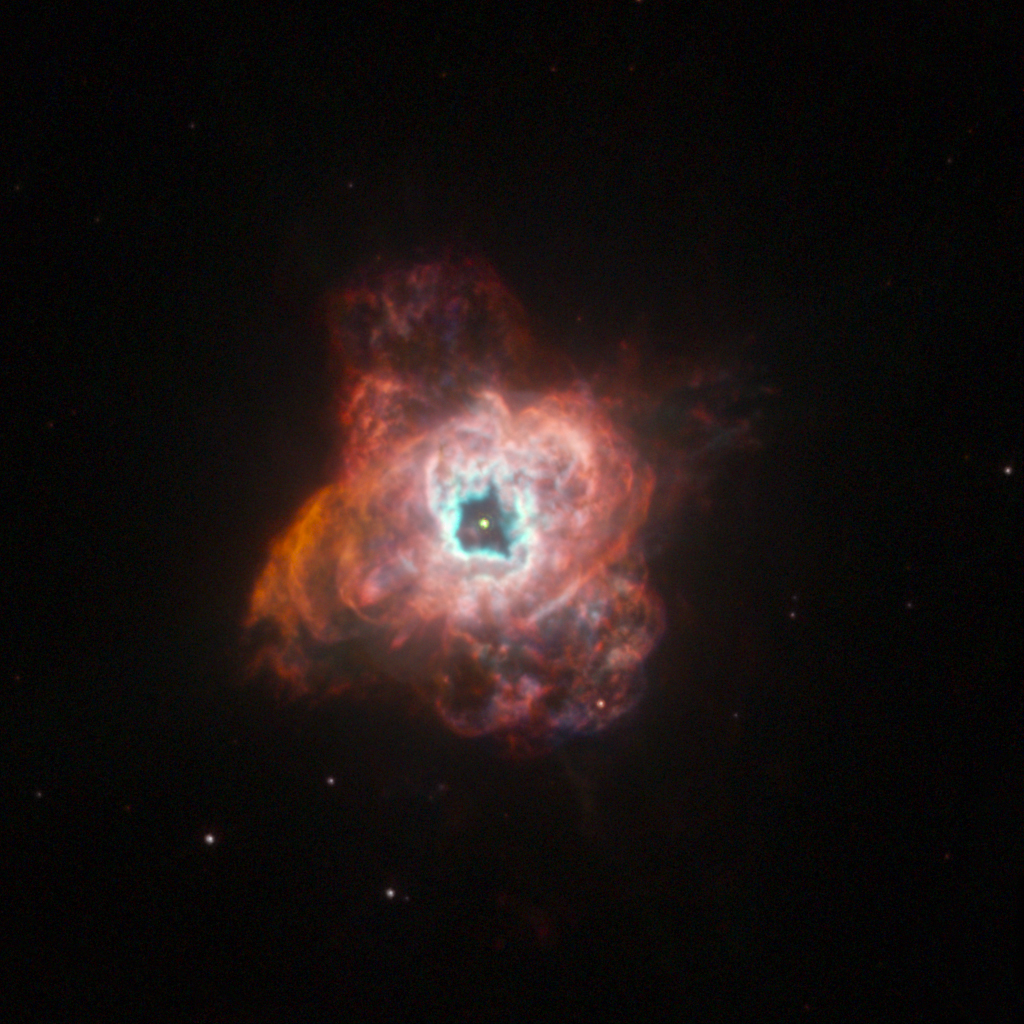
- Several faint star clusters, planetary nebulae and background galaxies that become accessible with moderate to large amateur telescopes under dark southern skies.
Observing
Circinus is best observed from southern latitudes, where it climbs higher above the horizon and away from light pollution. Because its stars are subdued in brightness, it is less conspicuous than many neighbouring constellations, but deep‑sky observers prize it for the Circinus Galaxy and for fields rich in faint nebulae and star clusters when conditions are favorable.
Distinctions
Although small and not prominent to the casual observer, Circinus is important in professional astronomy through its association with the nearby active galaxy that bears its name, and through the study of its peculiar and variable stars. Its inclusion among Lacaille's instrument constellations links it to an era of southern sky exploration and naming conventions still in use today.
Related articles
Author
AlegsaOnline.com Circinus (constellation) Leandro Alegsa
URL: https://en.alegsaonline.com/art/20435
Sources
- iau.org : "Circinus, constellation boundary"