
Carolingian Empire (c. 800–888)
Medieval realm of the Franks under the Carolingian dynasty. Centered on Charlemagne's crown in 800, it reshaped Western and Central Europe, prompting administrative, cultural and religious reforms with a lasting legacy.
Overview
The term Carolingian Empire is used by historians to describe the realm ruled by the Carolingian dynasty during the Early Middle Ages. It grew out of the kingdom of the Franks and is usually dated from the imperial coronation of Charlemagne in 800 to the death of Charles the Fat in 888. The polity spanned large parts of western and central Europe and played a crucial role in the transition from Late Antiquity to the medieval political landscape; scholars situate it within the broader period known as the Early Middle Ages.
Image gallery
10 Images






Territory and political structure
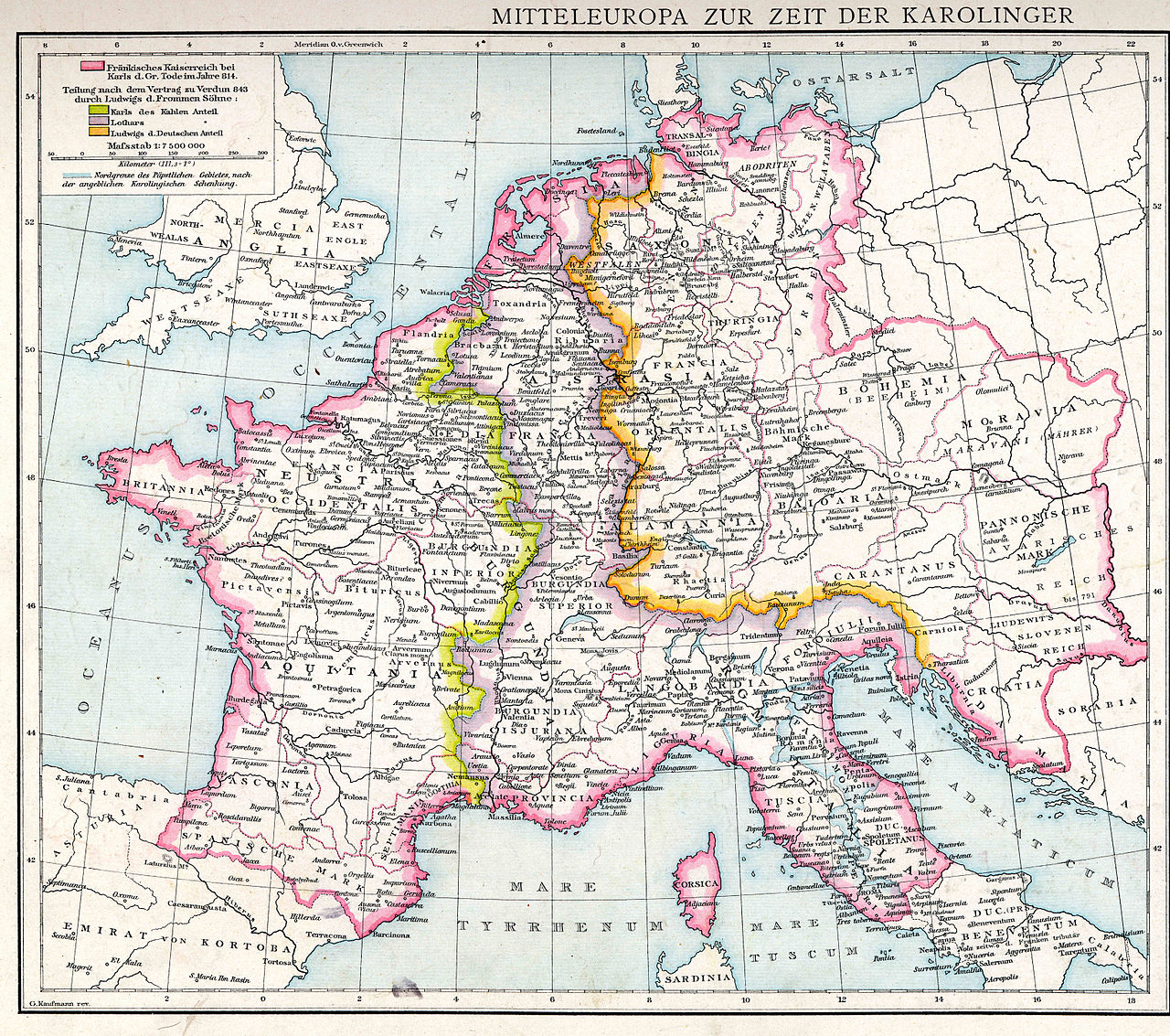
At its height the empire encompassed diverse provinces, including areas that later became parts of modern France, Germany and northern Italy. Emperors and kings attempted to govern this expanse through a network of local officials, written directives (capitularies) and royal envoys. Authority was personal and often negotiated with local elites; the central government relied on provincial counts, bishops and temporary inspectors known as missi dominici to oversee administration and justice.
Cultural and ecclesiastical reforms
The Carolingian court promoted reforms in liturgy, education and writing. Monasteries and cathedral schools received renewed support, producing standardized liturgical books and fostering learning. One of the enduring achievements was the development and spread of Carolingian minuscule, a clearer script that improved copying and preservation of texts, and later influenced medieval and early modern handwriting.
Key events and rulers
- Pepin the Short — established the Carolingian royal line
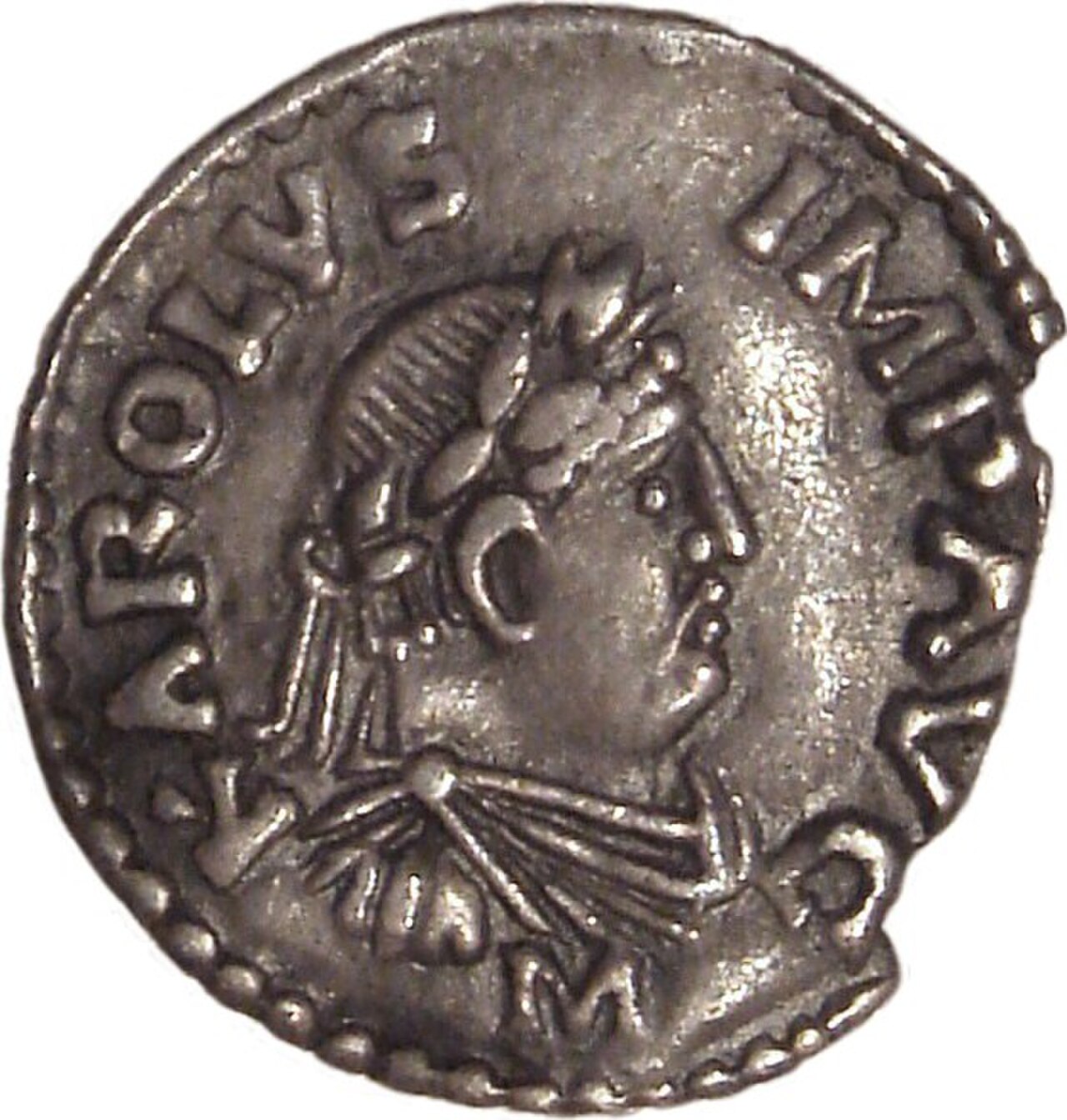
- Charlemagne — crowned emperor in 800; expanded and reorganized the realm
- Louis the Pious — sought to continue reforms but faced dynastic conflict
- Division after the civil wars and the Treaty of Verdun (843) set the stage for later kingdoms
- Charles the Fat — his death in 888 marks the conventional end of the unified empire
Legacy and significance
The Carolingian period left a durable imprint on European institutions, law, and ecclesiastical organization. Its attempts at administrative centralization, its cultural revival, and its model of a Christian emperor influenced subsequent polities, including the later concept of the Holy Roman Empire. Over time the former Carolingian lands evolved into several medieval kingdoms and, in the long term, contributed to the territorial cores of modern states such as France, Germany and Austria.
Further notes
The Carolingian realm was not a uniform state but a collection of regions governed through a mix of royal authority, local powerholders and church institutions. Its history is central to understanding the formation of medieval Europe and the continuity of Roman administrative and legal practices in a new political context.
Related articles
Author
AlegsaOnline.com Carolingian Empire (c. 800–888) Leandro Alegsa
URL: https://en.alegsaonline.com/art/17204