
Chagatai language: classical Turkic literary language of Central Asia
Chagatai was a classical Turkic literary language used across Central Asia from the Timurids to the early 20th century, influential on modern Uzbek and Uyghur and known for its rich poetic tradition.
Overview
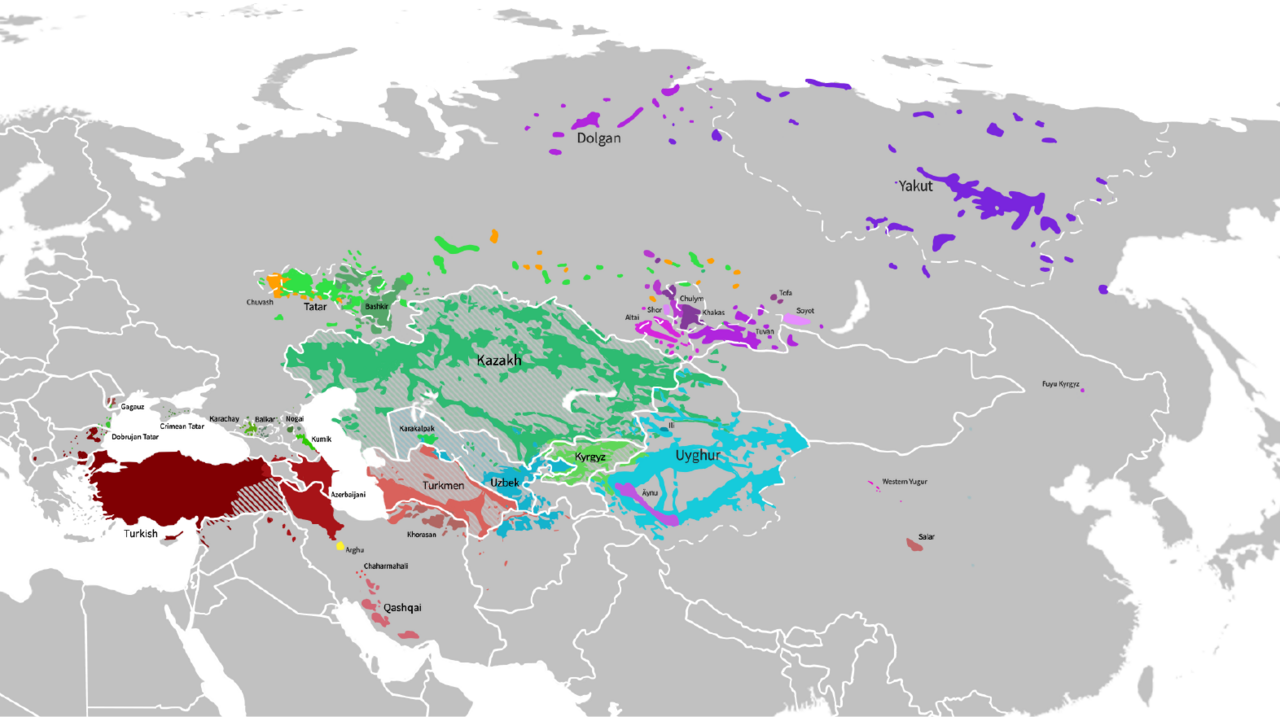
Chagatai was a prominent literary Turkic language used across Central Asia. It became a standard medium of written expression during the Timur and Timurid eras and remained an important cultural and administrative language into the early twentieth century. Traditionally considered part of the Turkic family, Chagatai is often discussed in relation to the broader Turkic languages and in historical debates connected to the Altaic hypothesis.
Image gallery
5 Images


Linguistic characteristics
Chagatai reflects the structural profile of many Turkic languages. Key features include:
- Agglutinative morphology: words are formed by adding a sequence of suffixes that mark case, tense, mood and other grammatical categories.
- Vowel harmony and a predominately subject–object–verb (SOV) word order.
- An extensive case system and productive verbal morphology that encode grammatical relations and aspect.
- Considerable lexical influence from Persian and Arabic, especially in literary, administrative and religious vocabulary.
History and literary tradition
The name Chagatai derives from the Mongol prince Chagatai Khan; the language developed from Turkic dialects of Central Asian urban and court centres. It achieved particular prestige under the Timurids, when poets and scholars adopted it for high literature. Notable figures who wrote in Chagatai include the poet and statesman Ali-Shir Nava'i, who championed the language as a vehicle for refined poetry, and several historical chroniclers and authors whose works circulated widely in manuscript.
Legacy and modern relevance
Although Chagatai ceased to function as an evolving spoken standard and is usually described as extinct in everyday use, its literary corpus has had lasting impact. It shaped the development of modern Central Asian Turkic languages such as Uzbek and Uyghur and preserves a rich record of premodern culture, law and administration. Texts in Chagatai are preserved in manuscripts and printed editions and remain a focus of philological and historical study, with modern editions, grammars and dictionaries helping scholars and readers engage with its literature.
Distinctive facts and study
Readers of Chagatai encounter Perso-Arabic orthography in most historical manuscripts, a heavy layer of Persianized vocabulary, and regional stylistic varieties produced by different courts and cities. Because of its literary prestige, Chagatai often served as a lingua franca for educated elites across wide geographic areas. Contemporary research emphasizes careful transcription, comparative grammars and annotated editions to make this heritage accessible to students of Turkic languages and Central Asian history.
For introductions and resources consult specialized grammars, edited text collections and digital catalogues that compile manuscript descriptions and editions.
Questions and answers
Q: What is Chagatai language?
A: Chagatai language is an extinct Turkish language spoken in Central Asia.
Q: Which branch of the Altaic languages family did Chagatai language belong to?
A: Chagatai language belonged to the eastern Turkic branch of the Altaic languages family.
Q: Was Chagatai language used as a literary language in any period?
A: Chagatai language was a literary language from the Timur period and the Timurids until the early twentieth century.
Q: Can Chagatai language still be spoken today?
A: No, Chagatai language is now considered extinct.
Q: What is the origin of Chagatai language?
A: Chagatai language has its origin in Central Asia.
Q: Which period of history saw the use of Chagatai language as a literary language?
A: The Timur period and the Timurids saw the use of Chagatai language as a literary language.
Q: Is Chagatai language still widely spoken in Central Asia?
A: No, Chagatai language is considered to be extinct in Central Asia.
Related articles
Author
AlegsaOnline.com Chagatai language: classical Turkic literary language of Central Asia Leandro Alegsa
URL: https://en.alegsaonline.com/art/18317
Sources
- glottolog.org : "Chagatai"