
Charles the Fat (Charles III) — Carolingian Emperor and King
Charles the Fat (839–888), a Carolingian monarch who briefly reunited much of his grandfather's empire. His reign saw Viking pressure, political concessions and eventual deposition that ended imperial unity.
Charles the Fat (13 June 839 – 13 January 888) was a late Carolingian ruler who, for a short time in the 880s, held most of the territories once united under Charlemagne. He belonged to the Carolingian dynasty and is often identified as Charles III when styled as emperor. Contemporary and later chroniclers remembered him for his size — the epithet "the Fat" — and for a reign that combined moments of dynastic reunion with political weakness and concessions to external threats.
Image gallery
9 Images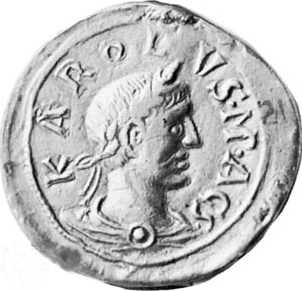
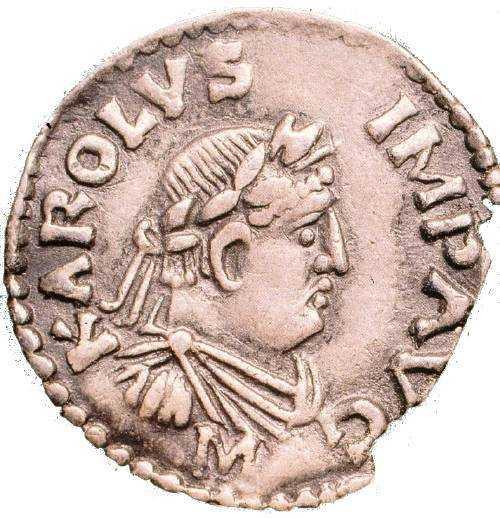
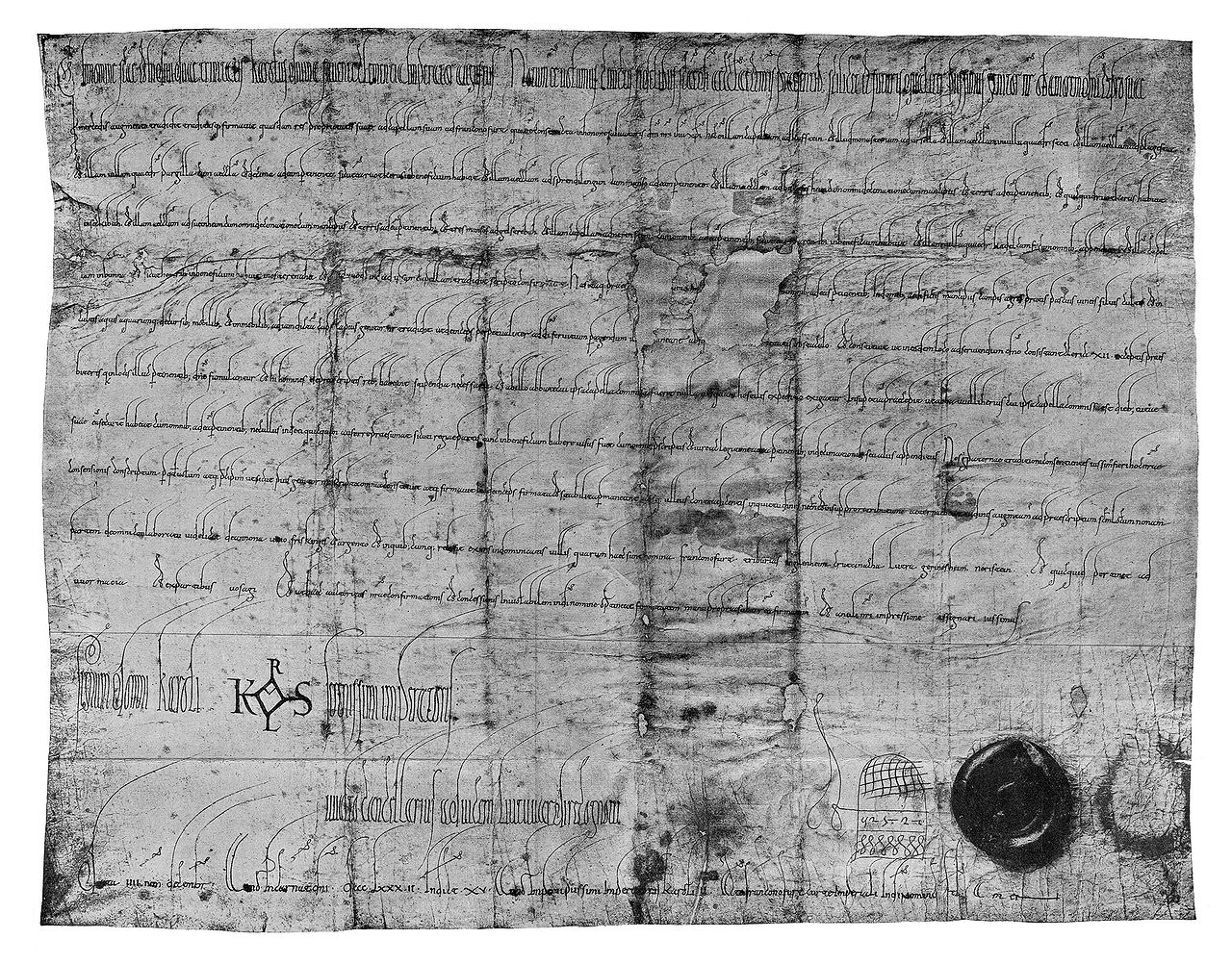




Titles and territories
Over the course of his career Charles accumulated several royal titles, often by inheritance or negotiation rather than conquest. Notable positions he held include:
- King of Alemannia (from 876)
- King of Italy (from 879)
- Holy Roman Emperor (as Charles III) from 881 — sometimes referenced in modern works with emperor context
- King of East Francia from 882 — a realm commonly discussed under the rubric of East Francia
- King of West Francia from 884, briefly bringing most royal titles into a single hand
Reign: reunification and pressures
Charles succeeded to authority at a moment of fluid borders and strong regional power-holders. Through inheritance and political settlement he reunited large portions of the Carolingian patrimony, but his capacity to govern effectively across distant regions was limited. The later 9th century was shaped by repeated Scandinavian (Viking) raids; Charles is particularly associated with negotiated settlements and payments to Viking raiders as a means of ending sieges and raids, a tactic that contemporaries sometimes criticized as appeasement.
Downfall and death
Growing dissatisfaction among nobles, military leaders and regional magnates culminated in his deposition in 887 after he lost effective control of several territories. Within weeks he died in January 888. His removal and death precipitated a rapid fragmentation of authority: various regional magnates and Carolingian relatives claimed kingship in different realms rather than accepting a single imperial ruler. Historians view his fall as a turning point that ended the brief reunification of the empire under a single Carolingian sovereign.
Legacy and historical assessment
Assessments of Charles the Fat combine recognition of the momentary reunification he achieved with criticism of his leadership style. Medieval writers who favored active military resistance to raiders judged him poorly for concluding payments and truces; later scholarship often places his decisions in the pragmatic context of limited military resources and fractious aristocratic politics. His deposition helped usher in a new political order in Western Europe, where regional kings and nobles exercised growing independence and where the idea of a single empire under a Carolingian ruler became harder to sustain.
Today Charles the Fat is studied as a figure who illustrates the strains on late Carolingian governance: dynastic inheritance could temporarily reunite territories, but sustaining centralized control required military strength, noble cooperation and stable institutions that were weakening by the late ninth century.
Related articles
Author
AlegsaOnline.com Charles the Fat (Charles III) — Carolingian Emperor and King Leandro Alegsa
URL: https://en.alegsaonline.com/art/18769