
Chen dynasty (557–589): Last of the Southern Dynasties
A concise overview of the Chen dynasty, its government, economy, cultural role, and fall — the final southern regime before Chinese reunification under the Sui.
Overview
The Chen dynasty (陳朝) ruled the southern Chinese states from 557 until 589 CE and is counted as the fourth and final regime among the so-called Southern Dynasties in China's period of political division. Founded by the general Chen Baxian (Emperor Wu), the dynasty was an ethnic Han polity centered on the lower Yangtze basin, with its capital at Jiankang (modern Nanjing). The Chen court presided over a relatively compact territory, maintained imperial institutions inherited from earlier southern courts, and confronted powerful northern states while managing internal aristocratic and military interests.
Image gallery
10 Images




Government, society, and military
The dynasty preserved an imperial bureaucracy staffed by members of the aristocracy and local gentry. Officials collected taxes, administered law, and oversaw land and labor obligations; contemporary descriptions sometimes compare the dynasty's fiscal arrangements to later periods of high imperial prosperity, though such analogies are illustrative rather than precise. The Chen military relied on riverine fleets and fortified river towns to defend the Yangtze heartland and to contest influence with northern rivals. Court politics could be factional, and succession disputes among powerful families and generals shaped the dynasty's short lifespan.
Economy and trade
The southern economy under Chen benefitted from fertile rice lands, craft industries, and active trade routes by sea and river. Maritime and inland commerce carried silk, ceramics, and luxury goods to partners in Southeast Asia and beyond. Surviving accounts emphasize the dynasty's material prosperity; some sources claim very large reserves of silver and describe vast wealth, though numerical totals in later records are debated. The unit known as the tael is often used in retrospective accounts of silver holdings. Local production and export included fine silk, spices and aromatics recorded in trade lists as spices, and high-quality porcelain and lacquerware. The state operated tax mechanisms and revenue practices that, in broad terms, resemble the structured fiscal systems that appear in better-documented later dynasties; surviving notes mention a formal tax system, but documentation is limited.
Culture and notable features
Although far fewer contemporary records survive for the Chen than for some other periods, the dynasty supported Buddhist patronage, painting, and decorative arts that reflect the south's tastes and trade connections. The Chen era is sometimes contrasted with larger imperial ages in later centuries; some observers invoke the prosperity of the Kang-Qian period as a comparative reference point for fiscal and cultural flourishing, while recognizing major differences in scale and context (feudal and imperial comparisons are imprecise but helpful for readers).
Decline and fall
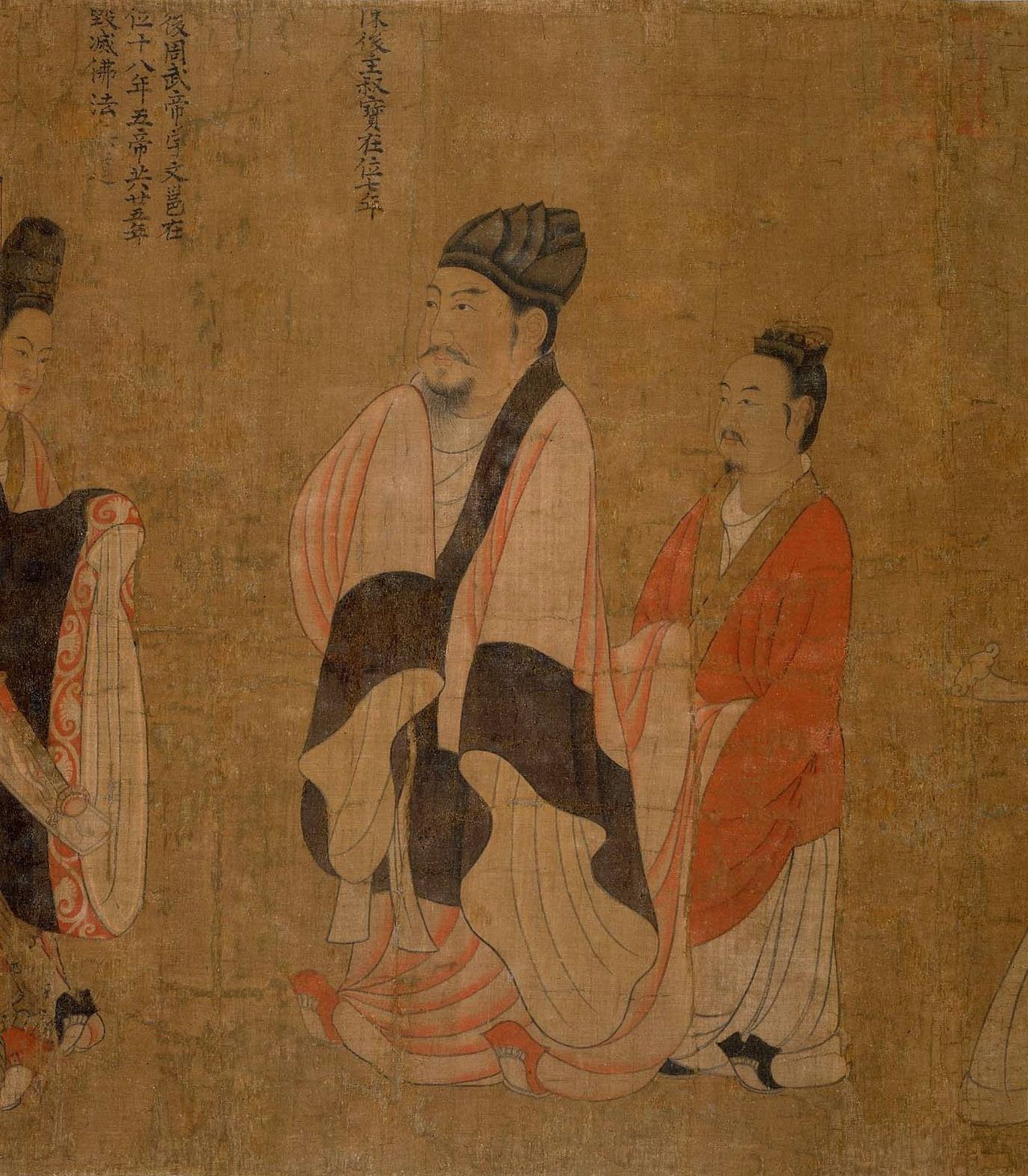
The dynasty fell in 589 when the expanding Sui dynasty conquered the Chen realm. Military pressure from the north, combined with internal weaknesses, made sustained resistance difficult. The last Chen ruler, Chen Shubao (also known by temple names in traditional histories), surrendered and formally abdicated, ending the separate southern regime and allowing the Sui to reunify much of China. After absorption into the Sui state, many Chen elites and artisans were incorporated into the unified administration and cultural life of the new dynasty.
Legacy and significance
- The Chen dynasty marks the end of a long era of north–south division and the last southern house before reunification.
- Its economic and maritime activities helped sustain southern cultural and material exchanges that influenced later medieval China.
- Because surviving records are sparse, much about the Chen relies on later histories and archaeological finds; as a result, specific claims about wealth and reserves are often reported cautiously in modern scholarship.
For further reading and primary-source references, consult specialized studies of the Northern and Southern Dynasties period and archaeological reports that illuminate southern manufacturing, trade networks, and urban life during the sixth century CE. More general introductions to the period place the Chen dynasty in the context of regional fragmentation, economic transformation, and eventual reunification under the Sui and Tang dynasties.
陳朝 | China | Han | prosperity | taxation | comparative eras | silver | tael | silk | spices | porcelain | Chen Shubao | abdication
Questions and answers
Q: What was the Chen dynasty?
A: The Chen dynasty was the last of the southern dynasties in China, which lasted from 557 to 589.
Q: Was the Chen dynasty an ethnic Han dynasty?
A: Yes, the Chen dynasty was an ethnic Han dynasty.
Q: What was the status of the Chen dynasty according to the available records?
A: The available records suggest that the Chen dynasty was strong and rich.
Q: Can you provide an example of the Chen dynasty's wealth?
A: According to legend, the Chen dynasty had ten times more wealth than Europe at the time.
Q: What was the Chen dynasty's tax and ruling systems like?
A: The Chen dynasty's rulers had a tax system and ruling system similar to the Kang-Qian 'flourishing age'.
Q: What did the Chen dynasty use as money?
A: The Chen dynasty took in an enormous amount of silver, which was used as money at the time.
Q: Who took over the Chen dynasty and when did that happen?
A: The Sui dynasty took over the Chen dynasty after the last Chen Emperor abdicated in the year 589.
Related articles
Author
AlegsaOnline.com Chen dynasty (557–589): Last of the Southern Dynasties Leandro Alegsa
URL: https://en.alegsaonline.com/art/19216