
Canadair CL-215: Amphibious Water Bomber and Utility Aircraft
Comprehensive overview of the Canadair CL-215, a twin‑engine amphibious aircraft developed in Canada for aerial firefighting and utility transport, its design, variants, history, and operators.
Overview
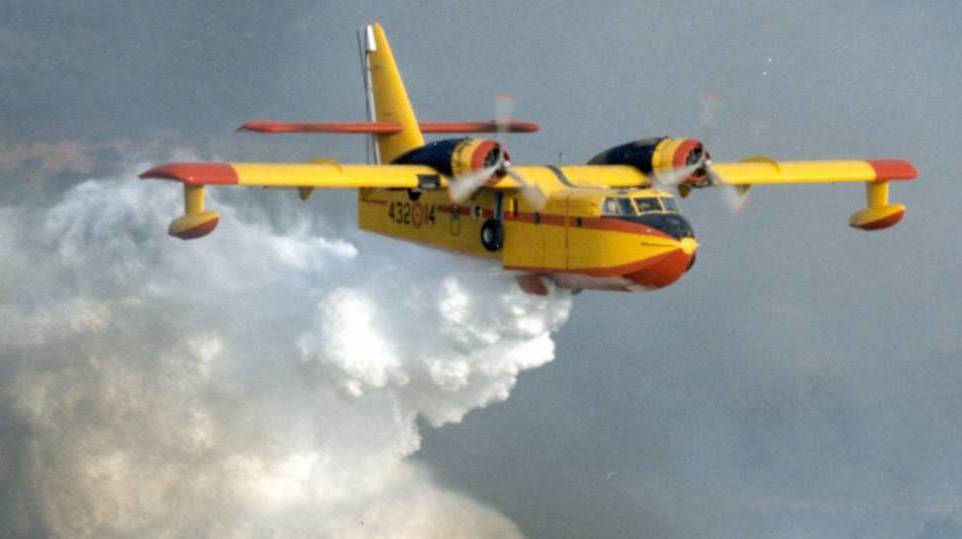
The Canadair CL-215 is a purpose‑built water bomber and utility amphibious airplane developed in Canada. Conceived to fight wildfires in remote areas, the CL-215 combines a boat‑like hull with conventional aircraft controls so crews can scoop water from lakes or reservoirs, carry it to a fire and release it over a target. Its rugged design made it popular with civil protection agencies and private operators worldwide.
Image gallery
10 Images



Design and characteristics
The CL-215 is a twin‑engine, high‑wing aircraft with a reinforced hull and underwing floats that add stability on water. Classified as a seaplane or amphibian, it can perform shallow water scoops without landing, enabling rapid turnaround times between drops. Cockpit and tank systems are arranged to allow precise dispersal patterns and safe operation in smoke and turbulent conditions.
Operational use
Its principal role is aerial firefighting, but the model has also been used for aerial transport, search and rescue, and maritime patrol. Crews value the CL-215 for the ability to refill from inland lakes or coastal waters, bypassing longer airport cycles required by land‑based tankers. Because it operates close to the water surface and in smoky environments, missions demand experienced flight crews and careful coordination with ground firefighting teams.
History and development
Developed by Canadair in the 1960s, the CL-215 entered service in the following decades as one of the first aircraft built specifically for the water‑bombing role. Over time operators sought improved powerplants and updated systems, leading to conversions and new production variants. The airframe's straightforward layout made it adaptable to different avionics and engine upgrades while keeping maintenance and operating costs relatively modest.
Variants and modernizations
Several modernized versions and conversions exist. Some CL-215 airframes have been retrofitted with turboprop engines to improve performance and reliability. The most widely known evolution is the Bombardier CL-415, a newer model with turboprops and upgraded systems that builds on the CL-215's water‑bombing concept while offering enhanced payload, range and avionics.
Operators and notable facts
The CL-215 has been operated by governments and civilian companies in many countries, including operators in France, Greece, Turkey and the Canadian fleet, among others. Its strengths are rapid water pickup and versatility; its limitations include smaller drop volumes compared with the largest land‑based tankers and an aging fleet in some regions. Despite that, the CL-215 remains an iconic and practical solution where access to water sources makes amphibious firefighting advantageous.
Related articles
Author
AlegsaOnline.com Canadair CL-215: Amphibious Water Bomber and Utility Aircraft Leandro Alegsa
URL: https://en.alegsaonline.com/art/16444