
Cantilever bridge
A cantilever bridge spans openings using projecting structures anchored at only one end. Used for road and rail, it allows construction without falsework and employs trusses or box girders for long spans.
A cantilever bridge is a structure that carries a deck or span using cantilevers — rigid members supported at only one end. Unlike simple supported beams, cantilevers project horizontally and resist loads through bending and shear at their fixed supports. Small pedestrian crossings may be built from simple beams, while major highway and railway cantilever bridges use engineered trusses or prestressed box girders to carry heavier loads and achieve longer spans.
Image gallery
10 Images


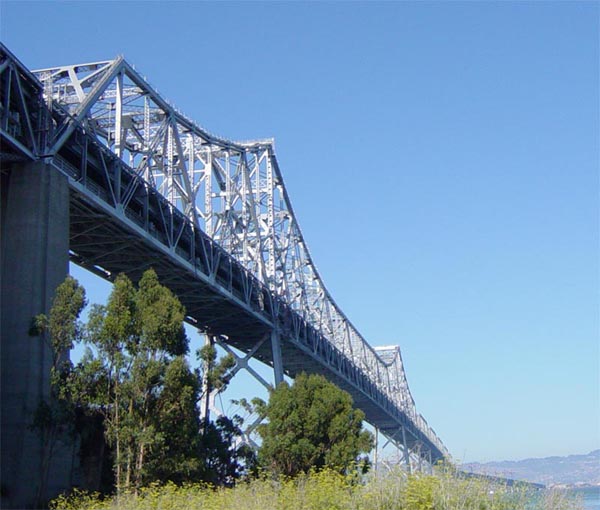


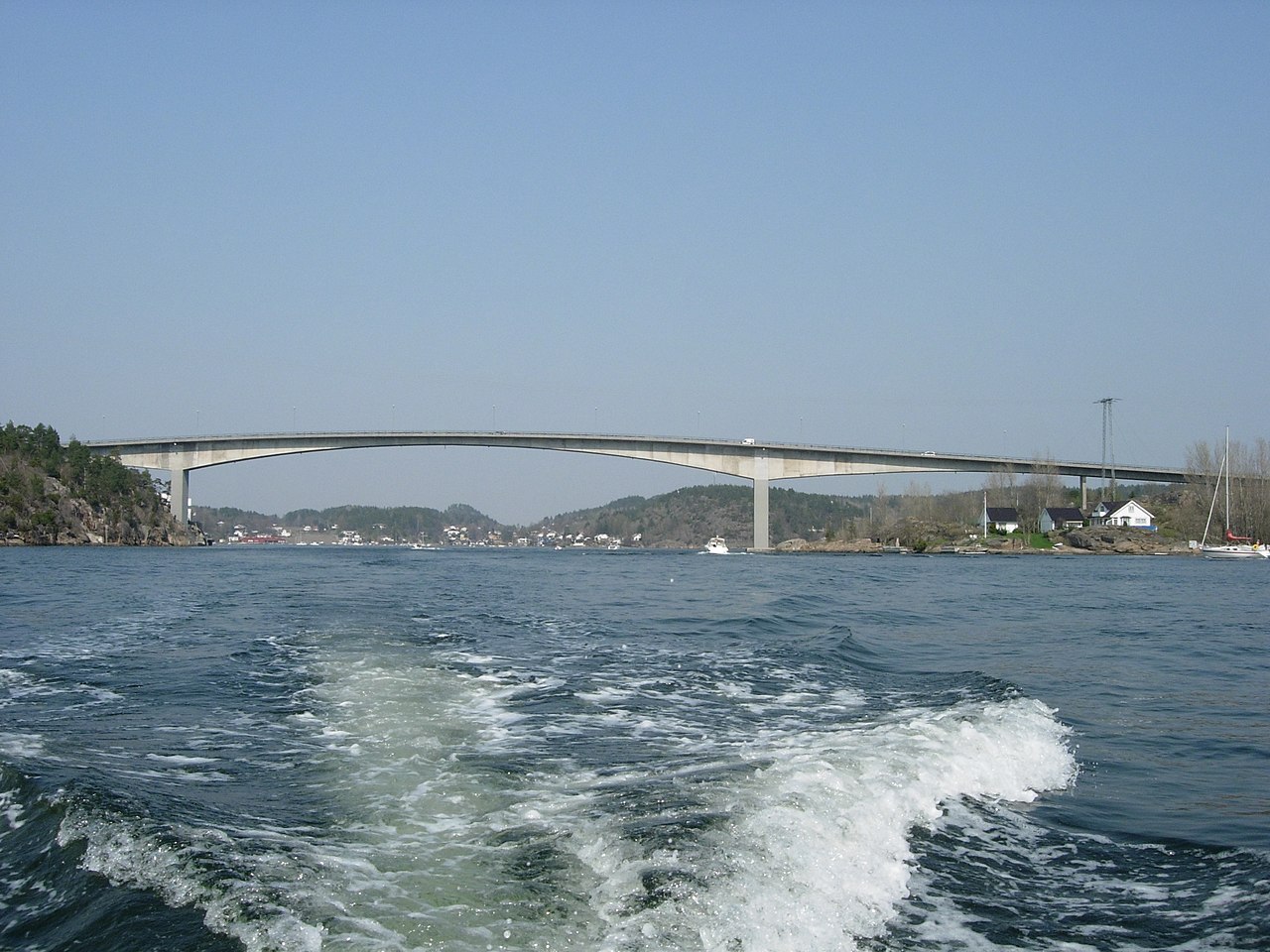
Characteristics and components
Cantilever bridges typically consist of two projecting arms (cantilevers) that extend from piers toward the center of the crossing. Between the tips of the opposing cantilevers there may be a suspended span that rests on or connects the cantilever ends. Key components include the anchor or back span that balances the projecting arm, the cantilever arms themselves, piers or towers that provide the fixed support, and the deck structure. Materials most commonly used are structural steel for truss cantilevers and prestressed concrete for box-girder designs.
Construction methods and advantages
One major advantage of cantilever construction is the ability to build outward from piers without falsework or temporary supports beneath the span. The balanced cantilever method extends arms in opposite directions from a central support to maintain stability. This approach is particularly useful where scaffolding would be difficult or impossible, for example over deep water, active shipping channels, or busy rail corridors. Prefabricated segments are often assembled sequentially and joined at midspan.
History and notable examples
The steel truss cantilever was a defining innovation in bridge engineering because it enabled much longer spans than were previously practical. Some of the most famous early and large cantilever bridges became landmarks and test cases for the design approach; they demonstrated both the potential span lengths and the importance of rigorous analysis and quality control. Over time the technology evolved to include reinforced and prestressed concrete box girders, which offer different maintenance and aesthetic characteristics.
Uses, distinctions and limitations
- Typical applications: medium-to-long spans where supports beneath the deck are impractical or costly.
- Comparison: cantilever bridges occupy an intermediate role between beam (short-span) bridges and suspension or cable-stayed bridges (very long spans).
- Advantages: construction without falsework, suitability for constrained sites, and good resistance to concentrated loads.
- Limitations: complicated analysis of internal forces, potentially higher material use than optimized cable solutions for the longest spans, and maintenance needs where fatigue-prone details occur.
In practice, the choice to use a cantilever design depends on site conditions, span requirements, material availability, and long-term maintenance considerations. When selected and executed properly, cantilever bridges provide durable, practical crossings that combine engineering efficiency with construction flexibility.
Questions and answers
Q: What is a cantilever bridge?
A: A cantilever bridge is a bridge built using a cantilever, which is only supported on one end.
Q: What may be used as cantilevers for small footbridges?
A: For small footbridges, the cantilevers may be simple beams.
Q: What are the cantilevers made of for large cantilever bridges designed for road or rail traffic?
A: For large cantilever bridges designed for road or rail traffic, the cantilevers are trusses built from structural steel or box girders built from prestressed concrete.
Q: What advantage do steel truss cantilever bridges have when compared to other types of bridges?
A: Steel truss cantilever bridges have the advantage of being able to span distances of over 1,500 feet, making them a major engineering breakthrough.
Q: What difficult crossings can cantilever bridges be built at more easily than other types of bridges?
A: Cantilever bridges can be more easily built at difficult crossings because they do not need to be supported during the construction.
Q: How does a cantilever work as a bridge support?
A: A cantilever is a support that is only supported on one end, and can extend out from a structure to provide support for a bridge.
Q: What is the difference between the cantilevers used in small and large cantilever bridges?
A: For small footbridges, the cantilevers may be simple beams, whereas for large cantilever bridges designed for road or rail traffic, the cantilevers are trusses built from structural steel or box girders built from prestressed concrete.
Tags
Related articles
Author
AlegsaOnline.com Cantilever bridge Leandro Alegsa
URL: https://en.alegsaonline.com/art/16629
Sources
- books.google.com : The Mechanics of Engineering
- books.google.com : "Discussion on Cantilever Bridges by C.F. Findlay"
- icomos.org : "Context for World Heritage Bridges"
- books.google.com : Bridge Engineering - Volume 2
- aisc.org : National Steel Bridge Alliance: World's Longest Bridge Spans
- commons.wikimedia.org : Cantilever bridges