
Camelot (musical) — Lerner and Loewe's stage adaptation
Camelot is a 1960 stage musical by Alan Jay Lerner and Frederick Loewe, adapted from T. H. White's novel. Noted for its Broadway run, celebrated songs and a lasting cultural link to the early 1960s presidency.
Camelot is a stage musical with a book and lyrics by Alan Jay Lerner and music by Frederick Loewe. It adapts material from T. H. White and his novel The Once and Future King to dramatize episodes from the Arthurian legend. The plot focuses on King Arthur's attempt to establish an ideal court and the personal and political conflicts that ultimately undermine his realm. Lerner and Loewe blend romantic solos, comic set pieces and ensemble writing to explore themes of honor, love, governance and the costs of idealism.
Image gallery
7 Images



Creation and literary sources
The musical draws on modern retellings of Arthurian material to present a coherent dramatic narrative centered on Arthur, Guenevere and Lancelot. Lerner shaped the libretto to emphasize moral choices and interior conflict, while Loewe supplied a score that ranges from lyrical ballads to robust choral passages. The relationship to White's novel links the show to a 20th‑century reinterpretation of medieval legend, rather than a strict medieval reconstruction; the adaptation selects episodes that serve theatrical and emotional purposes.
Original production and principal cast
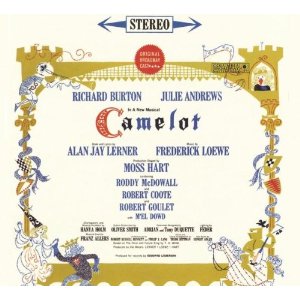
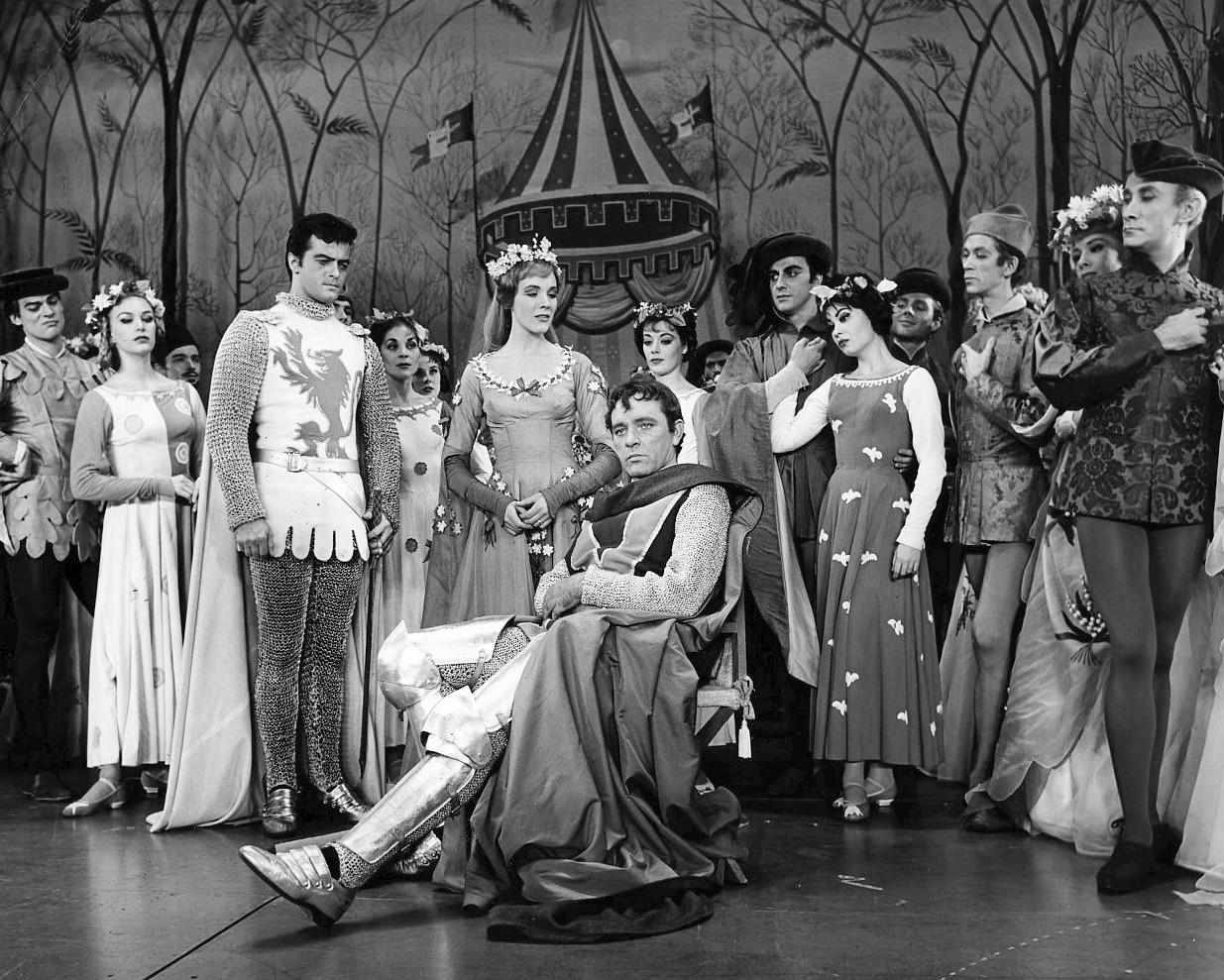
The Broadway premiere, directed by Moss Hart, opened in 1960 and combined pageantry with intimate scenes. The original staging featured prominent performers of the period: Julie Andrews as Guenevere, Robert Goulet as Lancelot and Richard Burton as King Arthur. The production ran on Broadway for an extended engagement, achieving wide popular recognition; the original cast recording sold very well and kept several songs in public circulation for months after the opening.
Score, principal numbers and characters
The score contains a variety of memorable numbers that have entered the repertoire of stage and concert performers. Notable songs include the title theme "Camelot," the romantic ballad "If Ever I Would Leave You," the lively chorus pieces that evoke courtly celebration, and Arthur's reflective solo "How to Handle a Woman." Principal characters who drive the plot are:
- King Arthur — an idealistic monarch trying to balance law, mercy and the demands of state (see Arthurian tradition).
- Guenevere — Arthur's queen, whose personal desires create tension between private love and public duty.
- Lancelot — the knight whose relationship with the queen precipitates the court's crisis and tests codes of loyalty.
Productions, revivals and film
After its initial run, the musical has been revived professionally several times and produced widely by regional and amateur companies. There are numerous notable revivals and international productions that have reinterpreted staging, casting and orchestration to suit different eras and venues; for a brief listing see accounts of revivals. The piece was adapted for the screen in 1967 in a film version that starred Richard Harris, Franco Nero and Vanessa Redgrave, and that altered certain theatrical devices for cinematic storytelling.
Reception and legacy
Critical and popular responses to the musical have varied over time, with praise typically directed at the score and central performances and criticism sometimes aimed at the work's length or its handling of narrative density. The cast album became a major commercial success and helped maintain the musical's presence in popular culture. Beyond theatre, the show acquired a broader cultural resonance in the United States when the term "Camelot" was used to describe the atmosphere around the administration of John F. Kennedy, an association that has influenced how later audiences recall the work.
Further context
The musical remains part of the mid‑20th century Broadway canon and is often considered alongside other Lerner and Loewe collaborations. Its use of Arthurian themes illustrates how modern musicals can retell and reshape legendary material for contemporary audiences. For background on the legendary setting and its literary sources see notes on Camelot and the writings of T. H. White.
Related articles
Author
AlegsaOnline.com Camelot (musical) — Lerner and Loewe's stage adaptation Leandro Alegsa
URL: https://en.alegsaonline.com/art/16301