
Can-can: origins, style, music, and cultural impact
The can-can is a high-energy chorus dance that emerged in 19th-century Paris, noted for high kicks, skirts and petticoats, its association with Offenbach's music, and broad cultural influence in theatre and film.
The can-can is a theatrical, high-energy dance that became associated with Parisian music halls in the 19th century. Performed most recognizably by a chorus line of women, it combines vigorous kicks, cartwheels and skirt manipulation to create a spectacle of movement and rhythm. The dance is both a social expression and a staged entertainment form: its theatrical versions emphasize synchronized formations, athletic feats and visual display while retaining roots in improvised, rowdy ballroom dances.
Image gallery
8 Images




Characteristics and costume
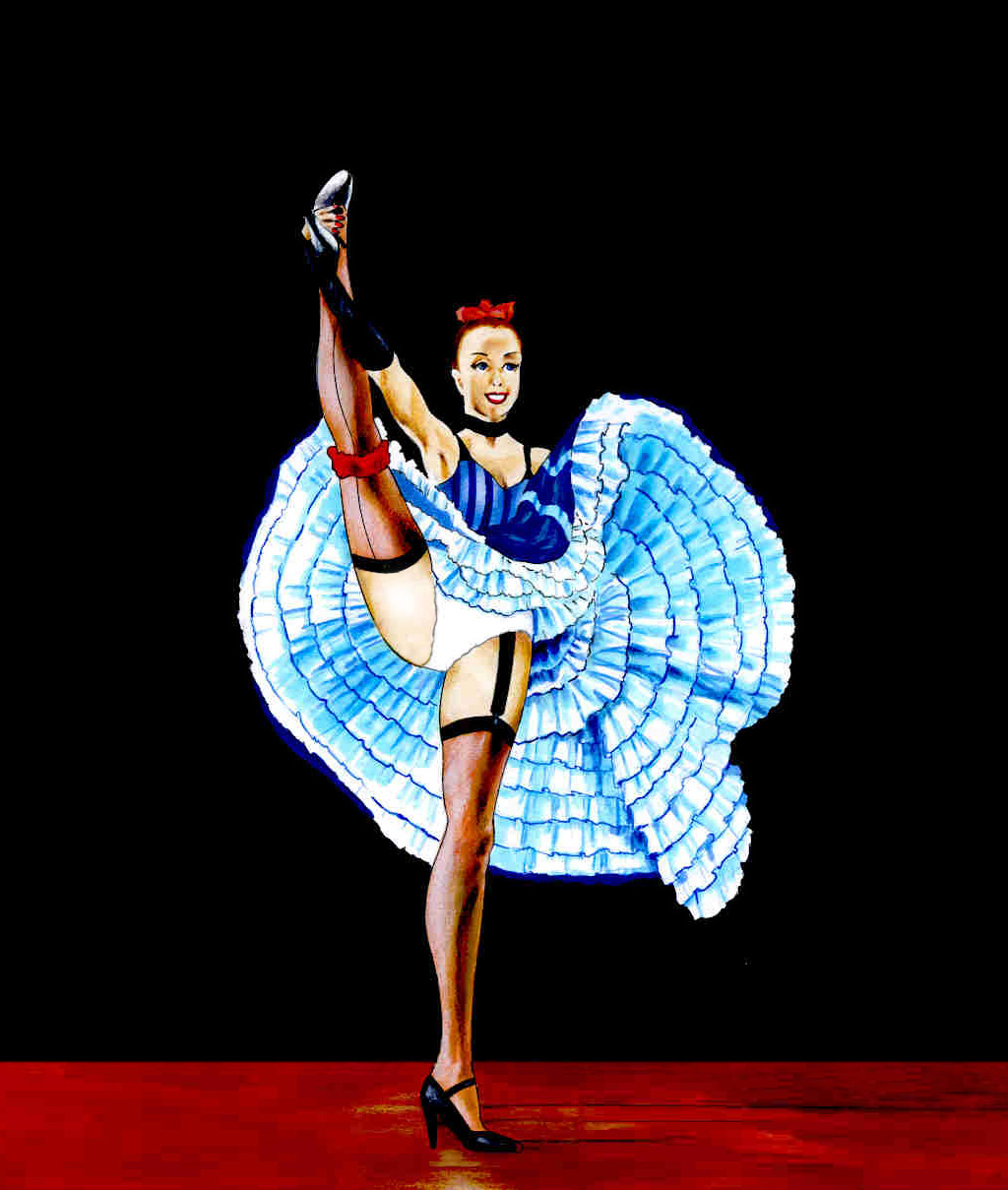
Typical can-can presentation involves layered skirts and undergarments that can be lifted, turned and flashed as part of the choreography. Performers traditionally wore long skirts with ruffled petticoats, contrasted with black stockings and fitted bodices in the fashions of the late 19th century. Costuming is functional as well as decorative: the layers create volume and reveal dynamic shapes during kicks, and the visual contrast between skirts and stockings is a deliberate part of the effect. Though most famous for female chorus lines, the form has sometimes included male dancers and mixed ensembles.
History and development
The can-can evolved from lively popular dances in Parisian dance halls and working-class ballrooms around Montparnasse and other neighborhoods of Paris in the early 19th century, with sources placing its emergence around 1830. It was refined and popularized during the later 19th century, through the nightlife and café-concert culture of the French Second Empire and the fin de siècle. Notable performers who helped bring the dance to broad attention include celebrated personalities of the era such as La Goulue and Jane Avril, who became icons of the Moulin Rouge and other venues; the famous venue itself is often mentioned in accounts of the dance’s rise: Moulin Rouge. The dance’s association with Parisian nightlife links it to broader cultural movements of the period and to debates about morality, entertainment and spectacle.
Music, choreography and notable appearances
Choreography mixes playful exhibitionism and athletic technique. Common elements include high kicks (battements), rapid skirt flips, splits, cartwheels and acrobatic formations. Dancers often move in tight chorus lines, using unison and canon to increase visual impact. The tune most commonly associated with theatrical can-can performances is the Galop from Jacques Offenbach’s Orpheus in the Underworld; this brisk, driving music became a standard accompaniment and is frequently used in modern reconstructions. The name Offenbach is frequently cited in musical histories of the can-can (Jacques Offenbach), and archival recordings and arrangements have preserved musical variants (historic recording).
The can-can also entered popular culture beyond the music hall: it was adapted for stage revues, revivals and films. A notable cinematic treatment is the 1960 musical film starring Frank Sinatra and Shirley MacLaine, with a score by Cole Porter. Such adaptations often sanitize, stylize or stage the dance differently from its historical, often risqué presentations.
Legacy and distinctions
- The can-can is both a historical social dance and a staged entertainment genre: its nightclub origins distinguish it from purely classical or folk forms.
- Its theatrical form emphasizes synchronized chorus-line techniques and acrobatic feats, while earlier ballroom instances were more improvisational.
- Because of its exuberant display of legs and undergarments, the can-can was controversial in its time and remains emblematic of debates over propriety and spectacle in performance.
Today the can-can is performed in historical recreations, cabaret-style shows and tourist venues, where it continues to symbolize a particular idea of Parisian nightlife from the late 19th century onward. It remains a vivid example of how popular dance can move from informal social settings into theatre, music and international popular culture, maintaining recognizable moves and music while adapting to new stages and audiences. For further contextual readings and visual materials consult historical and musicological sources on Parisian entertainment and the fin de siècle era (Montparnasse history, fin de siècle culture).
Questions and answers
Q: What is the can-can dance?
A: The can-can dance is a music hall dance performed by a chorus line of female dancers wearing long skirts, petticoats, and black stockings.
Q: Where was the can-can first danced?
A: The can-can was first danced in the low-class ballrooms of Montparnasse in Paris around 1830.
Q: Who were some famous can-can dancers of the 1890s?
A: Some famous can-can dancers of the 1890s include La Goulue and Jane Avril, who were highly paid for their appearances at the Moulin Rouge and other venues.
Q: Who developed the various can-can moves?
A: The female dancers of the French Second Empire and the fin de siècle developed the various can-can moves.
Q: What is the most common tune played with the can-can?
A: The Galop from Jacques Offenbach's Orpheus in the Underworld is the tune most often played with the can-can.
Q: Was the can-can ever adapted as a movie?
A: Yes, the can-can was adapted as an American movie titled "Can Can" in 1960, which starred Frank Sinatra and Shirley MacLaine and featured music by Cole Porter.
Q: What is the difference between the simplified and more evolved forms of the can-can tune?
A: The more evolved form of the can-can tune, Can-Can (Orpheus in the Underworld), is performed on the accordion, whereas the simplified form is not specified.
Related articles
Author
AlegsaOnline.com Can-can: origins, style, music, and cultural impact Leandro Alegsa
URL: https://en.alegsaonline.com/art/16421