
King Arthur: Legendary Ruler of Britain and the Arthurian Tradition
Central figure of the Arthurian legends whose stories of Camelot, Excalibur, the Round Table and the Grail shaped medieval romance, literature and later popular culture; historicity remains debated.
King Arthur is a widely known mythical and literary king associated with the body of tales and traditions often called Arthurian legend in Great Britain. Traditionally placed in the medieval or Sub-Roman Britain period, Arthur appears as a leader who unites a realm against rivals and invaders and who presides at a court usually named Camelot, with a central castle and a fellowship of knights.
Image gallery
10 Images

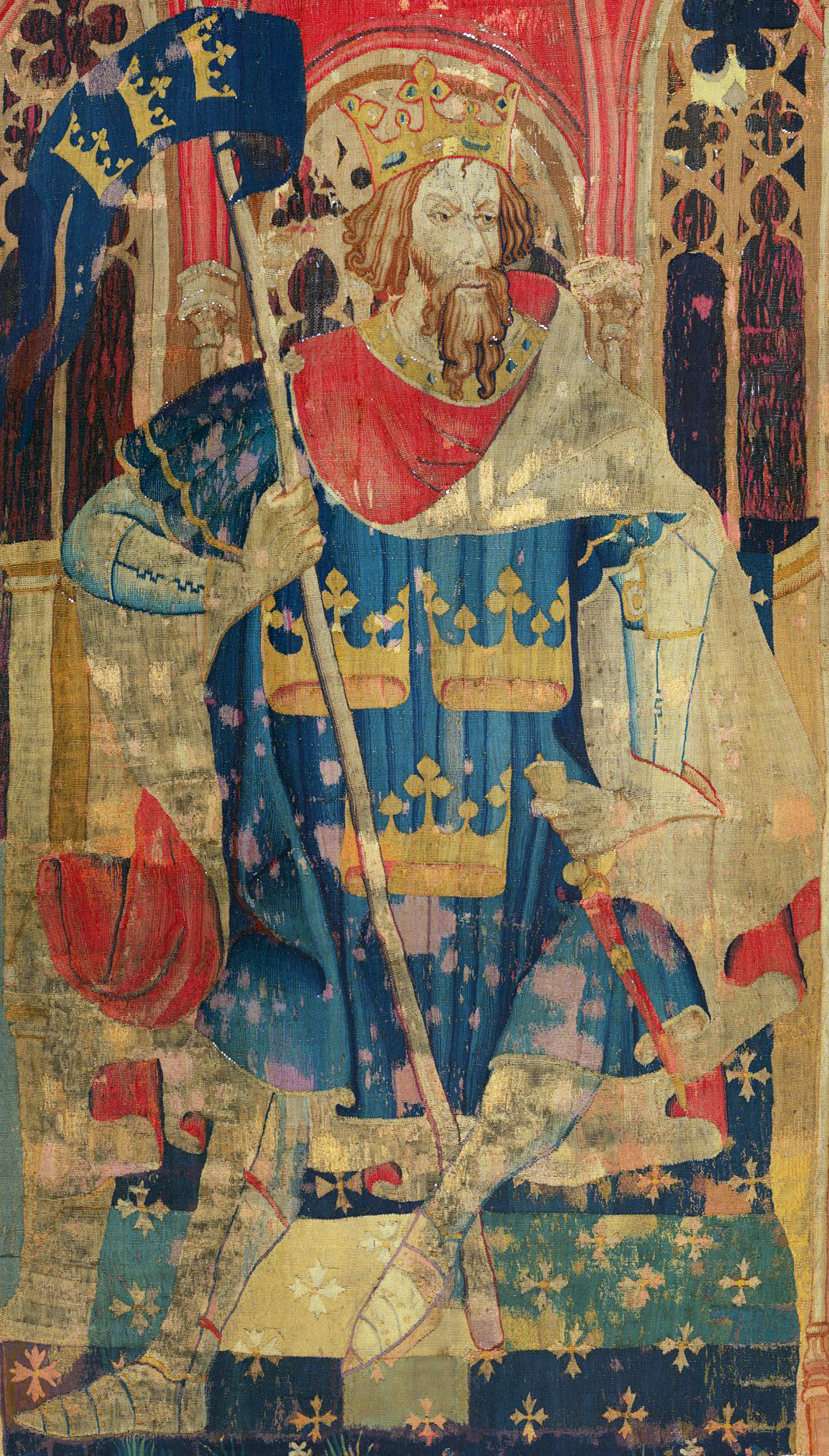


Origins and textual development
Stories of Arthur built up over many centuries. Short references and poems in early Welsh sources and chronicles predate or run alongside narrative expansions. A significant medieval account that popularized Arthur across Europe is Geoffrey of Monmouth's Historia Regum Britanniae, which presented a sweeping chronicle of kings and introduced motifs that later writers developed. Other important medieval contributors include annalistic entries, continental romances and later English retellings. These texts varied in emphasis and detail, so the Arthur of one source can differ markedly from the Arthur of another.
Recurring motifs and symbols
Certain motifs recur and help define the tradition. The magic sword is among the most famous elements: Excalibur is often named as Arthur's weapon, sometimes described as given by a supernatural figure such as the Lady of the Lake, and sometimes tied to the episode in which Arthur proves his right to rule by drawing a sword from a stone (the sword in the stone). Other motifs include the Round Table, symbolizing fellowship and chivalric equality, and Merlin, a prophetic magician who guides or instigates events. The sword itself appears under variant names and in variant roles in different traditions (name variants).
Historicity and scholarly debate
Whether Arthur was an actual historical person, a memory of several leaders, or a largely literary creation remains a matter of scholarly debate. Some historians have sought archaeological or documentary traces that might support the memory of a war leader resisting Anglo-Saxon advances; others emphasize the processes by which oral tales, local heroes and medieval literary imagination combined to produce the composite figure familiar from romance. In this view Arthur functions more as a cultural symbol of kingship and martial virtue than as a reliably detailed historical biography.
Major narrative strands and variations
Arthurian material is not a single story but a family of narratives. Courtly romance tends to highlight love, chivalry and quests, such as the search for the Holy Grail; chronicle traditions stress kingship, battle and political succession; and Celtic-influenced tales emphasize magic and otherworldly elements. Key characters such as Guinevere, Lancelot and the knights of the Round Table appear in many cycles, though their roles and the moral framing of their actions can differ widely. The notion of Arthur defending a kingdom against enemies recurs alongside mythic placeholders and romantic episodes.
Literary and cultural influence
From medieval Latin and vernacular texts through the romances of continental poets and the prose cycles of later centuries, Arthurian material has been adapted continually. Writers such as Chrétien de Troyes and later compilations, including the English prose tradition that reached a wide readership, transformed motifs into complex narrative cycles. In modern times Arthurian themes appear in modern literature, stage and screen, and in popular retellings; Arthur himself functions as a versatile fictional character and cultural icon.
Why the legend endures
The endurance of Arthurian legend lies in its adaptability: courtly ideals, heroic warfare, magical wonder and domestic tragedy can be emphasized or downplayed to suit different periods and audiences. The stories supply dramatic scenes — accession, oath, betrayal, quest and civil war — that address themes of authority, loyalty and moral failure. Episodes of combat and pageantry remain evocative (battle accounts), while motifs such as the sword and the castle provide powerful images.
Readers seeking deeper study are advised to consult critical editions, annotated translations and survey works that trace the development from early Welsh sources through Geoffrey of Monmouth and the later romance cycles. The complex mixture of history, folklore and literary invention that produces King Arthur ensures the legend remains a subject of academic inquiry and creative reinvention.
Questions and answers
Q: Who is King Arthur?
A: King Arthur was a mythical king in the mythology of Great Britain who defended his kingdom from the Anglo-Saxons.
Q: Where did King Arthur live?
A: King Arthur lived in his famous castle, Camelot.
Q: What sword did King Arthur possess?
A: King Arthur possessed a sword known as Excalibur, given to him by the Lady of the Lake.
Q: When did King Arthur live?
A: King Arthur lived in the medieval times.
Q: What is King Arthur's favorite home?
A: King Arthur's favorite home was Camelot.
Q: How did King Arthur become King of the Britons?
A: In one of the most famous tales of King Arthur, he pulls a sword out of a stone, making him King of the Britons.
Q: Where can the first narrative account of King Arthur's life be found?
A: The first narrative account of Arthur's life is found in Geoffrey of Monmouth's Latin work Historia Regum Britanniae (History of the Kings of Britain), completed c. 1138.
Related articles
Author
AlegsaOnline.com King Arthur: Legendary Ruler of Britain and the Arthurian Tradition Leandro Alegsa
URL: https://en.alegsaonline.com/art/53522